
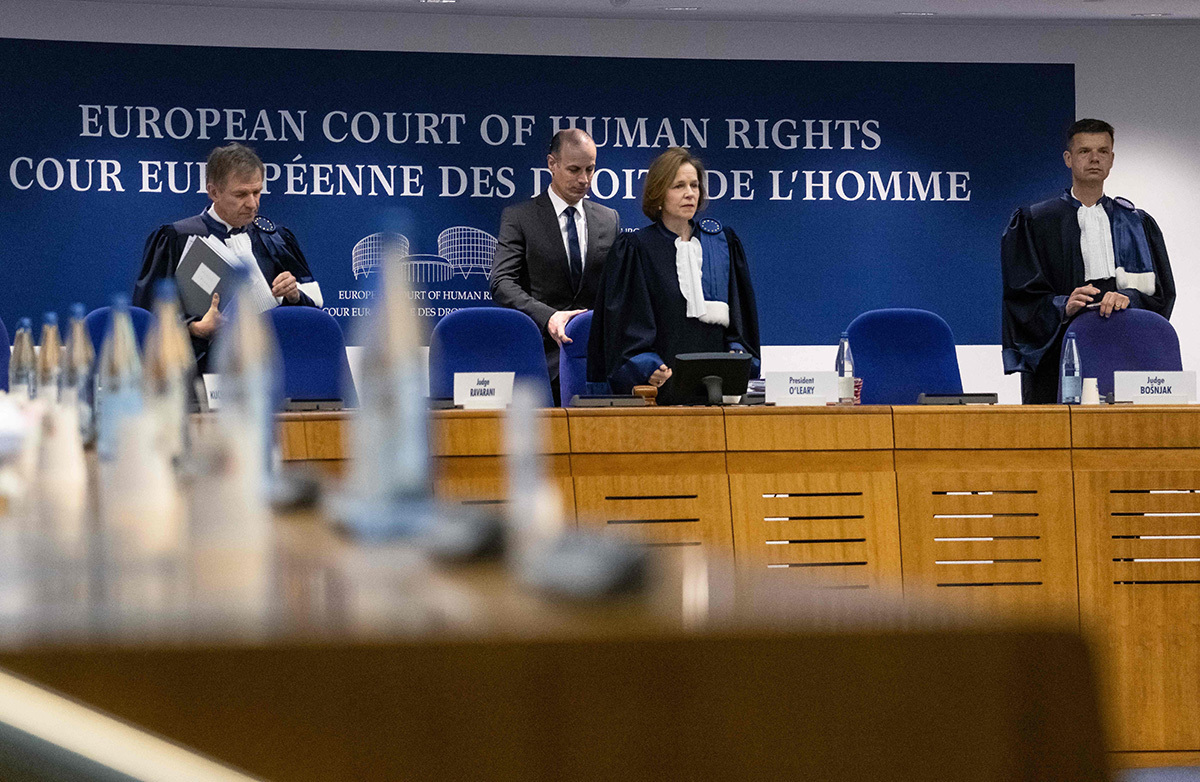
European Court of Human Rights Considers Case on Religious Symbols in Public Institutions
A significant case before the European Court of Human Rights could reshape the display of religious symbols in public spaces, as Greek atheists argue that Christian icons in courtrooms infringe upon their rights. The case emerges from objections to Christian imagery in courtrooms, which the plaintiffs claim violate their rights to a fair trial and religious freedom.
The legal challenge stems from two hearings in Greece’s Supreme Administrative Court in 2018 and 2019. In both instances, the plaintiffs argued against the presence of a Christian Orthodox icon of Jesus Christ, citing violations of Article 6 and Article 9 of the European Convention on Human Rights. These articles ensure the right to a fair trial and freedom of religion, as noted by the legal advocacy organization ADF International.
Despite the objections, the Greek court upheld the display of the religious symbol, as referenced in the case summary by the European Court. The 2018 case, brought by the Union of Atheists, contested ministerial decisions on religious education, claiming that the icon’s presence during proceedings compromised court impartiality. Their request was dismissed in 2019.
A subsequent case in May 2019 involved individuals contesting the recording of religious affiliation on school documents, who also sought the icon’s removal for similar reasons. Although their primary request succeeded, the icon-related complaint was dismissed, with the court highlighting Greece’s Orthodox tradition.
The plaintiffs argue that these decisions infringe on their rights as non-religious individuals, insisting that the Greek court failed in maintaining neutrality and that Greece lacks a legal framework for such religious displays. They note that many Council of Europe member states do not permit religious symbols in courtrooms.
The European Court has asked the Greek government to address whether these symbols compromised the applicants’ rights to an impartial tribunal, interfered with their religious freedom, or constituted discrimination under Article 14 of the convention.
In support of Greece, ADF International has intervened, maintaining that the removal of religious symbols is a misinterpretation of human rights law. ADF Senior Counsel Adina Portaru stated, “The display of religious symbols in public spaces is in no way incompatible with human rights law,” emphasizing the importance of cultural and religious heritage.
ADF’s legal brief argues that no law ensures freedom from offense by religious symbols and that such symbols do not inherently violate fairness or belief. They referenced the court’s decision in Lautsi v. Italy (2011), which upheld the presence of crucifixes in classrooms. The brief also highlighted the widespread presence of religious symbols in European institutions, including Italian state offices, Austrian and Spanish courthouses, and Bavarian government buildings, with French rulings allowing religious imagery with cultural or historical significance.
This article was originally written by www.christianpost.com




