
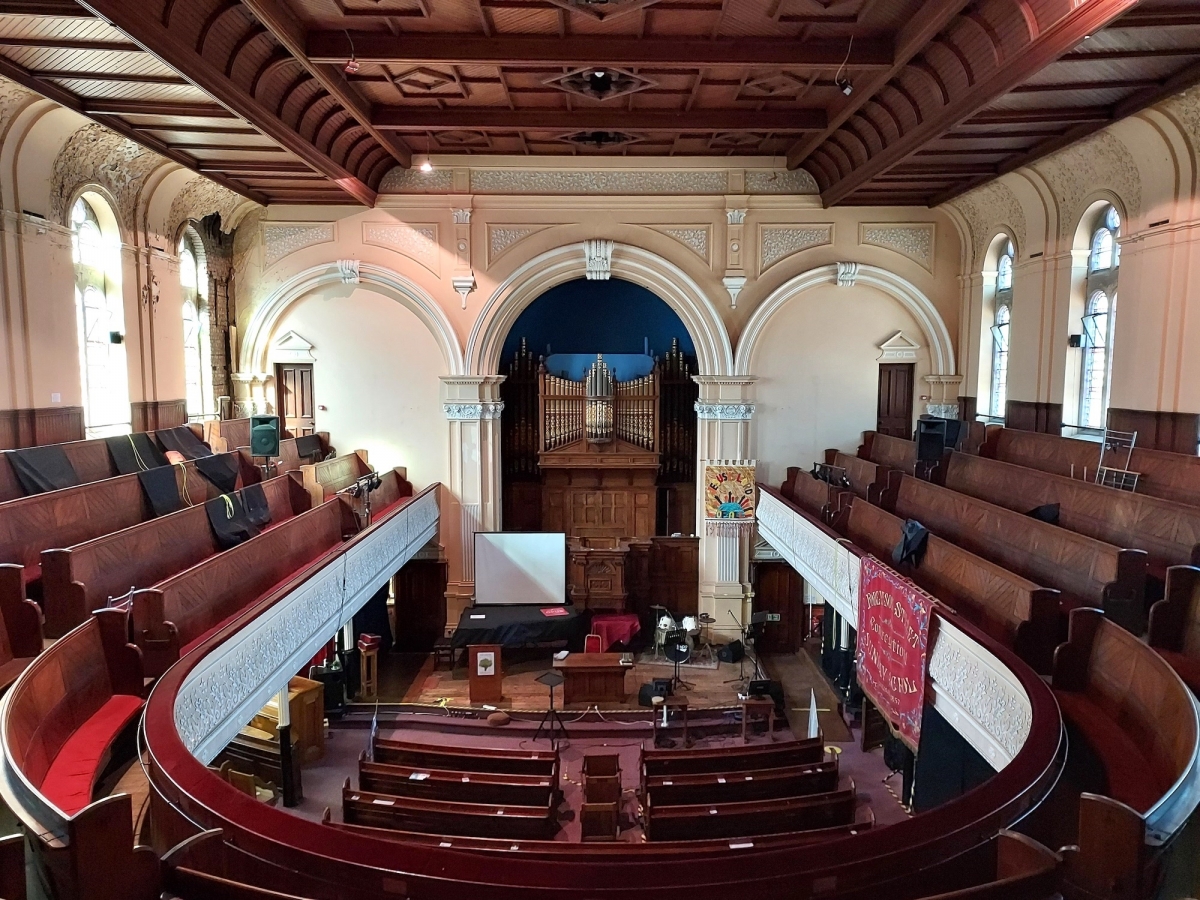
(Photo: National Churches Trust)
In a move to protect England’s historic buildings from potential closure, the government has announced a substantial £1.5 billion investment, with a notable focus on places of worship.
This funding, scheduled over a five-year timeline, seeks to rejuvenate “national pride in community assets.” Museums, facing financial struggles with maintenance, will receive £760 million, while libraries and creative arts initiatives are also set to benefit significantly.
Among the measures, the government has set aside £92 million specifically for a new Places of Worship Renewal Fund. This fund is intended to succeed the existing £23 million Listed Places of Worship Grant Scheme.
Additionally, places of worship can apply for repairs through a separate £75 million fund aimed at preserving “at-risk” historic sites, as well as a £46 million Heritage Revival Fund designed to empower communities in restoring and utilizing local heritage.
These announcements come as churches face the impending loss of VAT exemption on repairs starting in April, a change that critics argue could significantly impact restoration expenses.
Emily Gee, Director for Cathedral and Church Buildings for the Church of England, expressed a positive outlook on the new funding but raised concerns over the discontinuation of the existing grant scheme.
In her statement, she remarked, “We warmly welcome the Government’s Places of Worship Renewal Fund and the certainty of this investment in repairs and improvements for eligible parish and cathedral church buildings.”
Gee also appreciated the government’s acknowledgment of the diverse benefits that churches provide to their local communities, including spiritual, cultural, historical, and social contributions.
“However, we are very concerned that the end of the Listed Places of Worship Grant Scheme – after more than 20 years – will mean added pressure on local fundraisers and inevitably a drain on other sources of funding. We will work with the wider sector and the Government to see how that burden can be alleviated,” she continued.
“We look forward to seeing the details and working out what it means in practice for the Church of England’s 12,500 listed church buildings.”
The Church of England plans to collaborate with other church organizations, Historic England, and various faiths, alongside the Government, during this transitional period.
Culture Secretary Lisa Nandy, who introduced the scheme, highlighted its importance, stating that the initiative would help “keep the doors open and the lights on” in numerous local institutions, which she described as integral to the nation’s identity.
This article was originally written by www.christiantoday.com




