A Week of Tension at the World Economic Forum: Global Markets and Diplomacy Tested
The picturesque setting of Davos, Switzerland, was the stage for a tumultuous week in international relations, with President Donald Trump’s remarks causing ripples across global markets and diplomatic circles. From discussions about Greenland to ongoing tensions in Gaza, Trump’s statements led to uncertainty among some of America’s closest allies.
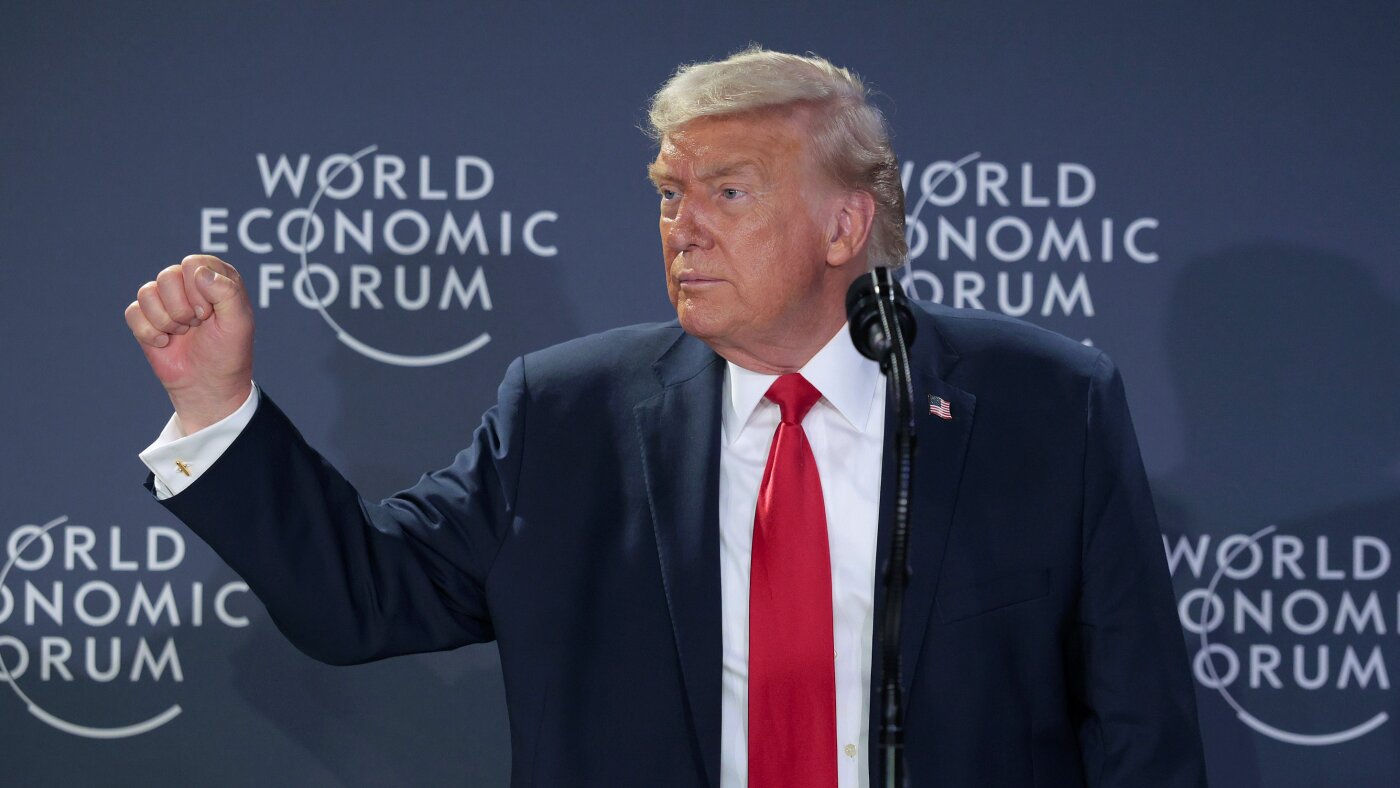
President Trump speaks during a reception for business leaders at the World Economic Forum Annual Meeting in Davos, Switzerland, Wednesday. Chip Somodevilla/Getty Images
The World Economic Forum in Davos unfolded amid growing questions about America’s role as a global leader. President Trump’s late arrival did little to calm the diplomatic uncertainties already set in motion by his administration’s comments about Greenland and proposed tariffs on European nations.
Trump’s offhand remarks about potentially acquiring Greenland had escalated into tariff threats against eight European countries. The rhetoric left allies in confusion, with financial markets reacting nervously to the unpredictability of U.S. policy directions.
A Voice of Concern from Canada
During the forum, Canadian Prime Minister Mark Carney voiced concerns about the fragility of the post-World War II economic and security framework, highlighting risks faced by medium-sized countries. “Let me be direct — we are in the midst of a rupture, not a transition,” Carney stated, warning against the use of economic integration as a weapon.
French President Emmanuel Macron echoed Carney’s sentiments, describing the era as one marked by political and security instability. He cautioned against a shift towards “a world without rules” where only the strongest prevail.
In contrast, President Trump defended his approach, emphasizing military and economic strength over diplomatic assurances. “We want strong allies, not seriously weakened ones,” Trump declared, referencing the strategic importance of Greenland.
Despite ruling out a military intervention in Greenland, Trump continued to question Denmark’s management of the territory. NATO Secretary-General Mark Rutte sought to ease tensions, yet Trump’s announcements on social media about a security deal with little public detail added to the ambiguity.
Trump later rescinded an invitation for Canada to join his Board of Peace initiative, intended to address postwar Gaza and other conflicts, further straining relations.
Renewed Calls for Action from Europe
Ukrainian President Volodymyr Zelenskyy highlighted European hesitancy in confronting challenges, urging for decisive actions. “Europe loves to discuss the future, but avoids taking action today,” Zelenskyy emphasized, pointing to the need for a strategic posture beyond mere dialogue.
As the forum concluded, the initial market reactions and diplomatic tensions remained unresolved. The lingering question was whether these disruptions signaled a temporary phase or a shift in global leadership dynamics, prompting allies to consider navigating future challenges independently.