
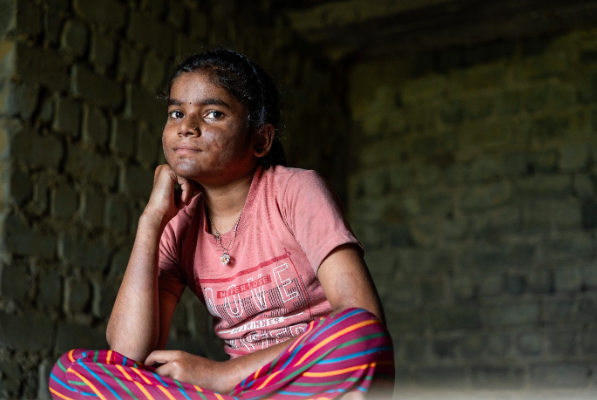
Global Aid Reductions Threaten Efforts to Combat Leprosy in Children
(Photo: The Leprosy Mission / Sabrina Dangol)
In the face of dwindling international aid, children’s health in impoverished regions is increasingly at risk, with leprosy cases on the rise. This alarming trend is highlighted by The Leprosy Mission Great Britain, which points to new evidence from Asia and Africa showing a surge in leprosy cases among children, despite the disease being treatable with antibiotics when caught early.
This development comes as the world observes World Leprosy Day on January 25 and World Neglected Tropical Diseases Day on January 30. Leprosy, or Hansen’s disease, although only mildly infectious and slow to develop, serves as an indicator of its prevalence within communities when it appears in children.
Aid workers have identified new clusters of leprosy cases with a notable increase in young patients, attributing this to weakened health systems and reduced outreach and diagnostic funding. In many regions, the fear and stigmatization surrounding leprosy lead to severe social repercussions.
The Leprosy Mission reports that children and their families often face ostracism from schools, isolation at home, or even violence after being branded as cursed or unclean. This social stigma adds psychological damage to the physical effects of the disease.
“The physical damage to young bodies is devastating — nerve damage, disability and pain. But the emotional damage is even deeper,” remarked Peter Waddup, chief executive of The Leprosy Mission Great Britain.
Advocates contend that the issue has worsened due to reductions in overseas development aid from several high-income countries, including the UK, amidst a global political climate where some US leaders question the value of foreign aid.
These funding cuts have hampered the ability of specialist teams to detect cases early, distribute medication, and dispel harmful myths within communities.
The World Health Organisation reports approximately 200,000 new leprosy cases globally each year. However, research shared by The Leprosy Mission suggests many more cases go undetected, especially among children hidden due to shame or fear.
“Leprosy has become increasingly hidden,” Mr. Waddup explained. “Hidden children and hidden suffering. Hidden because governments don’t prioritise it and overstretched health systems cannot keep up.”
In response, the charity is launching the #IAmNisha campaign on World Leprosy Day to eradicate child leprosy, combining medical treatment with surgery, prosthetics, rehabilitation, and job training for affected families. They also aim to enhance community education to combat stigma and promote early symptom reporting.
“Leprosy once received sustained global support,” stated Mr. Waddup. “When an effective cure was discovered in the late 20th century, the world moved forward with hope and determination. But momentum faded too soon.”
With conflicts, climate change, and poverty straining fragile health systems, campaigners caution that achieving international goals to eliminate neglected tropical diseases by 2030 is becoming increasingly difficult.
The Leprosy Mission calls on governments, churches, and the public to re-engage with the issue, emphasizing that leprosy is both curable and preventable, and that children should not bear the brunt of global inaction.
Mr. Waddup asserted, “At The Leprosy Mission, we believe every child is created by God, known by name and born to be loved. Where there is suffering, we have a shared responsibility to respond with compassion.
“As followers of Christ we know that compassion must cross borders, postcodes and passports. We are called not to look away, but to act.
He added, “In the name of Jesus, we can spare Generation Alpha from leprosy and every generation that follows.”
This article was originally written by www.christiantoday.com




