
Protests at Religious Sites: What the First Amendment Really Protects
Recent events at Cities Church in St. Paul, Minnesota, have sparked discussions on the limits of the First Amendment in the context of protests at places of worship. The Foundation for Individual Rights in Education (FIRE), a nonpartisan civil liberties group, has taken a stand that the First Amendment does not extend to protests disrupting church services, challenging claims otherwise by political figures such as Don Lemon.
According to a post by board member Samuel J. Abrams on the FIRE website, the right to free speech is limited in private spaces like churches, where owners have not consented to protest activities. Abrams noted, “There is no First Amendment right to enter a house of worship and engage in conduct that effectively shuts down a religious service, even as part of a protest.”
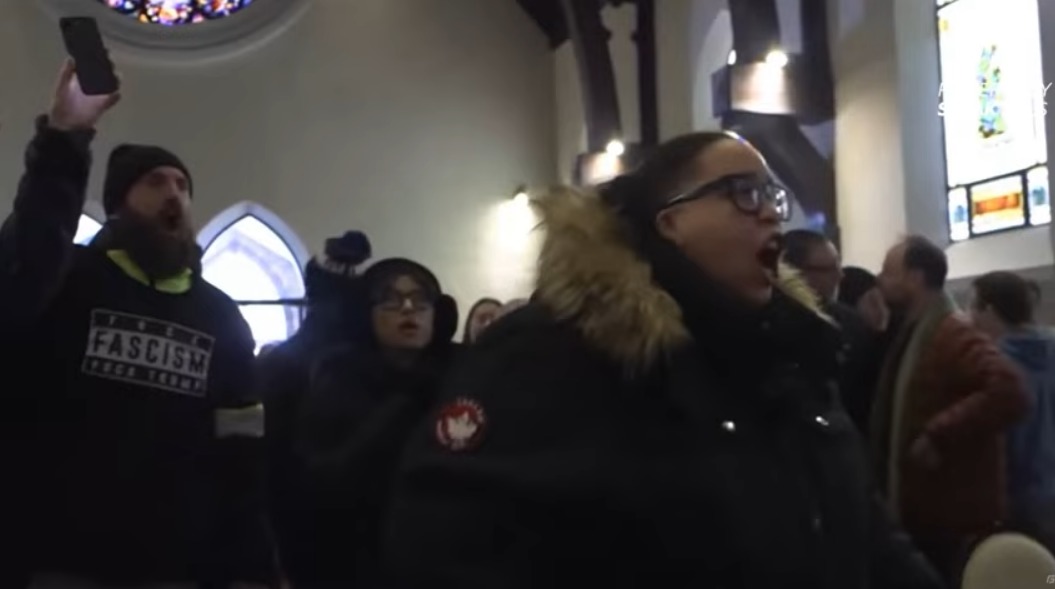
This position arose after anti-ICE protesters, associated with groups like the Racial Justice Network and Black Lives Matter, disrupted a Southern Baptist congregation’s service. They demanded the resignation of a pastor who also leads a local ICE field office. The commotion led to the premature end of the service.
In contrast, former CNN host Don Lemon argued that the protesters’ actions were protected under the First Amendment. Video from the event captured Lemon stating, “This is what the First Amendment is about,” as he was asked to leave the church premises.
Following the disruption, three protest participants were arrested and charged under the Freedom of Access to Clinic Entrances (FACE) Act of 1994, which protects individuals exercising their right to religious freedom. DHS Secretary Kristi Noem shared an image of protest leader Nekima Levy Armstrong in handcuffs, indicating charges under 18 U.S. Code § 241, known as “Conspiracy against rights.”
While the U.S. Department of Justice sought charges against Don Lemon, an appeals court rejected this request, further fueling the debate on the scope of protected speech.
Abrams emphasized that the misunderstanding around First Amendment rights often leads to confusion. “This distinction matters because the First Amendment is often misunderstood as an affirmative license to protest anywhere,” he explained. David French, a constitutional lawyer, echoed similar sentiments, stressing that such disruptions violate the rights of congregants seeking peaceful worship spaces.
The ongoing discourse highlights the need for clarity regarding where public speech rights end and private property rights begin, especially within religious and other voluntary assemblies. Abrams asserts that maintaining this balance is crucial for preserving both free expression and religious autonomy.
This article was originally written by www.christianpost.com




