Controversy Surrounds Kari Lake’s Role at Voice of America
Kari Lake, the figure at the helm of the Voice of America’s parent agency, is navigating a complex landscape of legal and political challenges as she attempts to reshape the government-funded broadcaster. Her approach, which includes using the platform to bolster President Trump’s image, has raised questions about potential violations of federal law.
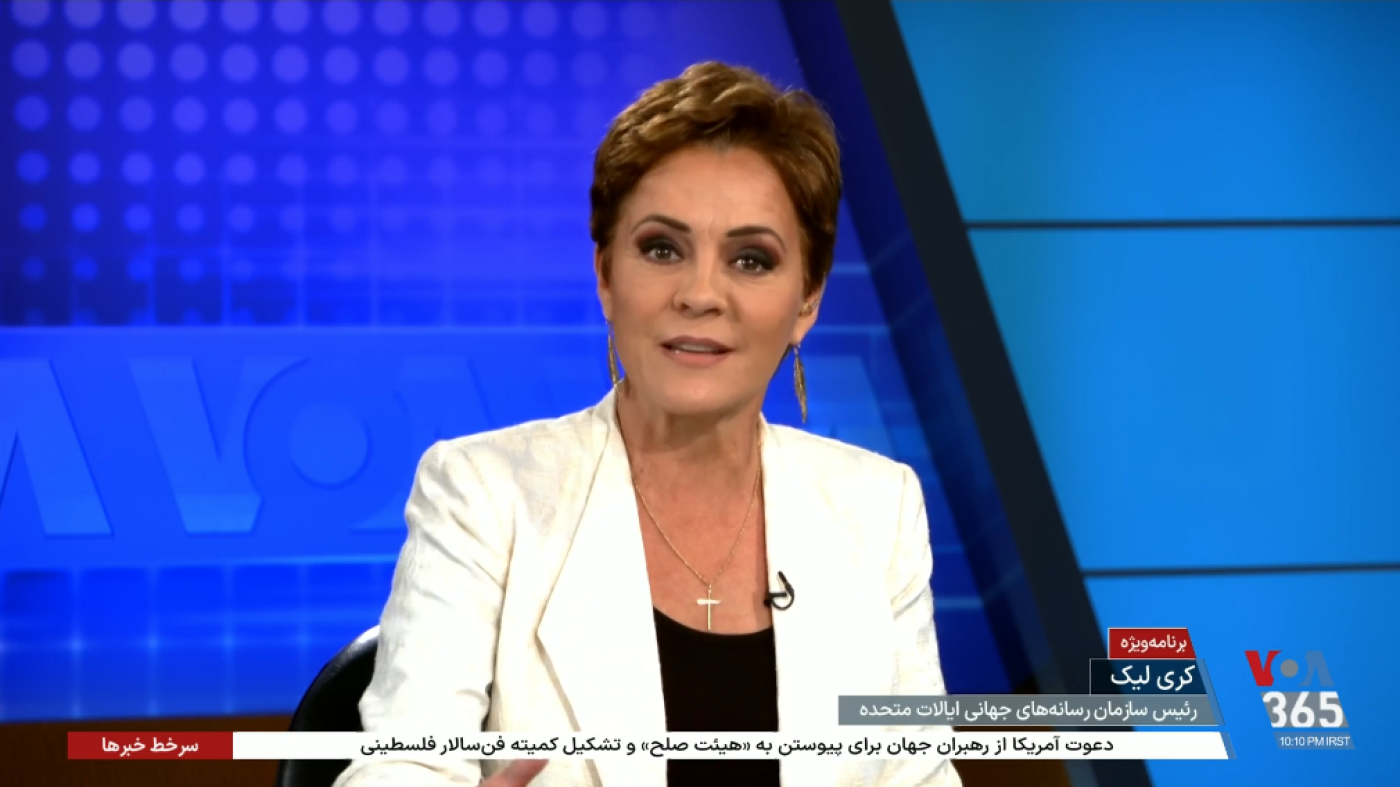
Lake’s recent appearance on Voice of America’s Persian-language service marked the first anniversary of Trump’s presidency. During the broadcast, she praised Trump extensively, labeling him “the president of peace” and supporting his claims of ending multiple conflicts. Such endorsements have sparked accusations of compromising the network’s editorial independence.
Her statements, including criticism of the judiciary and former President Joe Biden, were reviewed by NPR alongside the translation provided to Iranian viewers. Lake defended her comments, stating, “VOA is telling the story of the brave Iranian people and their fight for freedom. That story cannot be told without sharing statements from President Trump or the support the Iranian people have for him.”
The segment aired as part of a special program celebrating Trump’s first year back in office and was broadcast on both Persian and Chinese language services. Critics argue that Lake’s role conflicts with the firewall intended to protect editorial decisions from political influence.
Despite her position, Lake’s journey to lead the U.S. Agency for Global Media has been fraught with legal hurdles. Courts have questioned her authority, and she has faced challenges in implementing sweeping layoffs mandated by an executive order from Trump.
Ali Javanmardi, who now oversees the Persian-language service, has faced similar scrutiny. His leadership style, which has included discouraging criticism of Trump, further complicates the network’s position. Javanmardi’s public support of Trump and efforts to align with U.S. foreign policy have drawn criticism from within the organization.
The broader implications of these developments extend to Congress, which has introduced spending bills to ensure the survival of international networks like Voice of America. The proposed budget significantly exceeds what the Trump administration requested, aiming to maintain operations despite Lake’s attempts to diminish them.
Lake’s actions have also impacted Radio Free Europe/Radio Liberty, particularly its Persian-language service, Radio Farda. Her refusal to provide essential resources during critical times has drawn ire from lawmakers and raised concerns about the U.S.’s ability to disseminate information.
As these issues unfold, the tension between political influence and journalistic integrity remains at the forefront of the debate surrounding the future of U.S. international broadcasting.