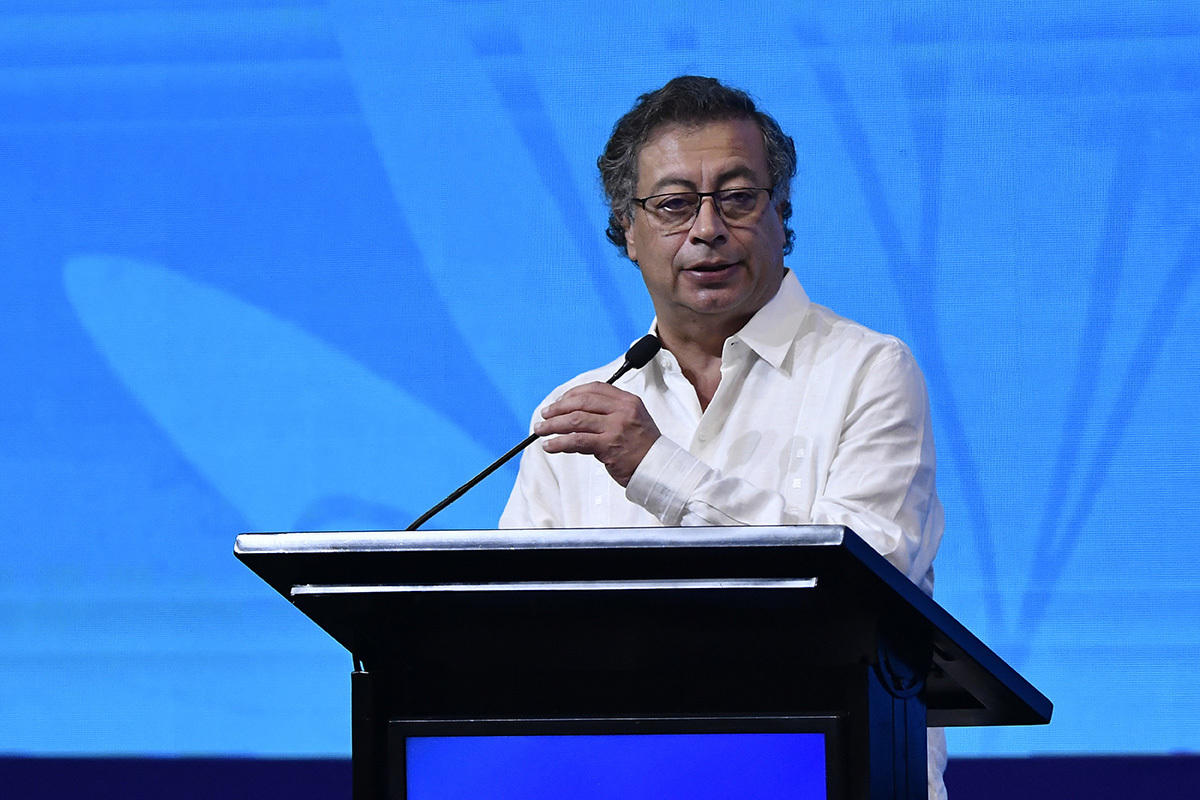
Colombia’s religious community is abuzz following a provocative statement by President Gustavo Petro during a hospital reopening in Bogotá. His remarks have ignited a fervent discussion on the intersection of politics and faith in the nation.
Petro controversially stated his refusal to refer to Jesus as “Christ,” a term he believes misconstrues Jesus as a figure of “power and king,” which he argues is contrary to Jesus’s true nature. Petro described Jesus as a “man of light, of truth and revolutionary” and speculated about a possible romantic link with Mary Magdalene, asserting, “such a man without love could not exist.”
This perspective quickly drew ire from various quarters, with critics accusing Petro of political exploitation and lacking historical accuracy. The Evangelical Confederation of Colombia (CEDECOL) and other Christian organizations have voiced their strong disapproval.
CEDECOL, representing a vast network of churches and believers, released a statement denouncing Petro’s comments. They underscored key points for defending the traditional view of Christ’s identity:
1. The Bible portrays Jesus Christ as holy and upright, with Mary Magdalene as a devoted disciple transformed by His grace, rather than as an object of speculative romance.
2. The president’s assertions are seen as distorting historical and theological truths, undermining the core beliefs of the Christian faith.
Between History and Ideology
Within the Christian editorial community, figures like Juan Sebastián Cortés have criticized Petro’s remarks as showing a “disconnection” from New Testament history. In a column published in Diario Cristiano Internacional, Cortés clarifies that “Christ” (Χριστός) is a direct translation of the Hebrew Moshiach (Messiah), a term established in the Septuagint long before Jesus’s time.
He accuses the president of attempting to reshape the core Christian message of the kerygma—Christ’s death and resurrection—into a political narrative rooted in Liberation Theology.
For many, Petro’s statements trivialize the Gospel’s significance, replacing it with a political agenda, which has sparked discomfort in a nation valuing both pluralism and respect for religious differences.
The Colombian Catholic bishops have also weighed in, urging Petro to respect the religious beliefs of all citizens. In a January 28 statement, the Colombian Bishops’ Conference emphasized that “no official nor other person is called upon to issue theological opinions on the religious or doctrinal convictions of citizens,” and highlighted the duty of civil authorities to protect religious beliefs and foster harmonious relations.
Originally published by Diario Cristiano, Christian Daily International’s Spanish edition.
This article was originally written by www.christianpost.com