
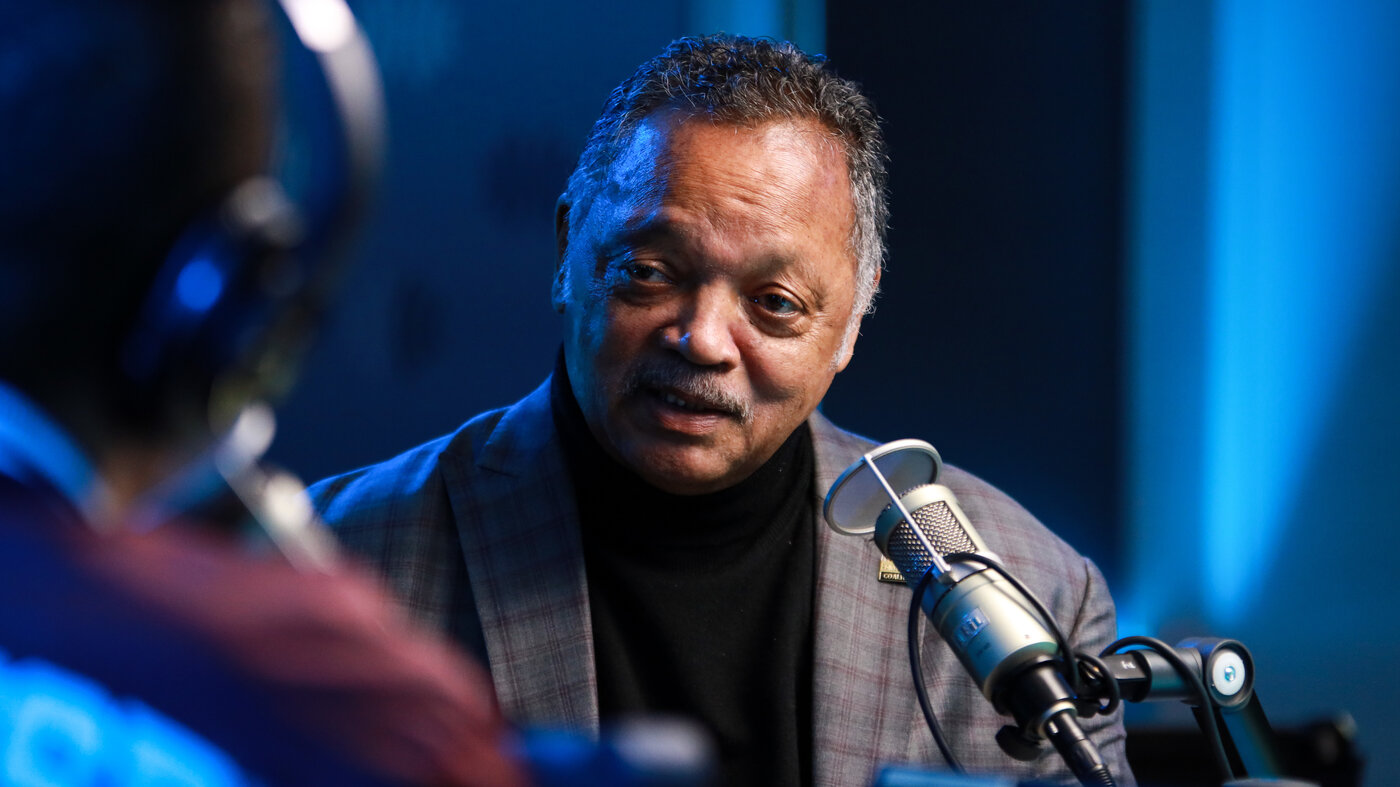
The Legacy of Rev. Jesse Jackson: A Life of Civil Rights Advocacy and Political Influence
The Rev. Jesse Jackson, a prominent figure in American civil rights and politics and a protégé of Martin Luther King Jr., passed away on Tuesday at the age of 84. Known for his powerful influence in reshaping Democratic politics in the 1980s through his presidential campaigns, Jackson’s life was one of dedication to the fight for equality and justice.
In a statement, the Jackson family said, “Our father was a servant leader — not only to our family, but to the oppressed, the voiceless, and the overlooked around the world. We shared him with the world, and in return, the world became part of our extended family.” Public commemorations are planned in Chicago.
Born on October 8, 1941, in Greenville, South Carolina, Jackson’s journey into activism began early. During a Christmas break from the University of Illinois, he faced racial segregation firsthand when denied a book from a white-only library. This led to his arrest during a sit-in as part of the “Greenville Eight.” He later transferred to North Carolina Agricultural & Technical College, a historically Black university.
Advocacy and Political Journey
Jackson’s activism took him to Selma, Alabama, in 1965, where he marched alongside Martin Luther King Jr. He became a key figure in King’s Southern Christian Leadership Conference, eventually leading its Operation Breadbasket initiative, aimed at improving economic opportunities for Black Americans.
Witnessing King’s assassination in 1968 in Memphis marked a turning point in Jackson’s life. By 1971, he founded Operation PUSH, and later combined it with the National Rainbow Coalition to create the Rainbow PUSH Coalition, a major civil rights organization.
Presidential Campaigns
Jackson’s foray into presidential politics began in 1983, when he announced his candidacy, becoming the second Black person to seek a major party’s nomination. His campaign was notable for its “Rainbow Coalition” appeal and registered over a million new voters. Despite controversies, Jackson’s candidacy in 1984 and 1988 marked significant milestones in Black political engagement.
His 1984 speech at the Democratic Convention in San Francisco was a call to action: “This is not a perfect party. We’re not a perfect people. Yet, we are called to a perfect mission. Our mission to feed the hungry, to clothe the naked, to house the homeless, to
This article was originally written by www.npr.org




