European Union’s Abortion Initiative Sparks Controversy Amidst Cross-Border Access Plans
Controversy arises across Europe as lawmakers propose a plan to facilitate cross-border abortions, allowing women to travel within the EU for the procedure. The “My Voice My Choice” (MVMC) initiative, which has garnered significant attention, aims to extend abortion access throughout the continent.
The initiative, submitted to the European Commission on September 1, 2025, received support from over 1.1 million people. Following a public hearing, the European Parliament voted in favor of the plan on December 17, with 358 votes for, 202 against, and 79 abstentions.
In a bold move, the European Parliament has urged the European Commission to consider creating a financial mechanism, backed by EU funds, to support and facilitate cross-border abortion access, aligning with the domestic laws of participating member states.
Over 170 civil society organizations from all EU member states have expressed their backing by sending a joint letter to the European Commission, advocating for a favorable decision that they believe could “save lives, reduce suffering, and translate EU values into concrete action,” as stated in an MVMC press release.
The European Commission is set to announce its decision on February 25, with potential implications for cases like a French woman seeking an abortion in the Netherlands due to limitations in France, or a Polish woman traveling to France for the procedure in cases involving Down syndrome.
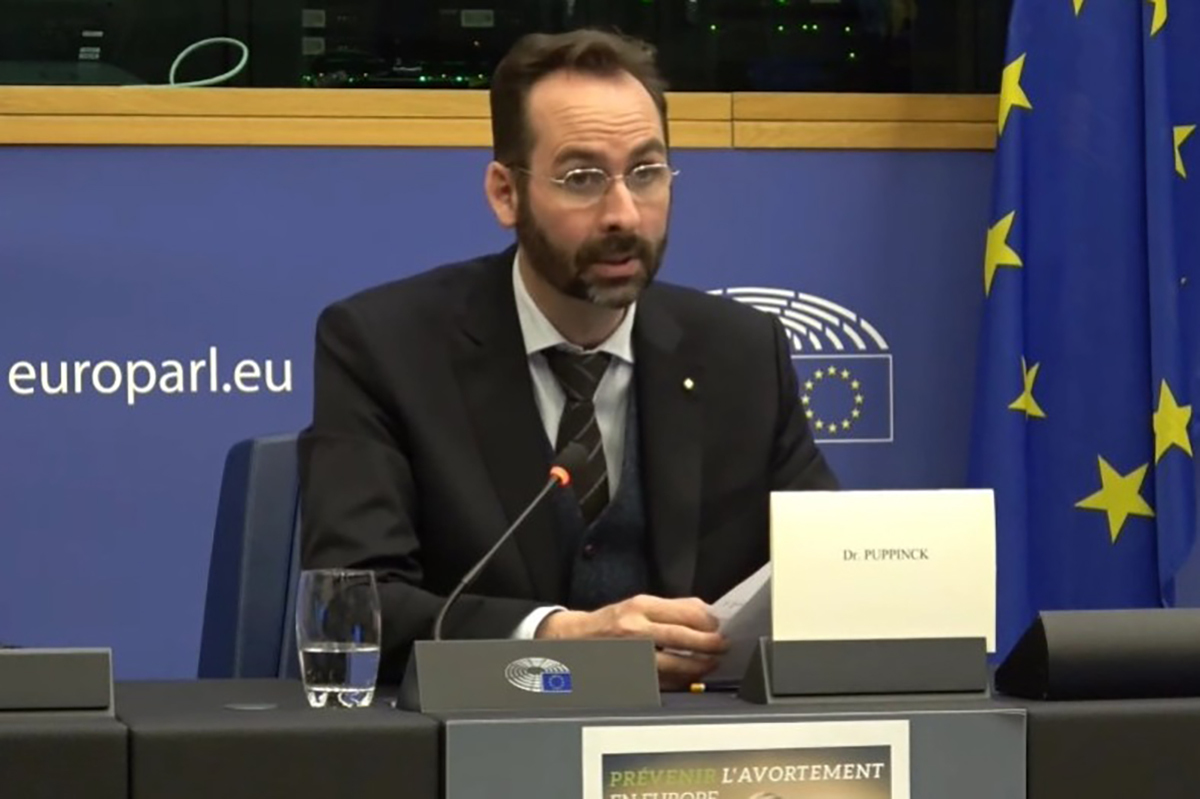
The European Centre for Law and Justice (ECLJ), a Christian legal group, has voiced strong opposition to this initiative. Grégor Puppinck, ECLJ’s director, has criticized the proposal, sending a letter to key European figures, including Ursula von der Leyen, denouncing the plan as an infringement on state sovereignty.
Puppinck argues that the initiative could undermine national legislative frameworks and diminish the EU’s credibility among citizens and member states opposed to abortion. He emphasizes that using EU financial mechanisms in this way could bypass national policies and raise concerns about the commission’s impartiality.
On behalf of the ECLJ, Puppinck outlined five reasons for rejecting the initiative. These include the limits of EU competence in abortion matters, the lack of a recognized right to abortion under European and international law, and the potential medical, psychological, and social repercussions for women.
Additionally, Puppinck highlighted the need for consistency and fairness in the commission’s treatment of ideologically opposed European Citizens’ Initiatives (ECIs), referencing the “One of Us” initiative.
This article was originally published at Christian Daily International
This article was originally written by www.christianpost.com