Controversial Social Media Posts Spark Debate Over Immigration Enforcement
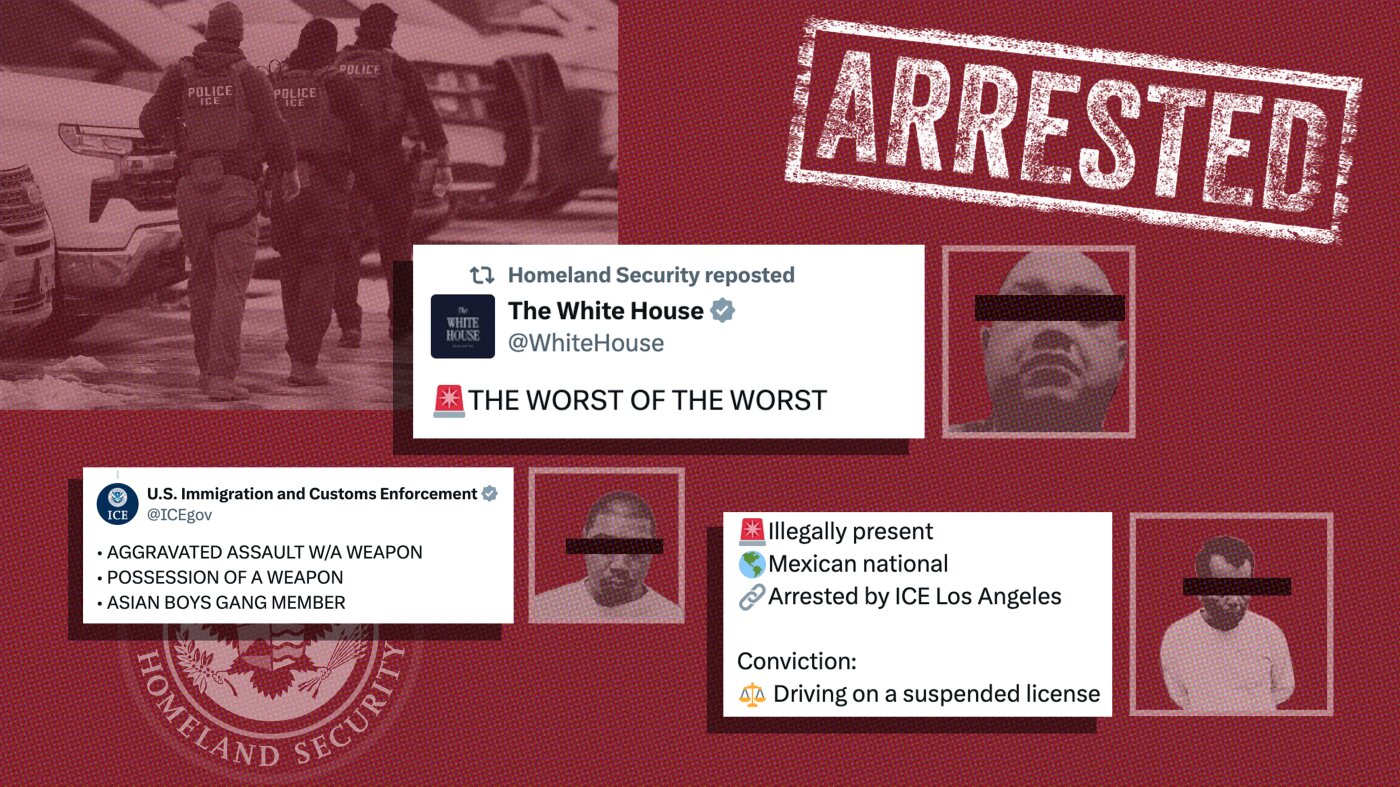
The recent arrest of At “Ricky” Chandee by U.S. Immigration and Customs Enforcement (ICE) has drawn significant attention due to a series of inaccuracies shared on social media. The White House’s X account mistakenly labeled the 52-year-old as the “WORST OF WORST” and a “CRIMINAL ILLEGAL ALIEN,” accompanying the claim with a photo of another individual. Chandee’s case highlights broader concerns about the portrayal of immigrants in official communications.
Chandee’s legal troubles date back to a single felony conviction for second-degree assault in 1993 when he was just 18. He served a three-year prison sentence and has since led a law-abiding life, according to his lawyer, Linus Chan. Despite being ordered to be deported back to Laos, practical barriers have allowed Chandee to remain in the U.S., where he has worked as an engineering technician for the City of Minneapolis.
Tim Sexton, Director of Public Works for the City of Minneapolis, expressed confusion over the decision to detain Chandee, stating, “I don’t understand why he would be a target for removal now, why he was brutally detained and swiftly flown to Texas, or how his removal benefits our city or country.” Chandee’s case is being challenged in federal court.
Broader Context of Immigration Enforcement
Chandee’s situation is not isolated. The White House and Department of Homeland Security (DHS) have increased their social media presence, frequently posting about individuals detained under immigration policies. These posts often depict detainees as serious criminals, although ICE data reveals that over 70% of detained individuals have no criminal records. NPR found that approximately a quarter of those highlighted have older or minor convictions, similar to Chandee.
Since last year, DHS and ICE have shared posts about over 2,000 individuals targeted in deportation efforts. An NPR review identified 130 cases in Minnesota, where the government’s statements about detainees’ criminal histories were often unverifiable or misleading, with some involving non-criminal charges like driving under the influence or disorderly conduct.
Implications of Social Media Campaigns
The emotional impact of these posts is significant, claims Leo Chavez, an anthropology professor at the University of California, Irvine. The portrayal of predominantly nonwhite individuals alongside criminal history statements is intended to evoke a strong public reaction. Chavez notes that even when inaccuracies are corrected, the initial message reinforces negative stereotypes.
Juliet Stumpf, a professor at Lewis & Clark Law School, likens the focus on individual cases to “FBI’s most wanted posters” and “reality TV shows,” suggesting that it skews public perception of immigrants. Research indicates that immigrants generally commit fewer crimes than U.S. citizens, yet the social media narrative often suggests otherwise.
Challenges to Official Narratives
DHS and ICE’s representations have faced pushback from local authorities and the judicial system. For example, Cottonwood County in Minnesota disputed claims made by DHS regarding their handling of detainees. Additionally, the Minnesota Department of Corrections has created a page to address misinformation from DHS.
In some instances, inaccuracies extend to DHS’s “Worst of the Worst” website, where non-violent offenses are occasionally listed as major crimes. Despite acknowledging these errors, DHS states the website serves to highlight individuals with additional criminal histories.
Overall, these social media campaigns have sparked debates about the portrayal of immigrants and the real impact of current immigration enforcement policies.
This article was originally written by www.npr.org