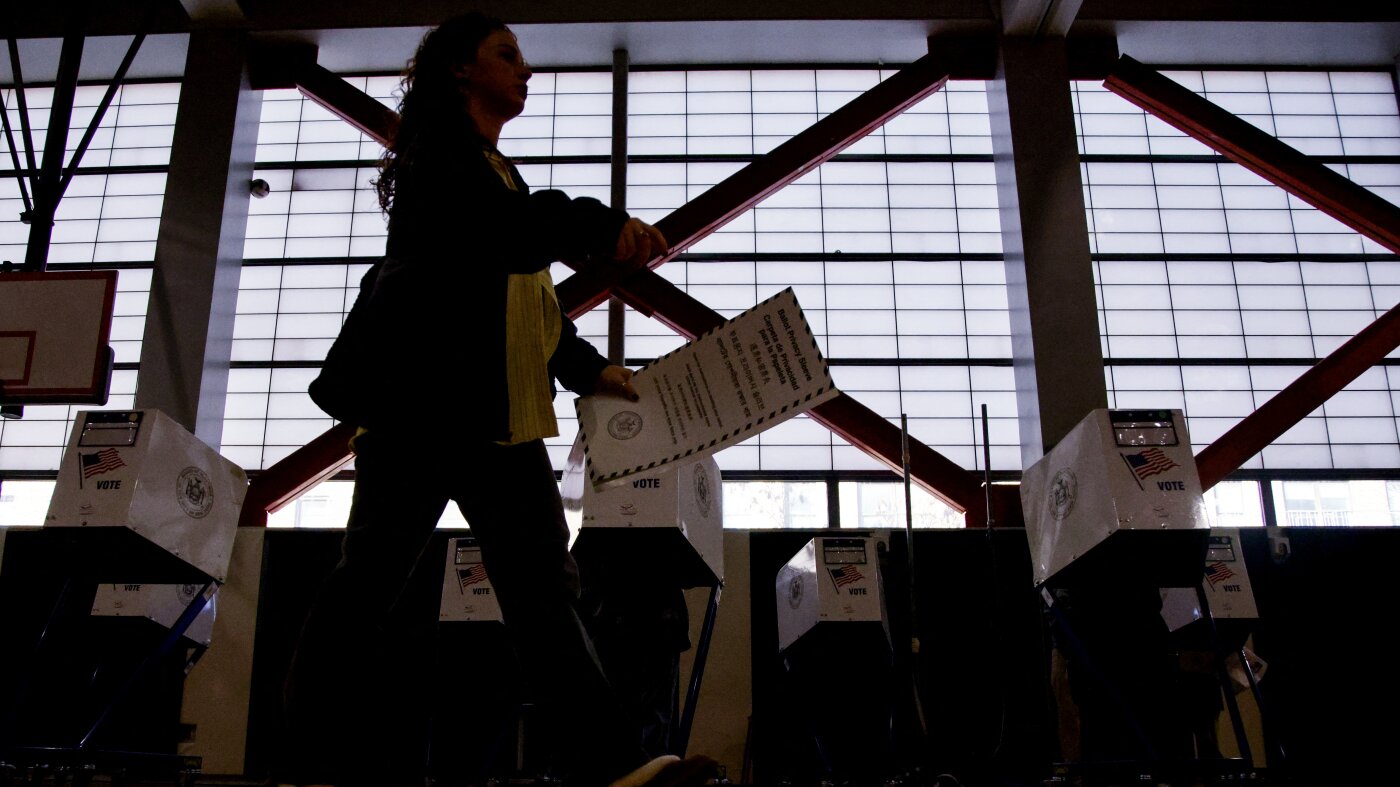
Debate Over National Guard Presence at Polling Places Gains Momentum
As the midterm elections approach, a new poll reveals a divided opinion among Americans on the presence of the National Guard at polling stations. While such an action would be illegal if ordered by the federal government, the idea finds significant support, especially among Republicans.
According to an NPR/PBS News/Marist poll, 46% of Americans are in favor of deploying the National Guard to monitor polling places, while 54% oppose it. This data point suggests a potential openness to federal intervention in elections, a notion supported by President Trump.
The legal use of the National Guard in elections is complex. While federal law prohibits using military personnel at polling places, state governors can deploy the Guard in various supportive roles. Florida State University professor Michael Morley noted that the current conflict with Iran and a recent terrorist incident in New York might make military presence more palatable to the public.
Morley stated, “I think the conflict with Iran and recent terrorist bombing attempt in New York may influence public opinion on this issue, especially over the next few weeks.”
President Trump has not explicitly called for the National Guard’s deployment for the midterms but has previously expressed regret over not using them in 2020 to seize election equipment. State and local officials have also voiced concerns over potential Guard deployments, fearing federal overreach.
Notably, the poll shows a partisan divide, with about 75% of Republicans supporting the Guard’s presence at polling locations, compared to a similar percentage of Democrats opposing it. This division underscores the ongoing debate over election security and federal involvement.
Americans’ Confidence in Elections Declines
Despite the controversy, two-thirds of Americans remain confident that state and local governments will conduct fair and accurate elections. However, this confidence has decreased since the 2024 election. Political polarization appears to contribute to this decline, with differing concerns among party lines.
Democrats worry about voter suppression and misinformation, while Republicans focus on voter fraud. Independents are split among these concerns. Experts like Paul Gronke from Reed College attribute this to the normalization of doubt-casting by political candidates.
Additional Findings
- The poll indicates widespread concern about artificial intelligence spreading misinformation during the elections, with over 80% of Americans expecting it to play a role.
- If the congressional midterms were held today, 53% of registered voters would support a Democratic candidate, with 44% favoring a Republican.
- President Trump’s approval rating stands at 38%, unchanged from previous surveys.
Methodology: The survey, conducted from March 2-4, involved 1,591 adults and has a margin of error of +/-2.8 percentage points. Respondents were contacted via various methods, including live callers, text, and online, in both English and Spanish.