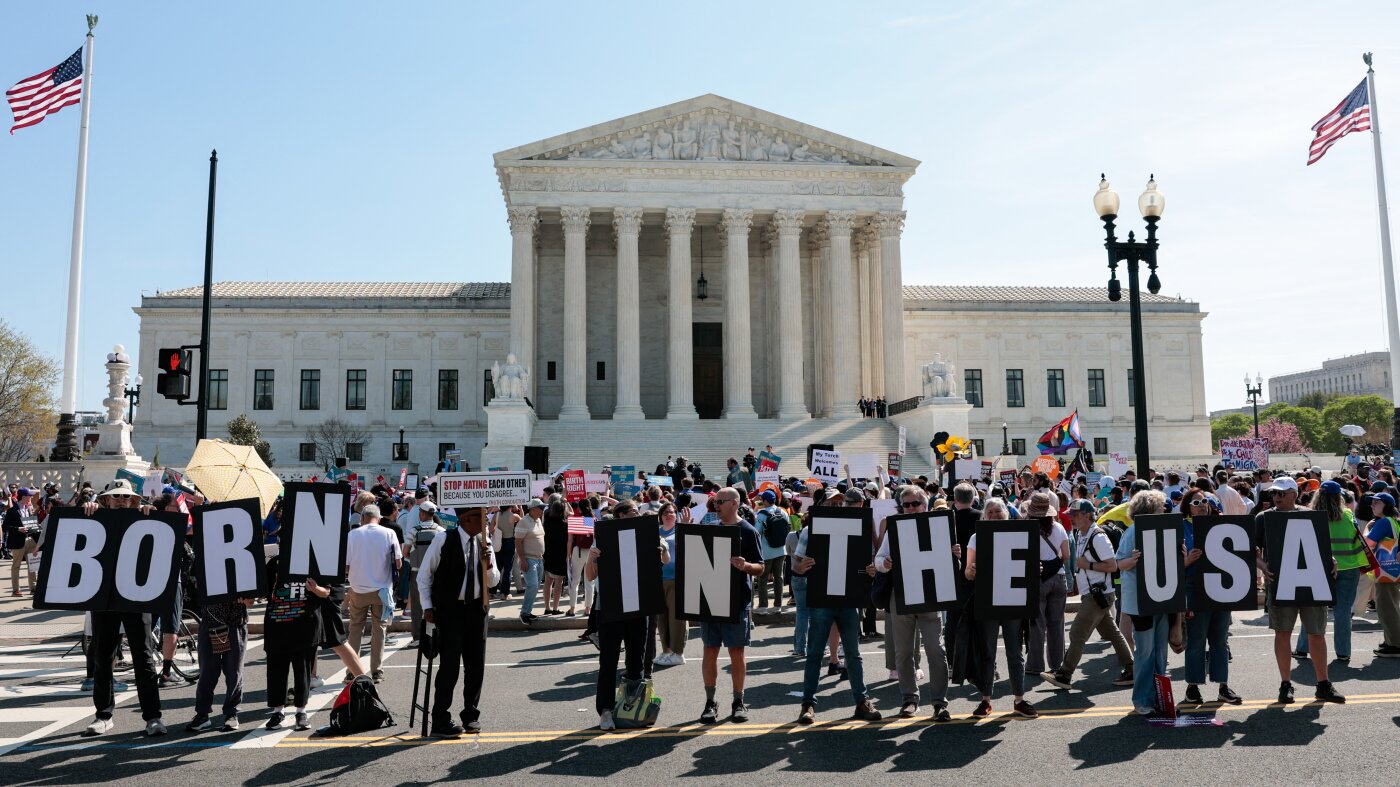
Supreme Court Justices Skeptical of Arguments Against Birthright Citizenship
In a lively session at the Supreme Court, justices expressed doubts about the Trump administration’s stance on birthright citizenship, questioning its applicability to children born to undocumented immigrants. The case has drawn significant attention, with Chief Justice John Roberts and other conservative justices, including Neil Gorsuch, Brett Kavanaugh, and Amy Coney Barrett, scrutinizing the arguments presented.
The questioning was particularly intense for Solicitor General D. John Sauer, representing the administration’s perspective. Some justices, like Roberts, found parts of Sauer’s arguments to be “quirky and idiosyncratic.” Meanwhile, both Gorsuch and Barrett seemed to play pivotal roles as potential swing votes, challenging both sides during the session.
Gorsuch raised historical considerations, asking Sauer about immigration laws dating back to 1868 when the 14th Amendment was enacted. He humorously remarked on Sauer’s sources as being akin to “going back to Roman law.” Gorsuch also commented on the use of the Supreme Court case Wong Kim Ark, noting, “I’m not sure you want to apply Wong Kim Ark.”
Kavanaugh, meanwhile, questioned the language differences between the 14th Amendment and the Civil Rights Act of 1866, pointing out the absence of the phrase “not subject to any foreign power” in the former. Sauer maintained that both laws shared the same intent, prompting Kavanaugh to probe further, asking, “Why didn’t they say the same thing?”
The justices also discussed the relevance of birthright citizenship laws in other countries, with Kavanaugh dismissing their significance in the legal interpretation of U.S. law. Justice Barrett found certain aspects of Sauer’s reasoning “puzzling,” particularly regarding the choice of citizenship by place of birth (jus soli) over bloodline (jus sanguinis).
On the other side, Cecillia Wang, legal director of the American Civil Liberties Union, faced tough questions, especially from Justice Samuel Alito. Alito challenged Wang on the 14th Amendment’s intent, with Wang referring to Wong Kim Ark to clarify ambiguities between the laws.
President Trump made a notable appearance at the Supreme Court during the proceedings, marking the first time a sitting president attended oral arguments at the court. A decision is anticipated this summer, and the case remains closely watched.
Stay tuned for updates on this developing story.
This article was originally written by www.npr.org