Construction at the White House Faces Legal and Public Challenges Amid Security Concerns
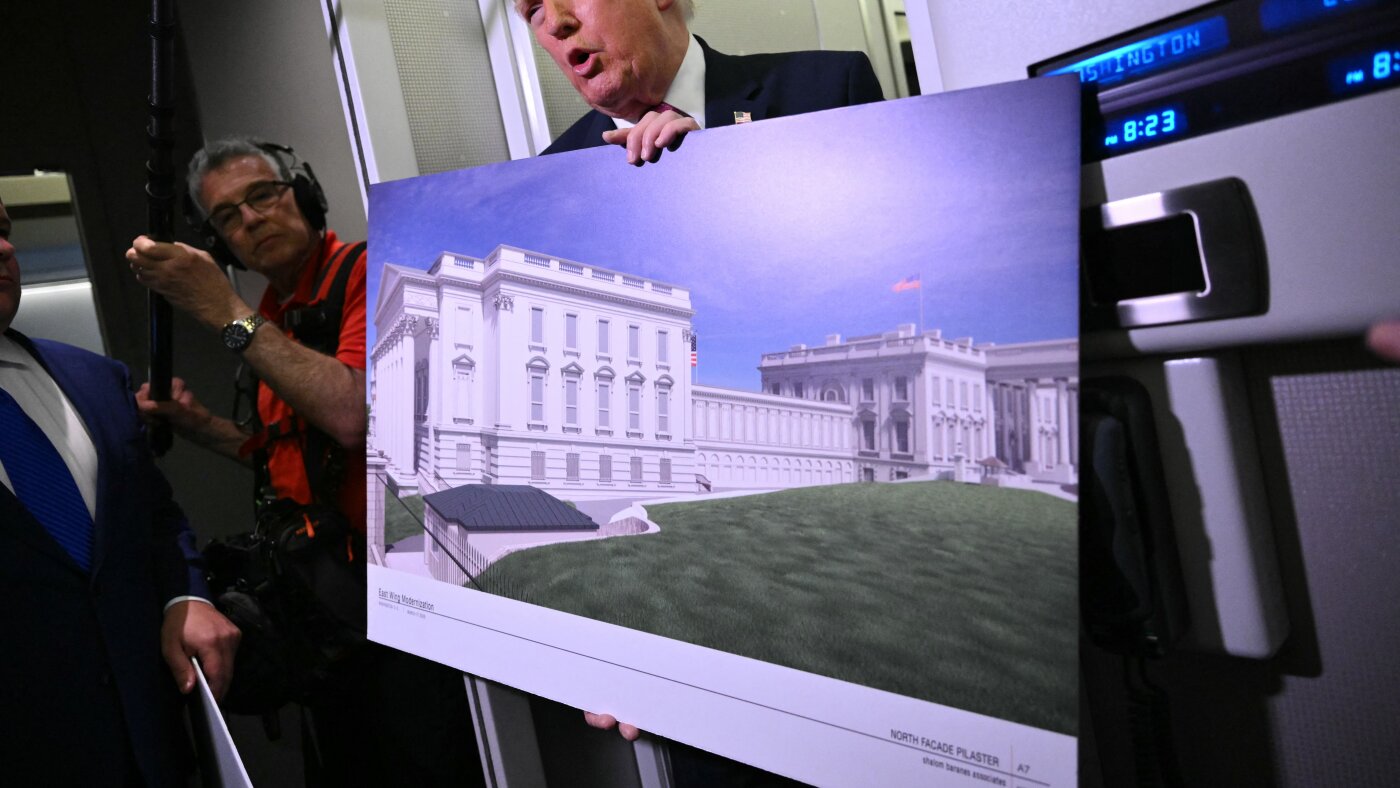
A dramatic overhaul of the White House’s East Wing is unfolding, driven by President Trump’s vision for a grand ballroom. However, the project has unearthed not only architectural controversies but also significant national security implications.
The demolition of the East Wing began in October, paving the way for a massive ballroom project estimated to cost upwards of $300 million. Despite President Trump’s enthusiasm for the ballroom, public sentiment largely leans towards disapproval, with vocal opposition from architectural and conservation groups. One such group filed a legal challenge in December, seeking to halt the construction.
The legal battle took a significant turn when U.S. District Court Judge Richard Leon sided with the National Trust for Historic Preservation, ruling that the ballroom’s construction “must stop until Congress authorizes its completion.” While the White House has appealed this decision, Judge Leon has allowed construction to continue temporarily for reasons of “safety and security.”
President Trump maintains that the project is essential for national security, describing it as more than just an aesthetic enhancement. The ballroom is part of a broader plan that includes a military complex beneath it, revealed due to the lawsuit.
Military Complex and Security Features
Trump disclosed that the military is constructing a complex beneath the ballroom, which he describes as “a shed for what’s being built under.” The ballroom will feature high-grade bulletproof glass windows designed to protect the underground facility from potential threats, including drones.
Historical references to the Presidential Emergency Operations Center (PEOC) have surfaced, a World War II-era bunker that served as a command center. However, the current state of the PEOC remains unclear amid the ongoing renovations.
The Secret Service has confirmed its involvement in the project, emphasizing the necessity of maintaining security during construction. Secret Service Deputy Director Matthew Quinn stated that any pause would compromise their protective mission.
Historical Context and Public Skepticism
The East Wing’s original bunker was constructed during Franklin D. Roosevelt’s presidency, with substantial upgrades over the decades. However, the existence and purpose of the new construction have raised questions similar to those during past administrations.
During Barack Obama’s presidency, a major excavation near the West Wing sparked speculation about bunker-related construction, despite official statements describing it as a routine upgrade of air-conditioning and electrical systems.
Recent reports and speculation suggest the current project may also be security-related, a notion fueled by the secrecy surrounding the construction details and the lawsuit’s revelations.
Public Reaction and Future Implications
Critics have expressed concerns over the project’s scale, lack of congressional approval, and potential environmental and historical impacts. Public comments have been solicited, and a National Capital Planning Commission meeting in January highlighted the project’s top-secret elements.
Despite the legal and public challenges, the commission recently approved a revised version of the ballroom plan, allowing the project to proceed as legal battles continue.
This article was originally written by www.npr.org