Virginia Voters Back Democrat-Led Redistricting Amid National Political Tensions
In a significant move that could reshape congressional representation, Virginia voters have narrowly approved a constitutional amendment aimed at reshaping the state’s legislative map. This development comes amid a broader political strategy to counteract Republican-led redistricting efforts across the nation.
The amendment, supported by Democrats, seeks to bypass the state’s redistricting commission, allowing lawmakers to directly implement a new electoral map. The Virginia delegation, currently composed of six Democrats and four Republicans, could see a shift to ten Democrats and one Republican if the new map is enacted. However, this change faces potential legal challenges that could delay its implementation.
Meanwhile, Republican lawmakers in Florida, as prompted by Governor Ron DeSantis, are gearing up for a special session to discuss potential redistricting that could enhance their electoral prospects. Read more about the Florida special session here.
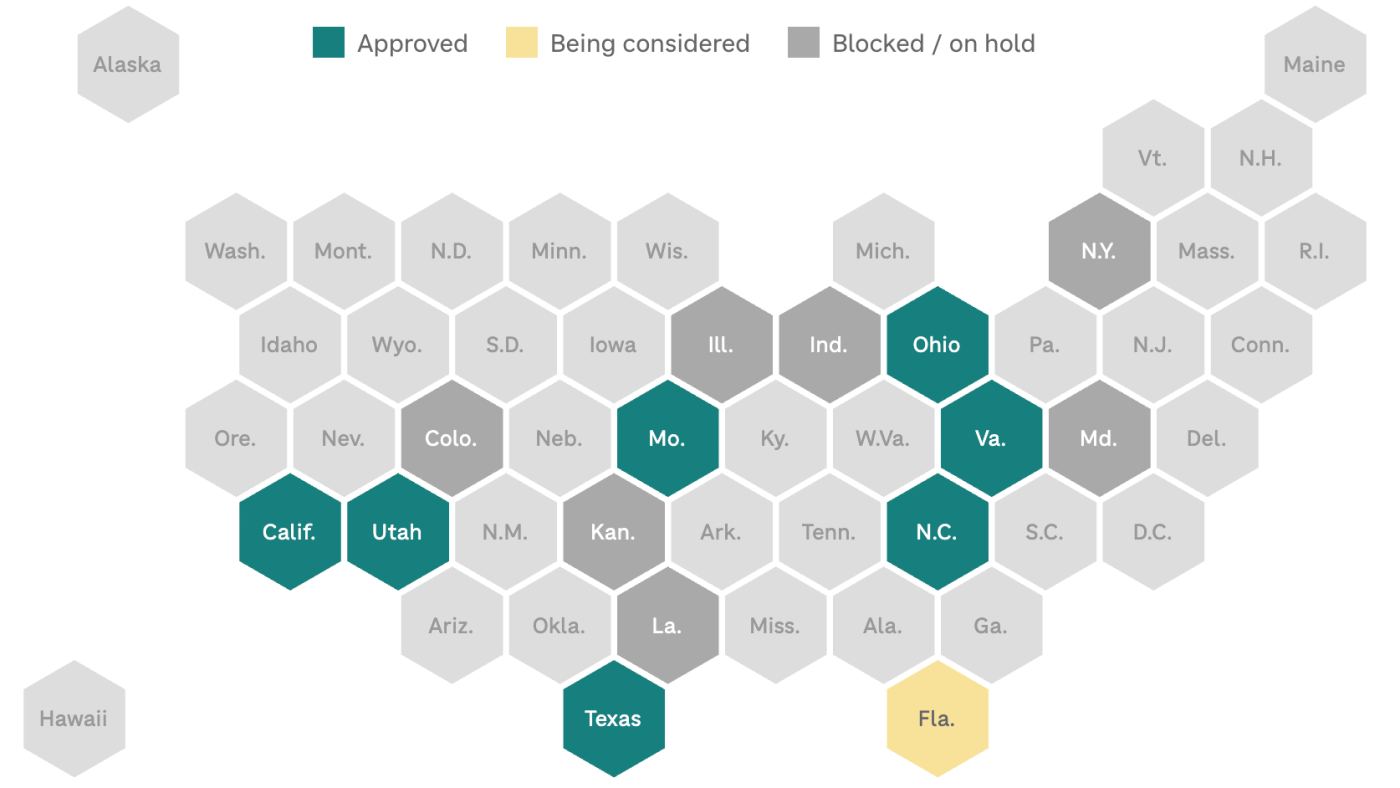
Virginia’s decision reflects a growing trend seen in states like California and Texas, where both parties are seeking strategic advantages through redistricting. In Texas, Republicans have embarked on a mid-decade redistricting effort, while California’s Democratic-led initiative aims to create five additional Democratic-leaning districts.
Redistricting: A Political Tool for Gaining Advantage
Redistricting, the process of redrawing district boundaries based on census data, is a powerful tool for shaping political power dynamics. It often leads to gerrymandering, where boundaries are manipulated to favor one party. The current political landscape sees Republicans holding a slight majority in the U.S. House of Representatives, a situation that usually shifts during midterm elections when the party in the White House typically loses seats.
Across the country, states like North Carolina, Missouri, and Ohio have made changes that favor Republicans, potentially adding nine seats to their column. However, Democrats have also made gains, notably in Virginia, California, and Utah, improving their position.
As Trump continues to push for redistricting to solidify Republican control, some states like Kansas and Indiana have resisted, despite pressure from the former president. Similarly, Democratic efforts in Maryland have stalled due to lack of legislative support.
Potential Impact on Upcoming Elections
With upcoming primaries, Florida remains a pivotal state to watch. Governor DeSantis’ call for a special legislative session could result in further redistricting efforts. Yet, following Democratic successes in recent special elections, Florida Republicans face a dilemma: whether to pursue further district realignments or maintain their current stronghold.
The larger picture includes a pending Supreme Court decision on the Voting Rights Act, which could influence future redistricting by potentially weakening legal challenges to gerrymandering. This decision could prompt GOP-led states to expedite redistricting plans before the next election cycle.
This article was originally written by www.npr.org