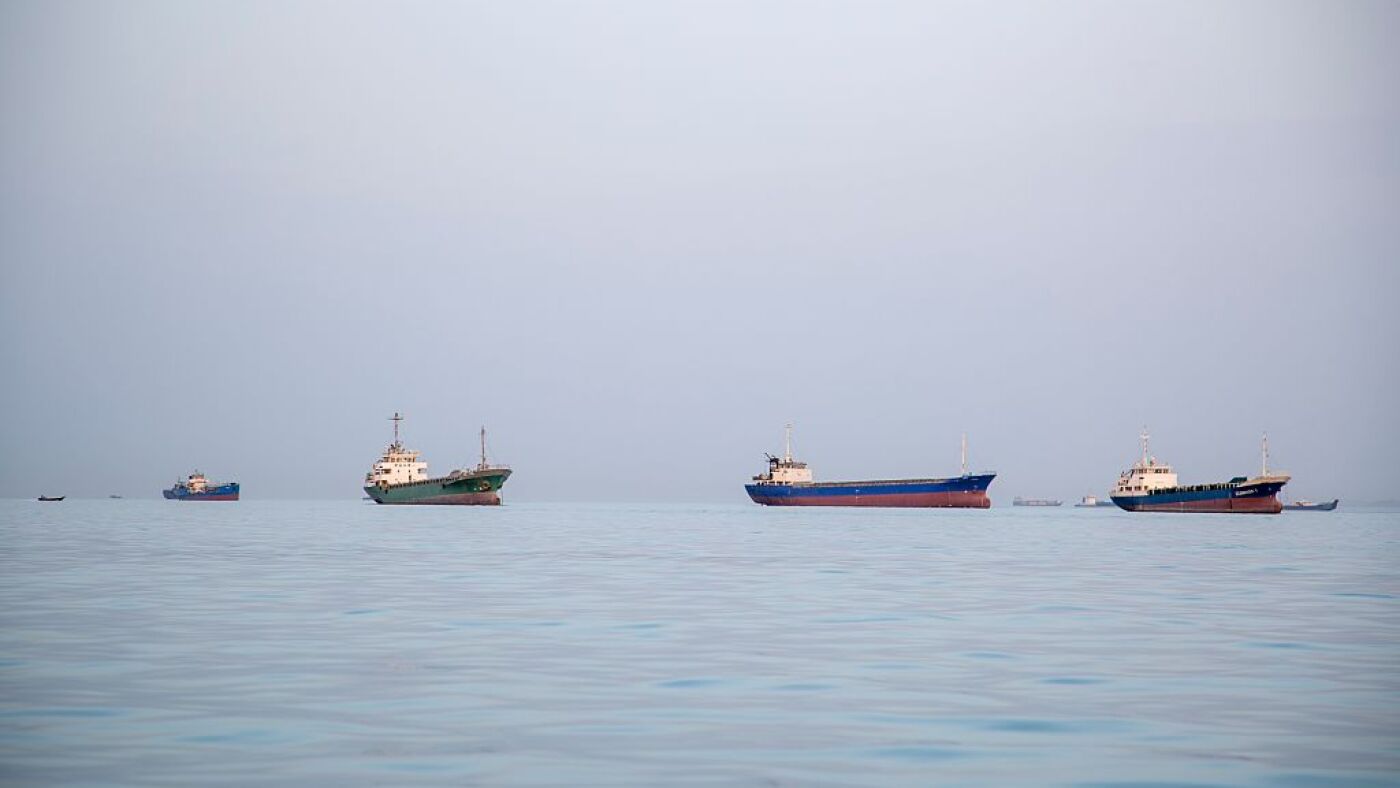
Ships are anchored near the shoreline in Bandar Abbas, Iran, on Wednesday. Bandar Abbas is a port city and the capital of Hormozgan province, along the Persian Gulf and Strait of Hormuz.
Getty Images
hide caption
toggle caption
Getty Images
Amid escalating tensions in the Persian Gulf, the U.S. military recently intercepted an Iranian oil tanker in the Indian Ocean. This action follows Iran’s seizure of two commercial vessels in the critical Strait of Hormuz.
President Trump announced via social media his directive for the Navy to eliminate any boat laying mines in the Strait of Hormuz. Additionally, the U.S. is intensifying its minesweeping operations in the area.
Just days earlier, Trump extended a ceasefire with Iran indefinitely, stating “no time pressure” exists for ending the truce or beginning new talks. However, Iran has deemed the extension insignificant, citing the U.S. naval blockade of Iranian ports as a breach of the agreement. Iran insists on lifting the blockade before resuming negotiations.
Since the blockade’s initiation, the U.S. Central Command has instructed 31 vessels to alter their routes. The ongoing standoff has disrupted shipments through the Strait of Hormuz, a vital passage for about 20% of the world’s oil and natural gas. Consequently, Brent crude oil prices have surged past $100 per barrel.
Developments in the Middle East
Following Trump’s declaration, Iran targeted and captured three commercial ships in the strategic waterway, tightening its hold on this vital shipping corridor.
In a related development, Lebanon is engaging in discussions with Israel in Washington, aiming to extend a U.S.-brokered ceasefire. This initiative comes after Israeli airstrikes in southern Lebanon resulted in the deaths of five individuals, including a journalist.
Meanwhile, the Pentagon experienced a shakeup, as U.S. Navy Secretary John Phelan was dismissed amid ongoing tensions with senior officials, including Defense Secretary Pete Hegseth.
Israel-Lebanon Dialogue
Israel and Lebanon plan to hold further talks in Washington, aiming to prolong their delicate ceasefire. The discussions follow unprecedented high-level contact between the nations in decades, as Lebanon seeks to halt hostilities with the Iran-backed Hezbollah group.
Lebanon also aims to secure the withdrawal of Israeli troops occupying southern regions, where Israel intends to establish a “buffer zone” to deter Hezbollah attacks. The Israeli government has urged Lebanon to pressure Hezbollah into disarming.
Hezbollah spokesperson Salman Harb told NPR that the group reserves the “right to resist” should Israel fail to withdraw.
Recent Israeli strikes have resulted in the deaths of five individuals, including Lebanese journalist Amal Khalil. The Lebanese government has accused Israel of deliberately targeting journalists, an allegation Israel denies, stating its actions were in response to an imminent threat.
Shakeup at the Pentagon
The dismissal of Navy Secretary John Phelan marks another significant change at the Pentagon. Undersecretary Hung Cao will temporarily assume Phelan’s role. This development comes amid criticism of instability and dysfunction within the Department of Defense under President Trump and Secretary Hegseth.
Phelan, a billionaire investor without naval experience, was responsible for the Navy’s budget and personnel but not day-to-day operations in the Middle East. His departure is the latest in a series of high-profile exits from the department.
Jane Arraf in Amman, Jordan, Kat Lonsdorf and Jawad Rizkallah in Beirut, Lebanon, Rebecca Rosman in London and Greg Myre Washington contributed reporting to this story.