Rediscovery of Ancient Christian Texts Sheds Light on Early Scripture
An international research team, spearheaded by the University of Glasgow, has achieved a groundbreaking recovery of lost pages from one of the earliest New Testament manuscripts. This significant find includes the letters of Apostle Paul, providing fresh insights into how early Christians engaged with Scripture.
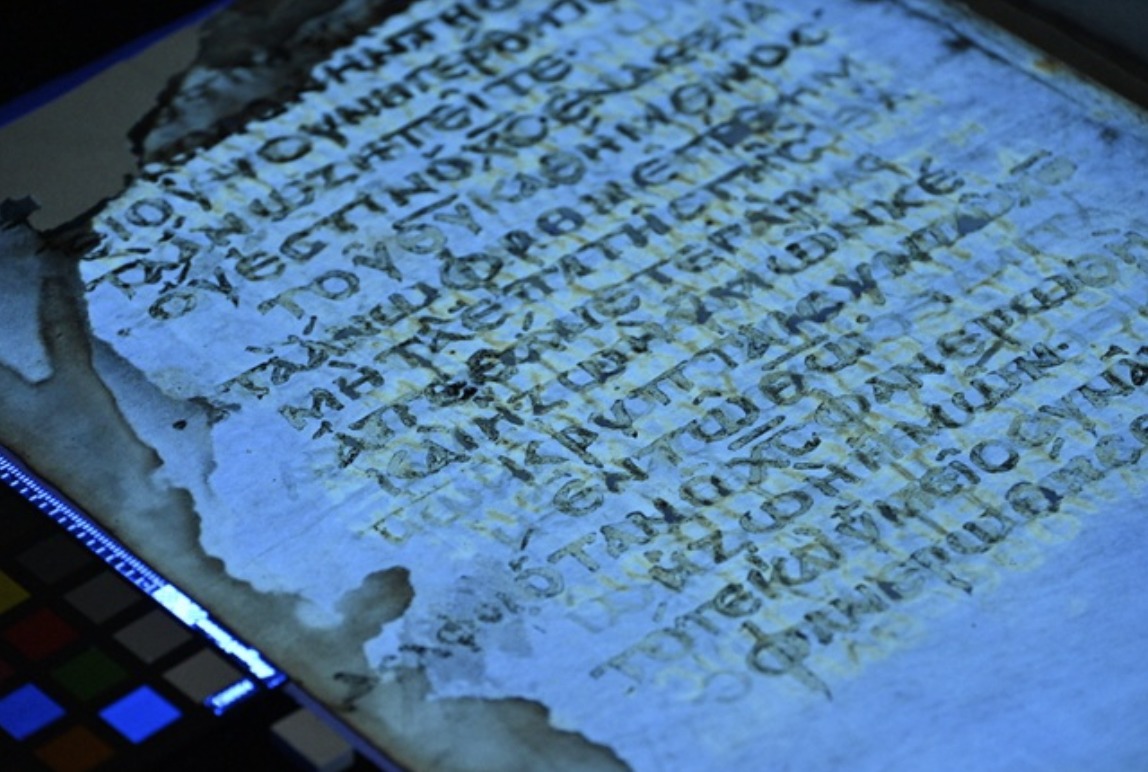
Using cutting-edge imaging technology, the team successfully retrieved 42 missing pages from Codex H, a sixth-century Greek manuscript. Known also as GA 015, this ancient text was initially disassembled in the 13th century at a Mount Athos monastery, where its parchment was repurposed for other books. Over time, the fragments became dispersed across European libraries, with many considered lost forever, according to an announcement from the university.
The researchers employed multispectral imaging, a method that uses varying light wavelengths, from ultraviolet to infrared, to unveil faint ink traces transferred between reused pages. This innovative approach allowed scholars to reconstruct the long-hidden text.
“We knew that at one point, the manuscript was re-inked,” said Professor Garrick Allen of the University of Glasgow. “The chemicals in the new ink caused ‘offset’ damage to facing pages, essentially creating a mirror image of the text … [it is] very clear with latest imaging techniques.”
Among the discoveries are early chapter lists for Paul’s letters, which differ from contemporary Bible divisions, and annotations by scribes that illuminate the intellectual and devotional practices of early Christians. The manuscript’s condition also highlights medieval practices of repurposing texts, offering insights into the historical treatment of sacred writings.
Professor Allen emphasized the significance of these findings, stating, “Given that Codex H is such an important witness to our understanding of Christian Scripture, to have discovered any new evidence — let alone this quantity — of what it originally looked like is nothing short of monumental.”
In collaboration with experts in Paris, radiocarbon dating confirmed the manuscript’s sixth-century origins. The project was a joint effort with the Early Manuscripts Electronic Library and benefited from the support of various research foundations, alongside cooperation from the monastery holding parts of the manuscript.
This discovery coincides with another remarkable archaeological find in Jerusalem, where a 2,700-year-old clay fragment featuring an Assyrian inscription was unearthed near the Temple Mount. Discovered during an excavation led by the Israel Antiquities Authority and the City of David Foundation, this artifact is believed to be part of a seal used for authenticating official documents.
Research indicates the clay’s origin from the Tigris basin, suggesting it arrived in Jerusalem via Assyrian official correspondence. Israeli tour guide Yoav Rotem linked the artifact to the era of King Hezekiah, referencing biblical accounts of tensions between Judah and Assyria, as recorded in 2 Kings 18.
This article was originally written by www.christianpost.com