
The Transformation of Washington D.C.: A Look at Trump’s Ambitious Infrastructure Agenda
A wave of construction and aesthetic changes is sweeping across Washington D.C., led by President Trump, who seeks to leave a lasting mark on the nation’s capital not only through policy but also through extensive remodeling. This initiative, undertaken by the former real estate mogul, envisions a radically different landscape for the city.
President Trump, who considers construction as a secondary vocation to the presidency, has initiated numerous projects across Washington D.C. “I have two jobs,” Trump said in late 2025. “I have a construction job, which is really like relaxation for me because I have been doing it my entire life.”
Some of the changes are temporary, such as the large banners of Trump’s face on federal buildings. Others involve significant alterations to the White House decor and other historical sites. For example, the Rose Garden has been paved over, and the Oval Office now features a gilded design.
Architect Neil Flanagan comments on Trump’s approach, noting that his emphasis on personal style and brand is particularly unique to his current term. “They all sort of declare the glory of America rather than actually building any kind of growth or future for America,” Flanagan says.
Major Initiatives: Reflecting Pool, Golf Courses, and More
Reflecting Pool
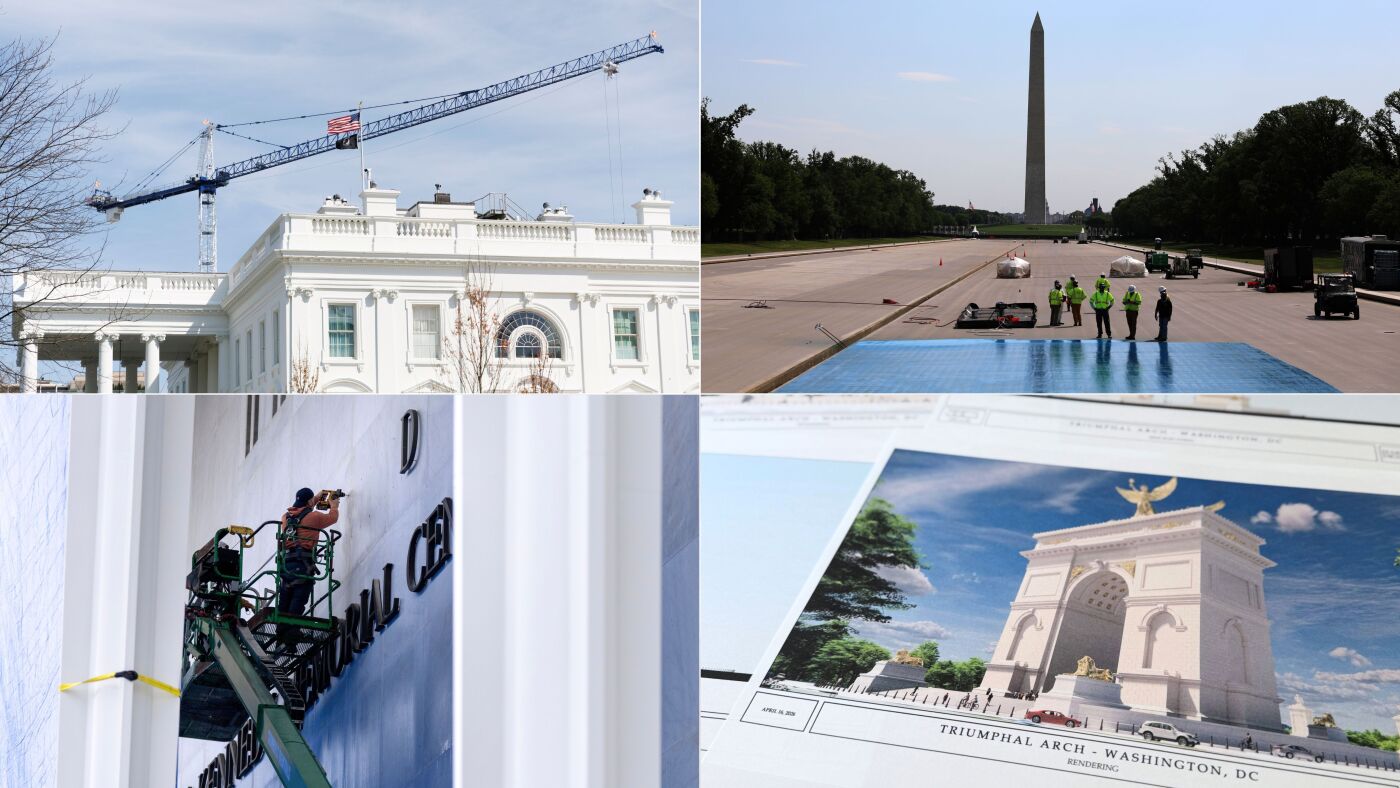
The Lincoln Memorial Reflecting Pool is undergoing a resurfacing process, with Trump opting for a bold “American flag blue” shade. This project, which addresses past structural issues, is slated for completion by the end of May, according to the Department of Interior.
Golf Courses
The administration is also eyeing control over D.C.’s public golf courses, particularly East Potomac Golf Links, with plans to upgrade them to championship standards. This has sparked legal challenges from local golfers concerned about accessibility and affordability.
National Garden of American Heroes
Trump’s vision for a sculpture garden featuring historically significant Americans has been revived. Initially proposed in 2020, the project aims for a July 4, 2026 opening, although its timeline and location remain uncertain.
Controversial Statues
The reinstallation of the statue of Confederate Gen. Albert Pike and the addition of a Christopher Columbus statue have stirred debate, reflecting Trump’s commitment to honoring controversial historical figures.
Triumphal Arch
Plans for a 250-foot “victory arch” near the Lincoln Memorial have been approved, despite public opposition and legal challenges. The arch is intended to commemorate the nation’s 250th anniversary.
White House Ballroom
The East Wing has been demolished to construct a new ballroom, a project estimated to cost $300 million and complete by 2028. Legal disputes over its necessity and authorization continue.
Kennedy Center Renovations
Trump has taken control of the Kennedy Center, initiating a $257 million renovation project. While the administration describes it as necessary maintenance, critics argue it lacks proper oversight.
Eisenhower Executive Office Building
The administration’s proposal to paint the historic Eisenhower Executive Office Building white has faced opposition from preservation groups, citing potential harm to the building’s integrity.
Lafayette Square
Lafayette Square has been closed off for renovations, part of a larger effort to prepare for the semiquincentennial celebrations. Security and vandalism concerns have driven these temporary measures.
Federal Architecture
Trump’s executive orders favor neoclassical architecture for federal buildings, a move that has reignited debates about the aesthetic direction of government structures.
D.C. Beautification Projects
An executive order aims to beautify D.C. through various projects, including park restorations and increased security measures, funded by a proposed $10 billion budget.
This article was originally written by www.npr.org




