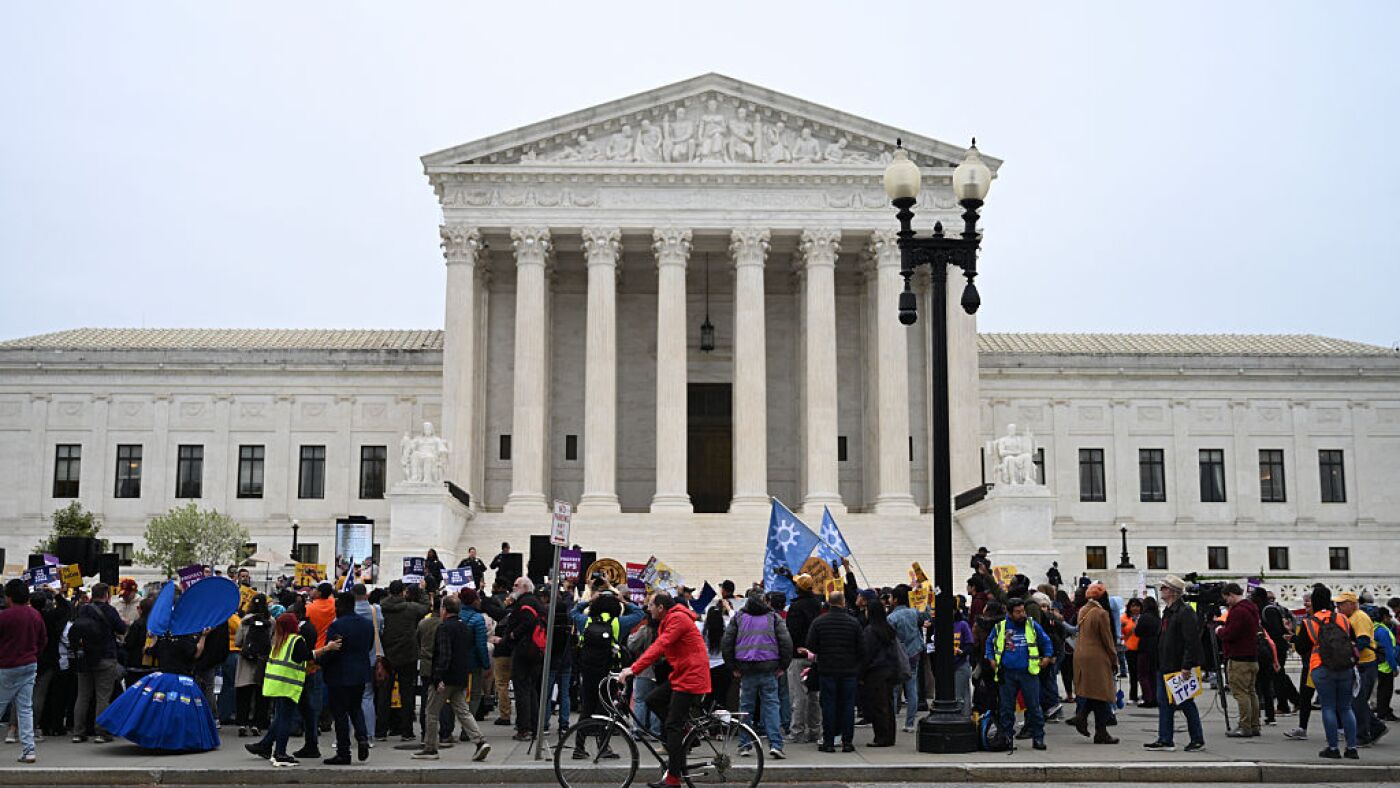
Supreme Court Faces Call to Dismiss Case on Haitian TPS Amid New Evidence
The legal battle over the Temporary Protected Status (TPS) of Haitian immigrants in the United States has taken a new turn. Lawyers representing Haitian nationals have urged the Supreme Court to reconsider a case that could potentially lead to the deportation of over 330,000 Haitians, citing newly uncovered evidence.
On Tuesday, a motion was filed by the attorneys to dismiss the Trump administration’s efforts to end TPS for Haitians. This program was originally established by Congress in 1990 to aid individuals unable to safely return to their home countries due to civil unrest or natural disasters. In Haiti’s case, the devastating 2010 earthquake, which claimed over 200,000 lives, left the nation grappling with ongoing challenges, including gang violence, cholera outbreaks, and a lack of effective governance. The U.S. had extended TPS to Haitians in 2010, a status that has been continuously renewed.
The Trump administration’s attempt to terminate these protections has been contested by TPS recipients, who argue that the necessary legal procedures were not followed. Interestingly, the Supreme Court agreed to hear the case even before a federal appeals court reviewed it, a rare judicial move.
As the June decision deadline approaches, the motion presented this week highlights new Department of Homeland Security (DHS) documents. The documents reportedly reveal that the decision to end TPS for Haitians was predetermined, with recommendations from “career staff” being overridden by a “political appointee.” This raises questions about adherence to established procedures.
The core issue in this legal debate is whether the judicial system can scrutinize the executive branch’s decision-making process regarding TPS for Haitians. During oral arguments, the administration argued against court intervention in such executive determinations. However, under questioning from Justice Amy Coney Barrett, it was conceded that courts could evaluate claims of racial discrimination. The Haitian immigrants have argued that the TPS revocation was racially motivated.
Given the emerging evidence, the immigrants’ legal team contends that the Supreme Court is not yet equipped to make a decision on the case. “Until discovery is complete, the Court lacks a firm factual foundation on which to judge the merits of respondents’ claims,” the motion asserts. It is anticipated that the court will seek a response from the administration.
Alex Wroblewski/AFP via Getty Images