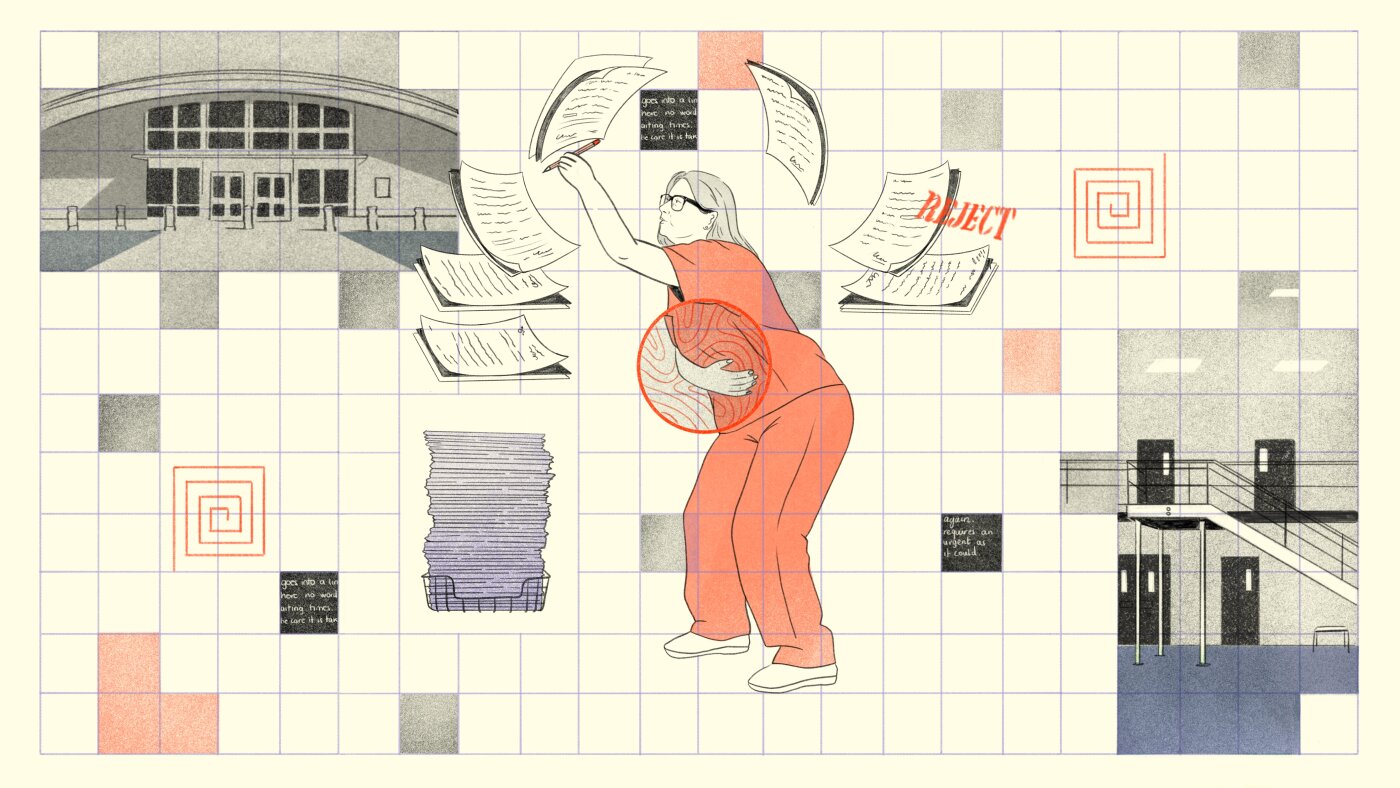
Prison Grievance System Faces Criticism Amid Dismal Success Rates
For incarcerated individuals, a grievance system is often the only avenue to voice concerns ranging from minor inconveniences to serious abuse. Yet, for many, this path leads to a dead end, according to a joint analysis by The Marshall Project and NPR.
In 2016, a federal prison doctor identified a small mass on Terri McGuire Mollica’s uterus, which required a simple surgery to remove. However, officials at FCI Aliceville, a women’s low-security prison in Alabama, failed to schedule the procedure, as documented in court records. Mollica, who began experiencing severe symptoms, including fainting and intense pain, saw her condition worsen over time.
The grievance system, meant to address such issues, instead often fails to provide resolutions. Data shows that the approval rate for grievances has plummeted from nearly 7% in 2000 to less than 2% in 2023, the latest complete year of data available. Many grievances are dismissed for procedural errors without considering the complaint’s content.
The Bureau of Prisons is aware of this decline in approval rates and claims to be working on improvements. “The program is intended to solve problems and be responsive to issues raised by inmates,” stated Randilee Giamusso, a Bureau spokesperson. However, federal law mandates that prisoners must exhaust the grievance process before filing a lawsuit, often obstructing their path to court.
Mollica’s attempts to navigate this complex system exemplify the challenges faced by many. Her initial lawsuit was dismissed because she hadn’t completed the grievance process. Although she had mailed her final appeal, it was never logged in the system. After years of waiting, doctors now recommend a full hysterectomy due to her condition’s progression.
The Bureau’s system is increasingly seen as a barrier rather than a solution. In 2023, fewer than 1% of medical grievances were granted. Comparatively, state prison systems in California and Georgia reported higher approval rates for grievances.
Common reasons for grievance rejection include trivial errors like using a pencil instead of a pen or misspelling a name. Spokesperson Giamusso denied such reasons as grounds for rejection, emphasizing the need for legible submissions.
Experts argue that the system’s complexity serves prison officials’ interests by minimizing the number of grievances that make it to court. The 1996 federal law does not require prisons to prove their grievance systems are fair, potentially incentivizing obstruction.
The Federal Prison Oversight Act, passed in 2024, aims to provide another route for accountability by establishing an independent ombudsman. However, implementation is pending due to funding constraints.
Mollica continues to wait for her surgery, facing a lengthy legal battle and ongoing health challenges. Despite a court ruling in her favor, systemic issues within the grievance process remain unresolved.
Data reporting and visuals by Ilica Mahajan and Anna Flagg of the Marshall Project, with additional graphics work by NPR’s Connie Hanzhang Jin. Art direction and photo editing by NPR’s Emily Bogle and Celina Fang at the Marshall Project.
“`
This article was originally written by www.npr.org