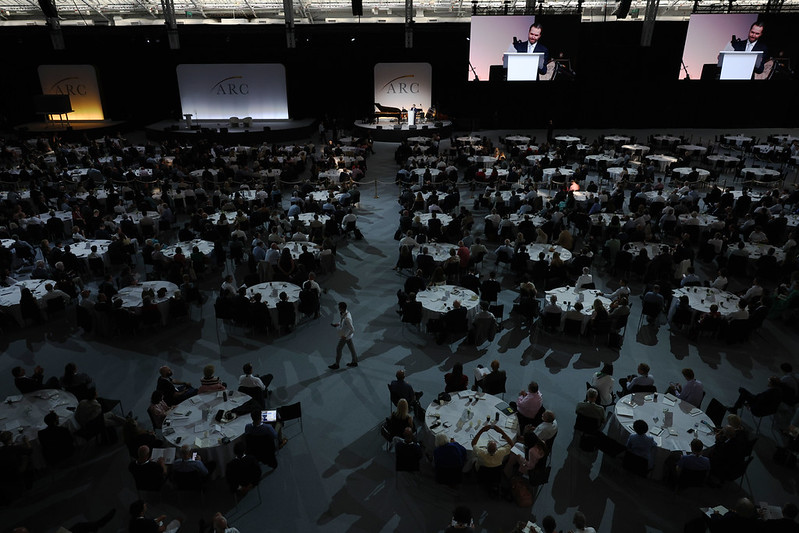
(Photo: Ryan Jenkinson/Parsons Media)
The second day of the Alliance for Responsible Citizenship (ARC) conference shifted focus from analyzing the decline of Western civilization to envisioning its reconstruction. The conference highlighted the necessity for a “mindset shift” encompassing various societal elements such as technology, energy, economy, family, education, and art. A significant consensus emerged among speakers that restoring Western civilization is intertwined with a revival of its Christian roots.
Michael Shellenberger, a journalist and author, addressed the diminishing belief in a transcendent God, correlating it with the rise of inequality and suffering. He noted the trend of attributing societal problems to civilization itself, driven by unmet spiritual and psychological needs due to waning Christian faith.
Shellenberger observed that attempts to bolster Christian faith have largely “failed,” with only minor signs of increased religiosity. He criticized “anti-civilization activists” for exploiting the decline in belief in a higher power to promote utopian ideals that misrepresent reality.
He argued for clarity in exposing the detrimental impacts of anti-civilization policies, emphasizing the enduring value of Western civilization as a humane social structure deserving of faith.
Ross Douthat, a conservative Catholic thinker, warned of a potential “mass extinction” of traditional customs and cultural institutions, such as marriage and family, without deliberate preservation efforts. He highlighted a “crisis of faith” in both divine and societal values, leading to increased reliance on digital interactions instead of genuine human connections.
Douthat predicted that only societies with strong faith will endure, advocating for both religious conviction and optimism about human life’s value.
Melanie Phillips, a Jewish commentator, focused on education as vital for cultural transmission. She criticized current educational trends for promoting moral relativism, which undermines Western civilization’s perceived greatness. Phillips stressed the importance of teaching children to appreciate the West’s Christian and Jewish foundations.
Former politician Ayaan Hirsi Ali emphasized the need to challenge the prevailing “feel good” culture, advocating for a return to acknowledging God as “transcendent” and “Creator.”
Nigel Farage, leader of the Reform party, echoed the sentiment of restoring community bonds central to Britain’s Christian heritage. He expressed a desire to address community and family breakdown, suggesting that government can at least promote the benefits of family and community living.
Rod Dreher, author of The Benedict Option, advocated for a renewed appreciation of the West’s “sacred story.” He expressed concerns about AI and digital technology eroding human connections in favor of artificial ones.
Theologian Dr. Johannes Hartl noted an increasing openness among youth to spiritual awakening, stressing the need for genuine religious conversion and prayer. He called for churches to become true “houses of prayer.”
Dreher concurred, urging Christians to guide young people searching for meaning and community, warning of the risks of losing them to extremist ideologies if action is not taken.
This article was originally written by www.christiantoday.com