An Executive Order by Trump Faces Legal Challenges Over Mail-In Voting
President Trump’s recent executive order aiming to restrict mail-in voting has encountered legal obstacles. A U.S. District Judge in Boston has temporarily blocked parts of the directive, which has yet to impact mail-in voting for the current midterm primary elections.
The legal confrontation is expected to persist as Trump’s executive order stretches the limits of presidential power under the Constitution. It is primarily the responsibility of state legislatures and Congress to establish federal election rules, not the President, as outlined in the Constitution.
The Trump administration is likely to challenge the decision made by U.S. District Judge Indira Talwani, who was appointed by former President Barack Obama. This move takes place as another appeal is underway concerning a previous ruling by a different federal judge, part of related litigation in Washington, D.C. More details on this can be found here.
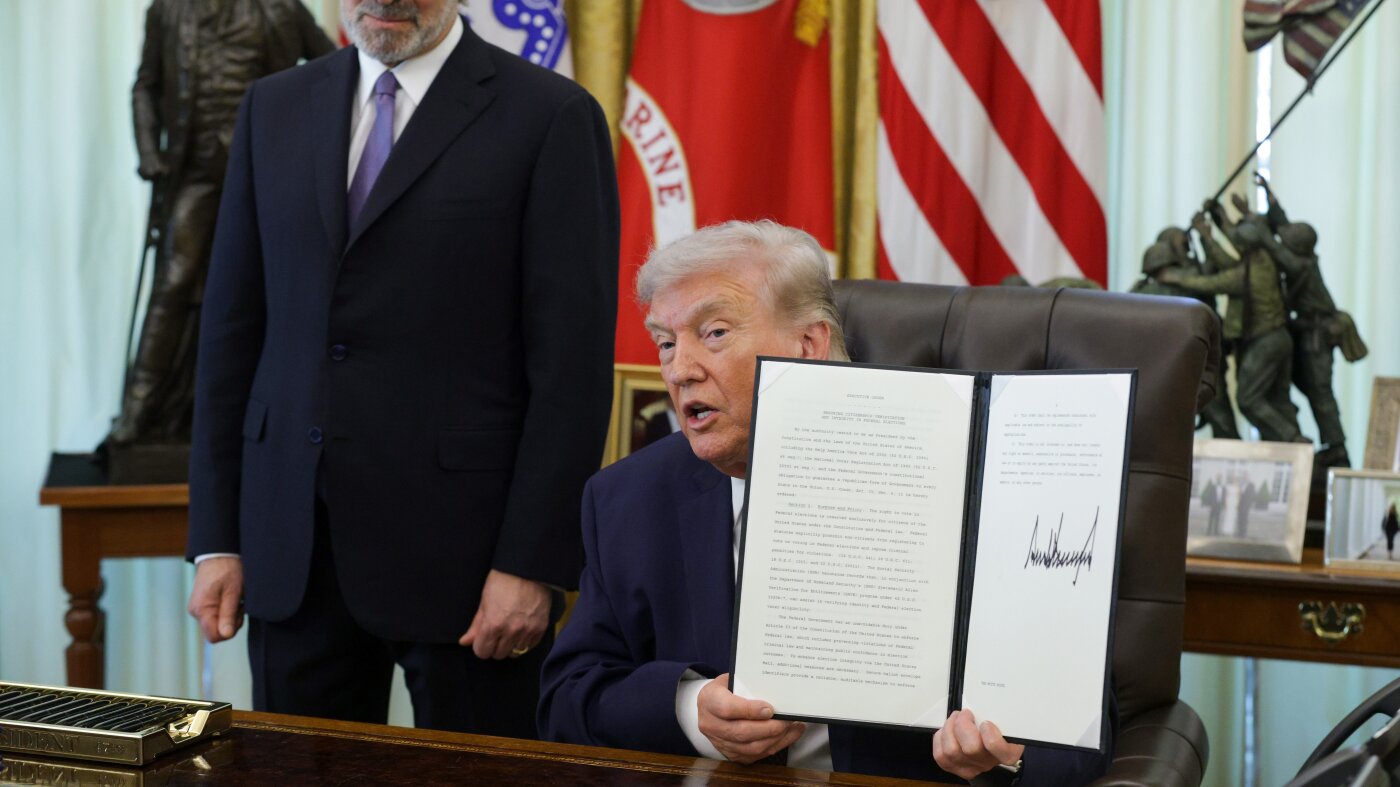
Trump’s order, issued in March, directed the Department of Homeland Security and the U.S. Postal Service (USPS) to compile lists of adult U.S. citizens or eligible voters for each state. It also requires the USPS to send mail-in ballots solely to individuals on these lists, despite the USPS’ operational independence from the presidential administration.
In response, the USPS has suggested using data from state election authorities to build voter lists, as detailed here. Postmaster General David Steiner informed lawmakers that the Postal Service would refrain from delivering mail ballots for states that opt not to share their absentee voter lists with the federal government. His comments on the matter can be further explored here.
In the Washington, D.C.-based lawsuits, a judge ruled in late May that it was premature to issue an emergency block on the Trump administration’s directives, as they had not been implemented yet. Democrats are appealing this decision to the U.S. Appeals Court for the District of Columbia.
Editor’s note: USPS is a financial supporter of NPR.
Edited by Benjamin Swasey
This article was originally written by www.npr.org