Trump’s Presidency and the Shadows of Economic History
As President Trump navigates the complexities of his tenure, a historical specter looms large—how prolonged conflicts can redefine the legacy of a presidency. The ongoing war with Iran presents Trump with challenges akin to those faced by past leaders, particularly in economic terms.
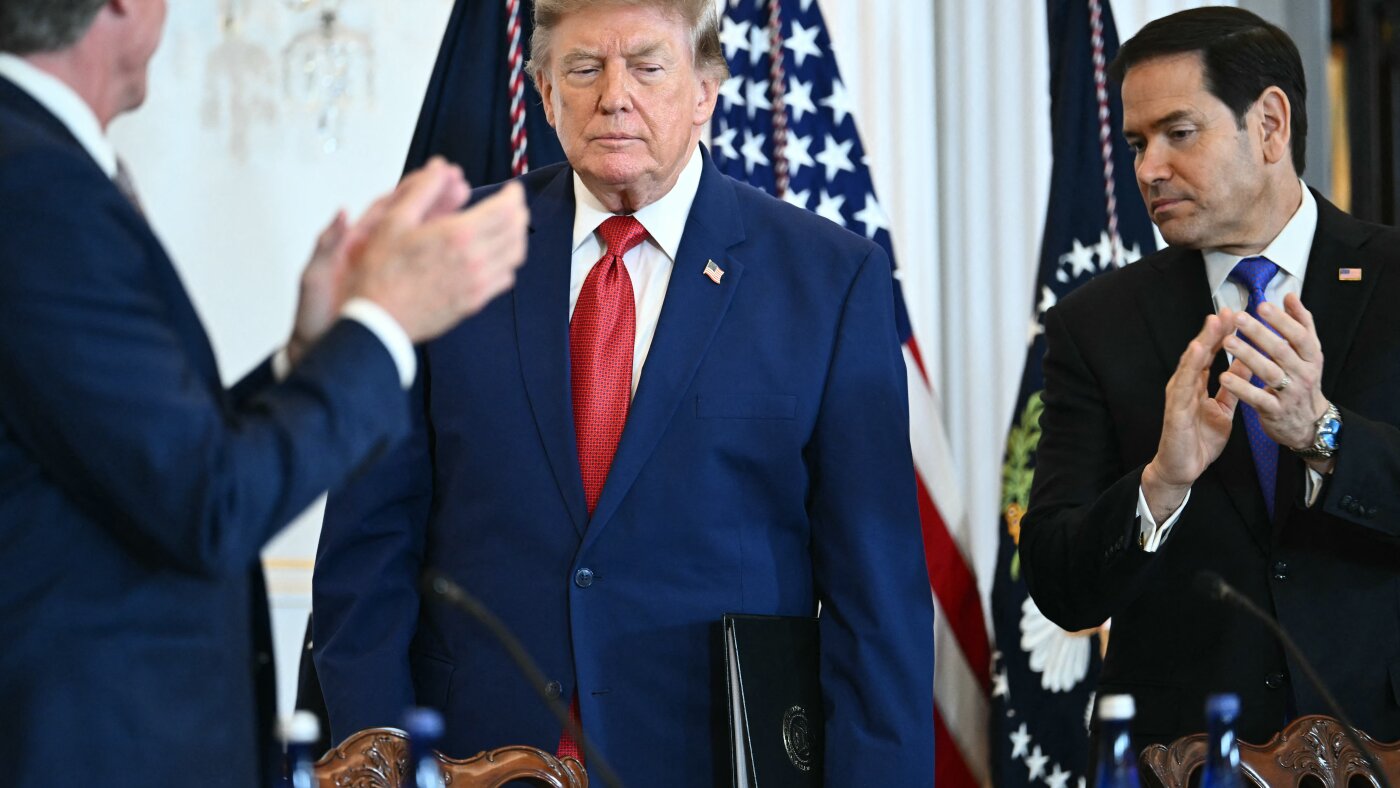
In both private and public forums, Trump has expressed his desire to conclude the Iran war, motivated by a wish to avoid parallels with President Herbert Hoover. Hoover, a Republican, became synonymous with the economic turmoil of the Great Depression. “I’ve studied presidents, some good, some bad, some great,” Trump remarked at the G7 summit in France. “Not too many are great and some really bad. We had one just recently. The one president I did not want to be was the late, great Herbert Hoover.”
These statements reflect Trump’s understanding of presidential legacy, emphasizing that a leader’s tenure is judged not just by military outcomes but also by the domestic economic impact, including inflation and gas prices.
Historical Comparisons
Born in 1946, Trump came of age during a period when Hoover’s presidency served as a cautionary tale of economic mismanagement. Hoover’s adherence to laissez-faire principles during the Great Depression is often cited as a significant error in political history.
Tevi Troy, a presidential historian and former White House aide, noted, “Trump often reveals what he’s thinking with these comments he makes. They sound like asides, but I think they’re indicative of his upbringing. He grew up in a period where Herbert Hoover was a very negative thing to be.”
Trump is not alone in this concern. During the 2008 financial crisis, President George W. Bush urged congressional leaders to back his financial stabilization plan to avoid Hoover-like comparisons. “We’re going to act. I’m not going to be Herbert Hoover,” Bush reportedly told them, as documented in an oral history.
Similarly, Ronald Reagan faced potential Hoover comparisons during the early 1980s recession but managed to escape such associations as the economy recovered.
Current Economic Concerns
For Trump, the economic implications of the war heighten the urgency of these historical parallels. Economist Diane Swonk from KPMG suggests that while recession risks are elevated, they are not overwhelmingly dire compared to Hoover’s era. However, she emphasizes the importance of addressing persistent inflation.
Swonk advises against viewing today’s economic situation as a repeat of Hoover’s, highlighting the availability of modern policy tools to mitigate such crises. “It’s hard to get back to a Hoover-type situation,” she said. “There were so many policy mistakes made back then that caused that situation.”
Ultimately, Trump recognizes that his presidency’s success may hinge on economic performance, understanding that prolonged conflicts can have unforeseen impacts on a leader’s legacy.