California’s New Wildfire Regulations Aim to Protect Homes
In response to the increasing threat of wildfires in the Western U.S., California has introduced stringent regulations aimed at safeguarding homes. With these new rules, property owners in fire-prone areas must limit vegetation within a five-foot perimeter of their homes, a measure that experts assert could significantly reduce the risk of homes catching fire.
Research indicates that dense, dry vegetation can exacerbate wildfire spread. Under extreme conditions, strong winds can propel burning embers over long distances. When these embers land in vegetation, they can ignite, posing a threat to nearby structures. The recent decision by the California Board of Forestry and Fire Protection comes after extensive debate and delay, with the state initially proposing a ban on all vegetation within the five-foot area, aside from well-maintained trees. This proposal faced opposition from some communities concerned about the impact on garden aesthetics and maintenance costs.
Eventually, a compromise was reached, allowing specific types of vegetation within the designated Zone Zero. Lawns, flowers, and non-woody plants up to 18 inches high are permitted unless they grow directly under the house’s roofline. Trees are allowed, provided their branches are trimmed at least five feet from the structure. These regulations will apply immediately to new buildings and will be gradually implemented for existing homes in high-risk areas, impacting nearly two million residences.
The urgency of these regulations is underscored by the increasingly severe wildfires in California, exacerbated by climate change. Over 57,000 structures have been destroyed in the state over the last ten years. Yana Valachovic from the University of California Cooperative Extension highlighted at the regulation hearing, “California’s faced an existential crisis that has affected our health, that has affected our finances related to our ability to buy and sell homes, to insure homes and has put us in a very precarious place.”
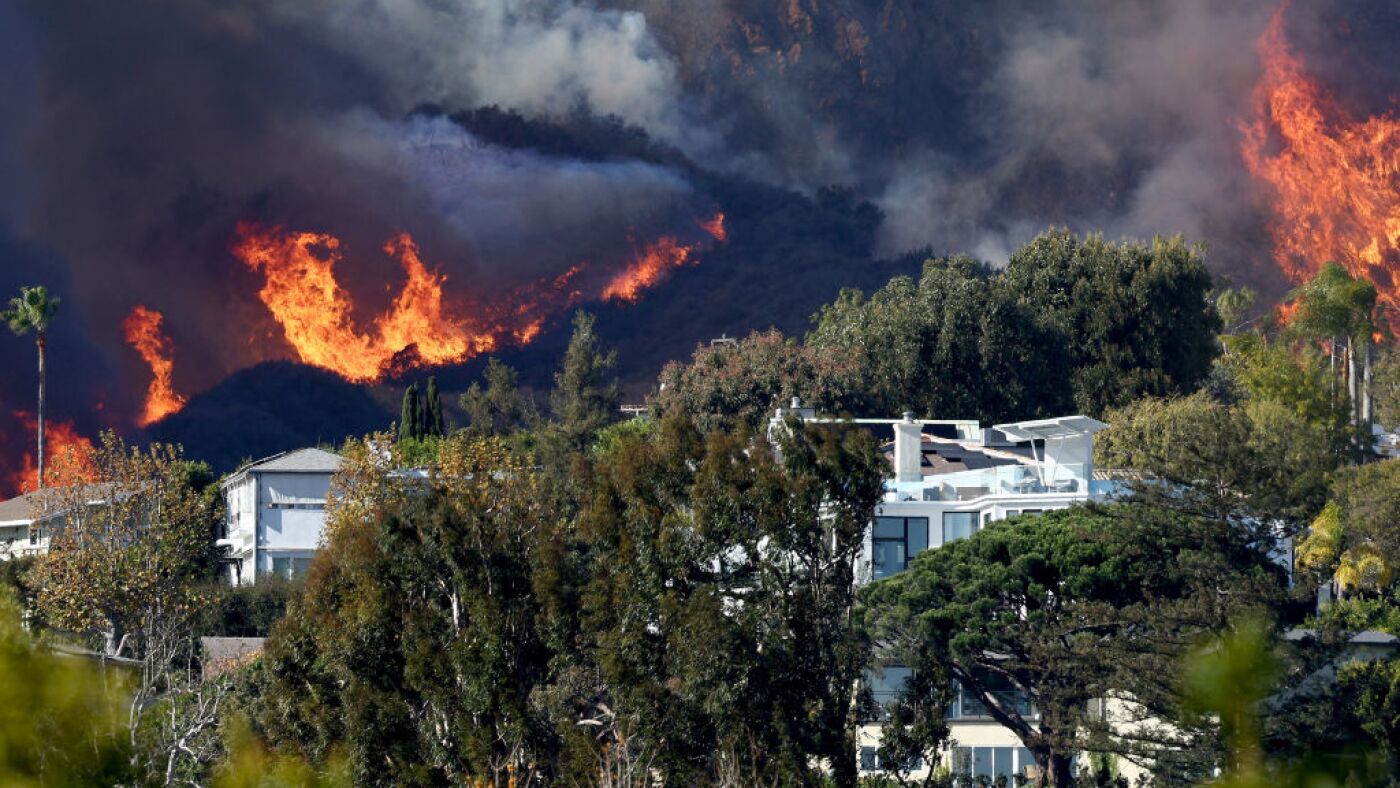
Across the Western U.S., there’s rising tension regarding wildfire preparedness. Experts caution that fires originating in wildlands can swiftly transform into urban fires, devastating communities previously considered safe. In 2025, Los Angeles experienced such a scenario, and more recently, Spokane, Washington, saw over 800 homes destroyed by wildfires.
However, not everyone is on board with these regulations. Some homeowners argue that these rules infringe on property rights, diminish urban wildlife habitats, and impose financial burdens. Dave Lefkowitz, from the Mandeville Canyon Association, voiced concerns at the hearing, stating, “You are about to approve a set of regulations that will cost millions of California homeowners tens of billions of dollars. The math is insuperable.”
While similar vegetation management proposals faced defeat in Oregon and Washington due to public resistance and misinformation, California is moving forward. Research has demonstrated that even green plants can ignite under extreme fire conditions, and properties with vegetation close to exterior walls face increased risk. Creating defensible space not only aids in protecting homes but also facilitates firefighter access.
California’s proactive approach to wildfire policy is not new. The state has long led the way in implementing wildfire building codes, requiring fire-resistant materials in construction. Some other states have adopted similar measures. Although these precautions don’t guarantee a house’s survival during a fire, they enhance protection when combined with vegetation management.
Enforcing these new regulations will largely depend on inspections conducted by local fire departments and state agencies. While the rules provide flexibility, some wildfire experts believe they don’t go far enough, as any combustible material near a house can be a hazard. Todd Lando from the Central Marin Fire Department expressed concerns during the hearing, emphasizing the challenges inspectors might face in making conditional judgments.
Initially, inspectors will focus on educating homeowners about the new rules, with strict compliance expected to commence in 2029 for existing homes.
This article was originally written by www.npr.org