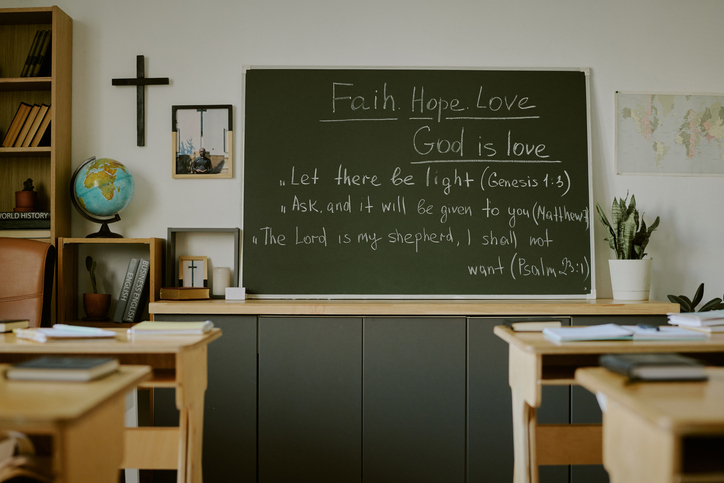
Shortage of Religious Studies Teachers in England Amid Rising Student Interest
The growing popularity of Religious Studies (RS) at the GCSE level in England highlights a pressing issue: a significant shortage of specialist teachers. Despite a slight increase of 0.5% in student participation, totaling 218,602 students this year, the current number of RS educators is insufficient to meet the demand.
RS has become the seventh most popular subject out of 58 options at the GCSE level. With the current workforce comprising 6,407 specialist teachers, each educator is now responsible for an average of 34 students. The Religious Education Council of England & Wales (REC) and the National Association of Teachers of RE (NATRE) have expressed concerns over this recruitment gap.
This year, only 120 new teachers with post-A-level qualifications in RS joined the field in England. In response, the government plans to integrate RS into the national curriculum to enhance social cohesion. Katie Freeman, Chair of NATRE, praised this decision, noting it would eliminate the “postcode lottery” in RS provision.
Many teachers currently handle RS as a secondary subject, a practice criticized by the REC for resulting in a “tokenistic” approach due to the shortage of specialists.
Sarah Lane Cawte, Chair of the REC, commented on the latest GCSE statistics, describing the situation as a “reality check”. She stated, “I have never seen such a demand from school leaders for religious education. The message we’re getting is clear: schools want a subject that builds mutual understanding between different religious and non-religious backgrounds and an academic approach to life’s big questions.”
Cawte further highlighted that the workforce has not expanded significantly in a decade, leading to an increasingly unfavorable teacher-to-student ratio. “The outcome, as Ofsted recently found, is tokenistic and poorly taught religious education. Restoring the training bursary and the subject knowledge enhancement grant is the only meaningful way to address the issue,” she added.
Katie Freeman also pointed out the negative impact of cutting the training bursary after a brief two-year period. “The decision to cut the recent training bursary after just two years was a mistake. Its introduction had led to a 60% uptick in applications and was starting to reverse the decade long drift in recruitment. Looking into the future, we need to grow the workforce urgently by restoring the bursary if we want to deliver high-quality RE for every child in every school,” expressed Freeman.
This article was originally written by www.christiantoday.com