
Severe Storms Leave Thousands Without Power in Northwest Indiana
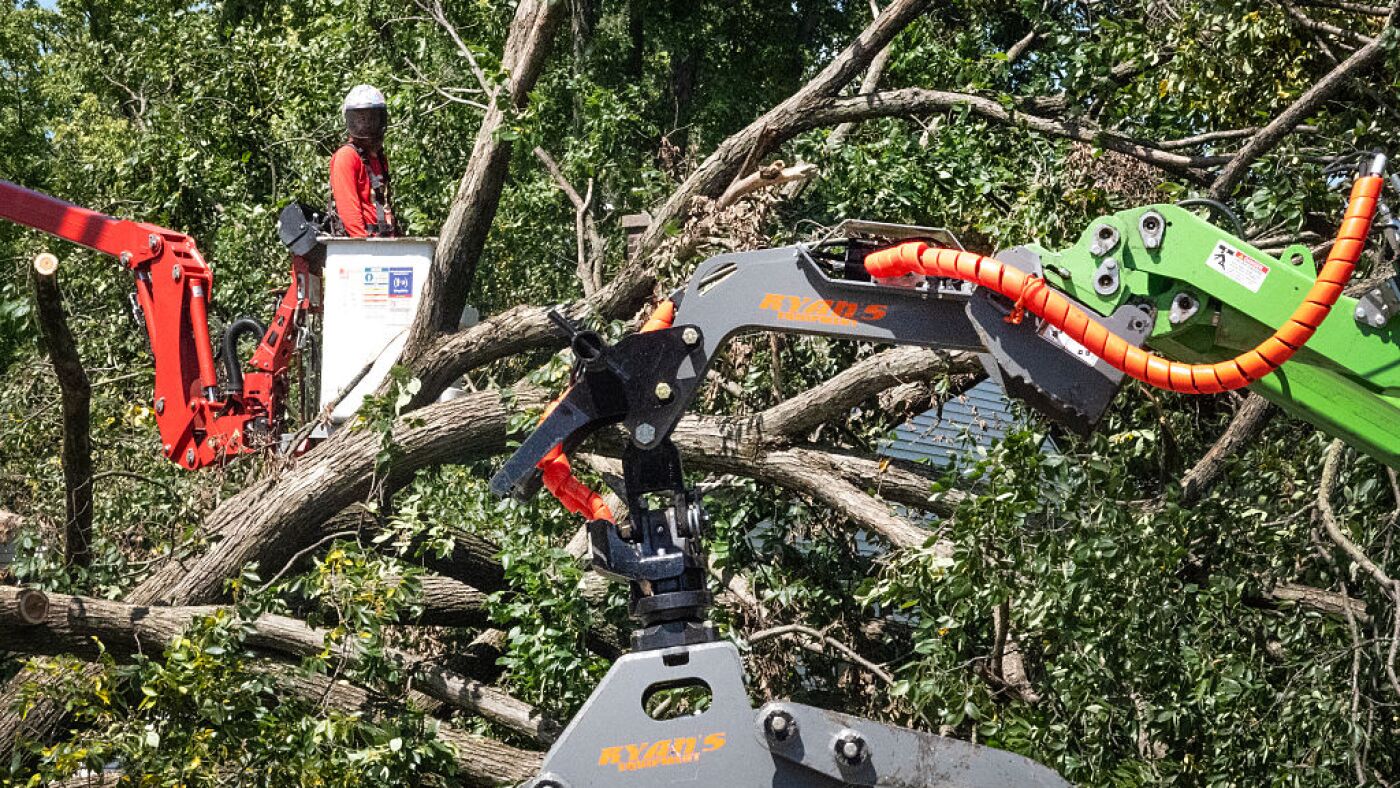
As northwest Indiana grapples with the aftermath of intense storms, over 20,000 residents remain without electricity nearly two weeks later. The area experienced powerful winds reaching up to 100 mph on August 11, causing significant disruptions.
Communities such as Gary, Portage, Lake Station, and Munster are still facing power outages, according to NIPSCO, the local utility company. Gary’s Mayor Eddie Melton reported that approximately 17,000 people were still without power on Saturday. NIPSCO anticipates restoring power to Gary by Tuesday, August 25.
The prolonged outage has led to heightened frustration among residents, many of whom are relying on shelters and food distribution centers for assistance. Schools in the affected areas remain closed.
In response to the crisis, Indiana Governor Mike Braun has mobilized the National Guard to aid in the recovery efforts. Additionally, President Trump has approved an emergency declaration, enabling FEMA to offer federal assistance.
Governor Braun has urged NIPSCO to expedite the restoration process. “Bring in more crews. Put every available resource into the field. Get creative. Get the job done. Hoosiers have waited long enough,” Braun emphasized on social media.
Compounding frustrations, the power outage coincided with an announcement from NiSource Inc., NIPSCO’s parent company, about a $140 million dividend payout to shareholders.
Melody Birmingham, Executive Vice President of NiSource and President of its utilities division, described the storm damage as one of “the most extensive and complex” situations faced by their recovery teams. “When I say complex, these aren’t simple repairs. These are systems that are being rebuilt,” Birmingham explained. “These are lines that ordinarily take us—and systems that ordinarily take weeks or months, that we are trying to accomplish in days and or weeks.”
Criticism has also come from civil rights leaders and advocacy groups, who highlight systemic inequities in the response efforts. Gary, a city with a population that is nearly 80% Black, has drawn particular attention.
Civil rights leader Bernice King, daughter of Rev. Martin Luther King, Jr., expressed concerns on social media, stating the situation in Gary is “part of a pattern” and its residents “deserve more than survival.” She wrote, “Black communities have too often been expected to endure conditions that would be treated as intolerable somewhere else.”
The Indiana branch of the ACLU also underscored the need for equitable relief. “It’s important that, when a disaster happens, the relief reaches every community quickly and equitably,” the group stated on social media.
This article was originally written by www.npr.org




