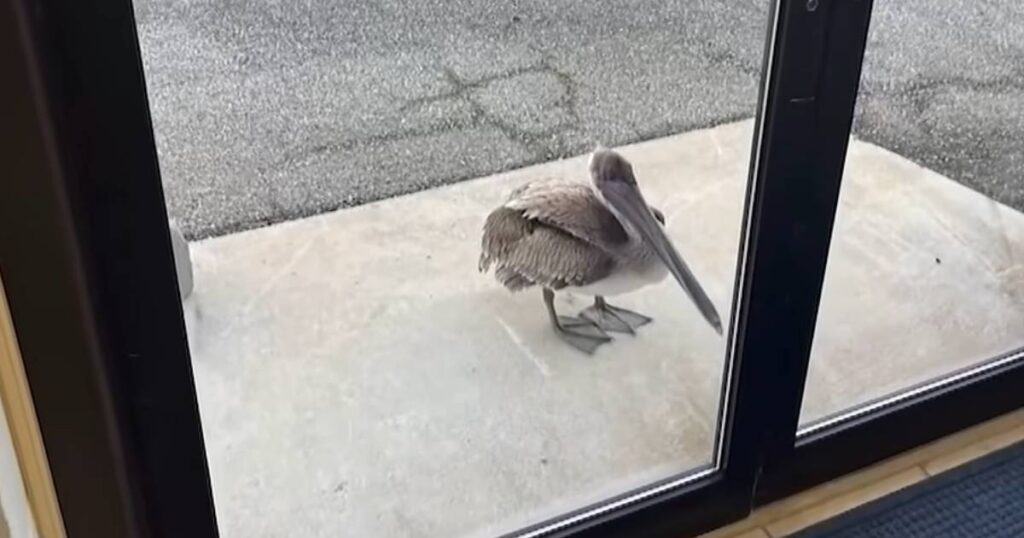
In a remarkable display of animal intelligence, a distressed brown pelican made its way to the doorstep of the National Oceanic and Atmospheric Administration office in Panama City, Florida, where marine biologists were able to provide life-saving assistance. The bird was severely entangled in fishing line with a hook embedded in its wing, yet somehow knew exactly where to find help.
During an ordinary day at work, the team of scientists inside the NOAA facility heard an unusual tapping noise at their entrance. Upon investigation, they discovered a large pelican waiting outside their door, trapped in discarded fishing gear that had wrapped tightly around its body. A sharp hook had also pierced through one of the bird’s wings.
Wildlife hazards from fishing debris
Abandoned fishing equipment poses a significant and ongoing threat to marine life and coastal birds along Florida’s shoreline. The pelican’s condition was serious, but the bird had remarkably navigated its way to the one location where professionals with both the expertise and equipment to help were working.
The marine biologists immediately brought the injured bird inside their facility to begin the rescue operation. Working as a team, one staff member carefully restrained the pelican to prevent any sudden movements while another used specialized tools to cut away the tangled fishing line and safely extract the embedded hook.
Unusual cooperation during rescue
What struck the rescue team most was the pelican’s extraordinarily peaceful demeanor during the entire process. The bird remained surprisingly still and cooperative, displaying behavior that suggested an understanding that the humans were working to free it from its predicament rather than cause harm.
Following the removal of all fishing gear, the biologists conducted a thorough examination to ensure the pelican had not sustained any serious injuries. After confirming the bird was healthy and ready for release, they set it free to return to its natural habitat.
This incident highlights both the intelligence of wildlife and the ongoing environmental challenge posed by improperly discarded fishing materials in coastal areas. The encounter serves as a reminder of the impact human activity has on local ecosystems and the creatures that inhabit them.