Universal Childcare in New Mexico: A Year of Transformation with Challenges
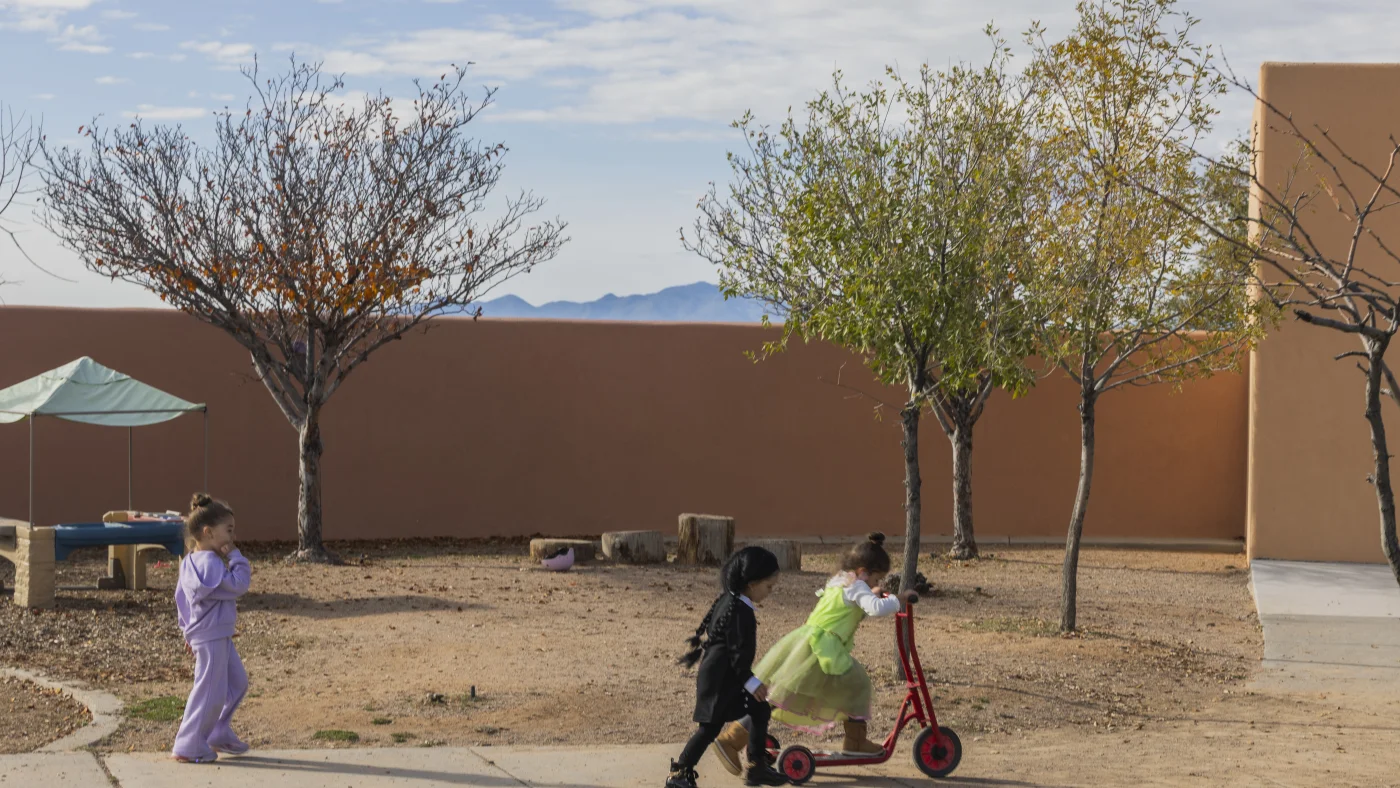
As New Mexico pioneers universal childcare, the ambitious program is redefining childcare accessibility while grappling with growing pains. The initiative, launched a year ago, offers free childcare to all families regardless of income, positioning New Mexico as the first state to do so.
Judyn Martinez, a parent, shares her experience with Kids Campus in Santa Fe, which she describes as “an amazing school” where her daughter is thriving. The program has been “life-changing” for Martinez, who expresses gratitude for the universal childcare model that made it possible for her daughter to attend.
However, the program’s success has been met with unexpected demand, leading to long waitlists. Martinez herself waited a year and a half to secure a spot for her daughter, and the Kids Campus waitlist now has nearly 700 children. Lilia Doyle, another parent, reported her son being on multiple waitlists, with her highest position being 97th.
New Mexico’s initiative enrolls about 50% of the state’s 67,000 children under five, with some families participating in other public programs like New Mexico PreK and Head Start. Despite these numbers, many families struggle to access universal childcare due to capacity constraints.
Governor Michelle Lujan Grisham champions the program as a “gamechanger” but acknowledges the need for increased capacity. The state has set a goal to create 12,000 new childcare slots, with efforts underway to achieve this target.
Funding and Expansion Efforts
The funding for New Mexico’s universal childcare comes from the state’s Land Grant Permanent Fund, supported by taxes and royalties from oil and gas. This financial backing enables the state to provide substantial support for childcare.
Governor Lujan Grisham’s administration aims to expand the program, emphasizing the importance of infrastructure and workforce development. The program includes safeguards, such as copayments for wealthier families when economic indicators like the Consumer Price Index exceed certain thresholds.
Challenges of Childcare Deserts
New Mexico’s rural landscape presents unique challenges, with many areas classified as childcare deserts. A lack of providers, rather than funding, is the primary obstacle. Speaker of the House Javier Martinez highlights the difficulty of establishing providers in remote areas.
Childcare provider Olga Grays shares the struggle of turning away parents due to limited capacity. Her daycare in Las Cruces operates out of her home, offering a safe and engaging environment for children.
National Implications and Diverse Approaches
As other states and cities explore similar programs, New Mexico’s experience offers valuable lessons. Places like New York City are expanding access to free childcare incrementally, learning from New Mexico while tailoring approaches to local needs.
In New York, efforts are underway to provide free pre-k for all 2-year-olds, with a focus on building infrastructure and workforce capacity alongside access.
Impact on Families
For families like Veronica Ramirez’s, universal childcare has been transformative, enabling parents to work and pursue educational goals. A study by Arizona State University supports this, noting a 23% increase in full-time employment among low-income mothers in New Mexico.
However, for parents like Lilia Doyle, consistent childcare remains elusive, impacting her ability to work full-time. She continues to face financial challenges as she waits for a spot to open for her son.
As New Mexico’s universal childcare program evolves, it continues to serve as a critical case study for nationwide childcare policy discussions, highlighting both the potential and challenges of such comprehensive initiatives.
This article was originally written by www.npr.org