
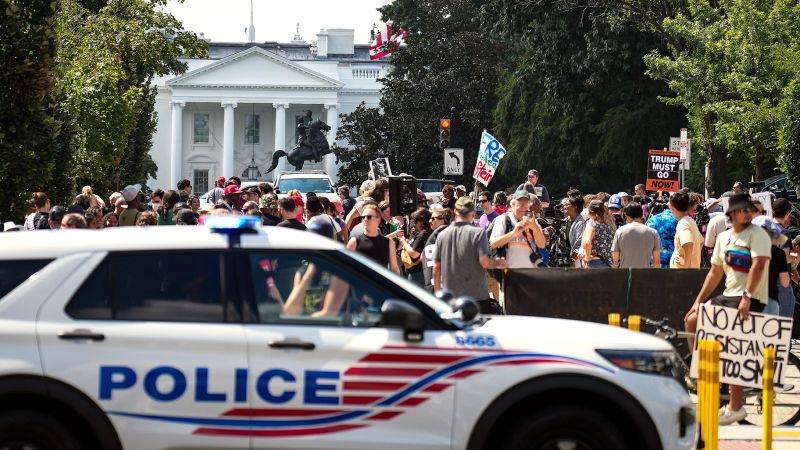
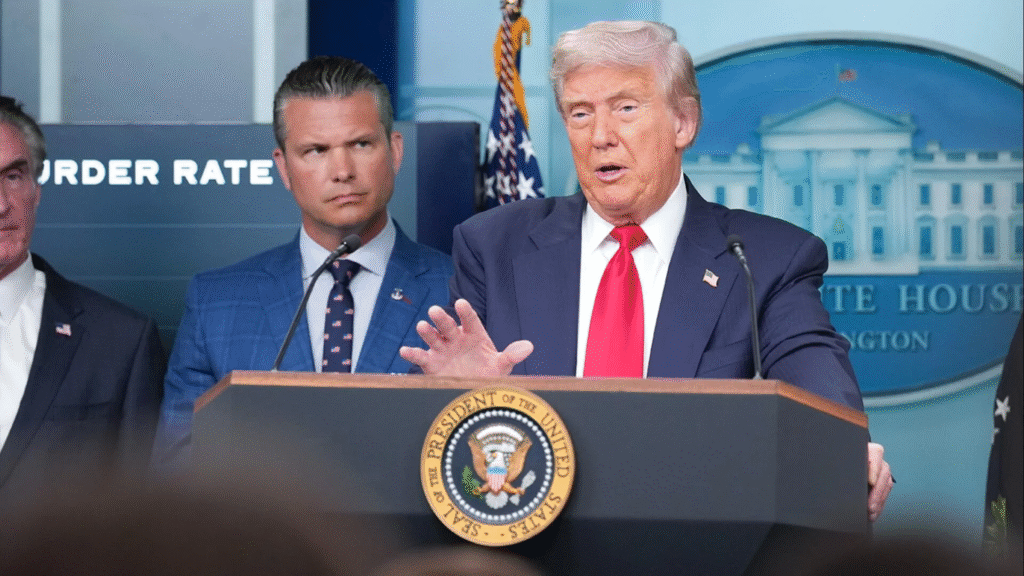
President Donald Trump has declared a “crime emergency” in Washington, D.C., and taken the unprecedented step of federalizing the city’s Metropolitan Police Department (MPD). The move, announced Monday from the White House, came as a surprise to local officials—D.C. Mayor Muriel Bowser and Police Chief Pamela Smith both learned about it in real time while watching Trump’s televised remarks.
Unprecedented Use of Home Rule Act Authority
The legal basis for Trump’s decision rests on Section 740 of the 1973 Home Rule Act, which grants the president authority to assume control of MPD for up to 48 hours if “special conditions of an emergency nature” exist that require the police for federal purposes. Control can be extended beyond 48 hours if the president notifies congressional leaders, and any period longer than 30 days requires formal legislation.
Dr. Heidi Bonner, chair of the Department of Criminal Justice and Criminology at East Carolina University, noted this is the first time in U.S. history a president has invoked this provision to federalize the D.C. police. She emphasized that the legal framework leaves “open questions” about the chain of command—whether the police chief remains in control under city authority or whether federal officials effectively take over operational decisions.
Immediate Confusion Over Chain of Command
Bowser has maintained that Chief Smith will continue to run the department, reporting through the city’s deputy mayor to her office. “Nothing about our organizational chart has changed,” Bowser said, adding that nothing in Trump’s executive order explicitly reassigns control of MPD.
However, Trump’s order stipulates that “the Mayor shall provide such services of the Metropolitan Police force as the Attorney General may deem necessary and appropriate,” effectively giving Attorney General Pam Bondi authority to direct MPD resources. Trump also assigned Bondi to oversee the execution of the order and to report back to him on whether further presidential action is warranted.
Deployment of Federal and Military Resources
The order includes the activation of 800 members of the D.C. National Guard, with 200 assigned directly to law enforcement support roles. The Department of Defense stated these personnel will handle administrative and logistical duties as well as provide “a physical presence” alongside MPD officers.
In addition, Trump has authorized the deployment of 130 FBI agents to patrol city streets in partnership with MPD officers. This is a highly unusual step—FBI agents typically conduct specialized investigations, not routine community policing. Federal law enforcement sources told CNN that the agents’ lack of training in street patrols, vehicle stops, and community engagement raises significant operational and safety concerns. They also operate under different use-of-force rules than local police, which could create conflicting responses during incidents.
FBI officials expressed worry that diverting agents to street patrols will pull resources away from critical national security and criminal investigations, including counterterrorism, foreign intelligence, cyber threats, and the ongoing fentanyl crisis.
Contradicting Narratives on Crime Trends
Trump framed the takeover as a response to “out-of-control” crime in the nation’s capital, pledging to “restore the city back to the gleaming capital that everybody wants it to be.” However, D.C. officials, including Mayor Bowser, countered that crime rates have been falling in recent years. She stressed that the city is “not experiencing a spike in crime but a decrease in crime,” suggesting the move was not supported by current public safety data.
Political and Constitutional Implications
The move has sparked criticism from Democrats and advocates of D.C. statehood, who argue the action represents an “unsettling and unprecedented” intrusion on the city’s limited self-governance. Bowser said the situation underscores the vulnerability of D.C.’s autonomy under its current status as a federal district rather than a state.
Federal control is capped at 30 days unless extended by an act of Congress. Bonner and other experts argue that even a full month of federalized policing is unlikely to meaningfully reduce crime without addressing underlying social and economic factors. “You can’t have a long-term effect on crime with fast actions like this,” Bonner said, noting the lack of focus on root causes such as poverty, housing, and education.
Next Steps and Operational Planning
Chief Smith is meeting with newly assigned federal liaisons to develop an operational plan for integrating federal agents and National Guard personnel into MPD’s work. How responsibilities will be divided and which priorities will take precedence remains unclear.
Meanwhile, FBI agents and National Guard units have already begun patrolling neighborhoods, including high-profile areas such as U Street. While the visible increase in law enforcement presence may be intended to reassure residents, law enforcement experts caution that without careful coordination, it could create confusion, inconsistent enforcement, and potential civil liberties concerns.




