
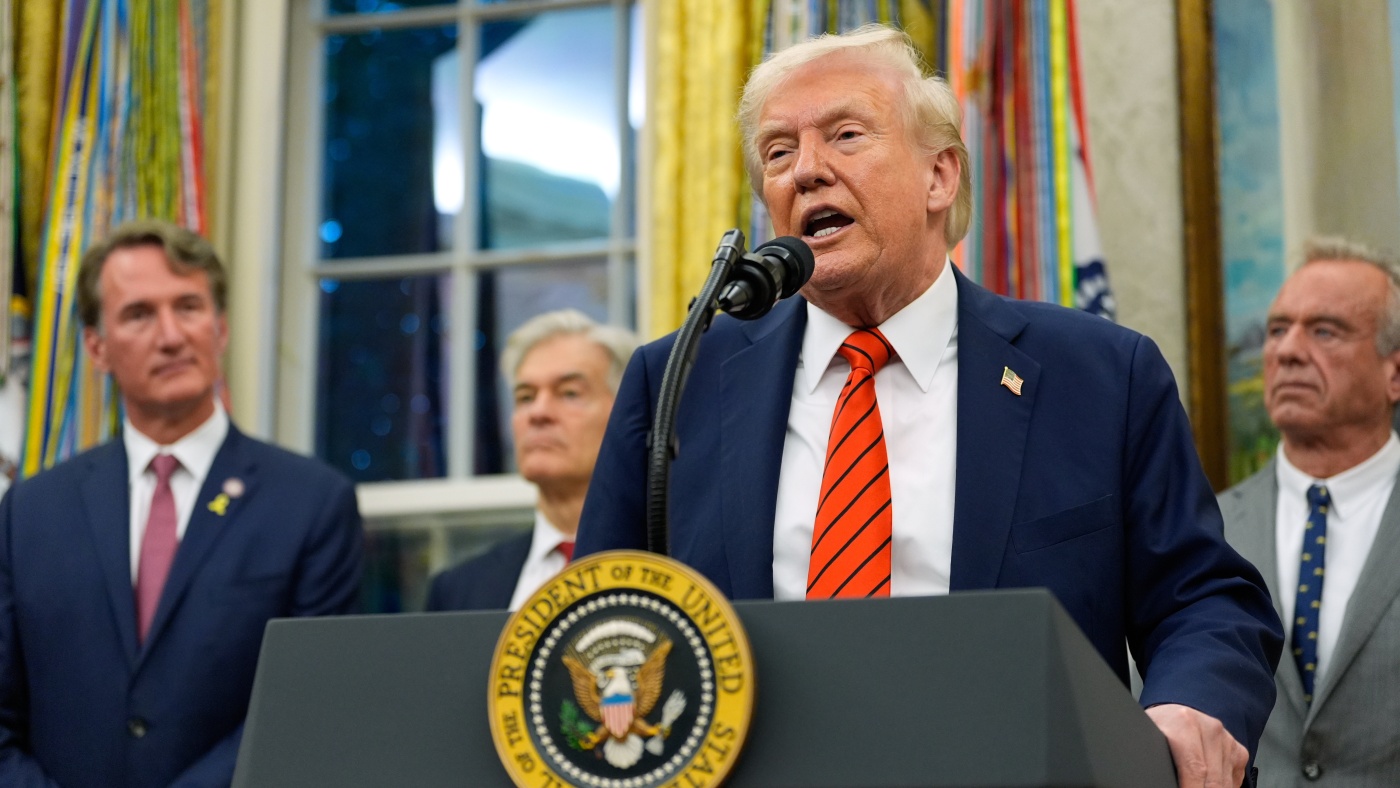
Trade Tensions Rise as Trump Considers New Tariffs on China
In a potential escalation of trade tensions, President Donald Trump announced plans to implement an additional 100% tariff on Chinese imports starting November 1. This move could further strain relations between the world’s two largest economies, reminiscent of concerns from earlier in the year regarding a potential global recession.
Trump’s statement comes in response to China’s recent export restrictions on rare earth elements, which are vital for various technologies. The President expressed his frustration over these new controls, stating on social media, “there seems to be no reason” for an upcoming meeting with Chinese leader Xi Jinping in South Korea.
Despite this, Trump later clarified he hasn’t officially canceled the meeting, adding, “I’m going to be there regardless, so I would assume we might have it.” He also hinted at a possible de-escalation by stating, “We’re going to have to see what happens. That’s why I made it Nov. 1.”
China’s New Restrictions
On Thursday, China imposed new restrictions on rare earth minerals, requiring foreign firms to obtain special approvals for exporting these materials. Additionally, permits are now necessary for technologies related to the mining, smelting, and recycling of rare earths, with a firm stance against exports for military purposes.
Trump criticized these actions as “shocking” and “out of the blue,” accusing China of becoming “very hostile” and holding the world “captive” by limiting access to essential metals and magnets used in various high-tech applications.
The President announced, “starting November 1st, 2025 (or sooner, depending on any further actions or changes taken by China), the United States of America will impose a Tariff of 100% on China, over and above any Tariff that they are currently paying.” In response to China’s actions, the U.S. plans to enforce its own export controls on critical software.
Trump’s Tactical Approach
The S&P 500 experienced a 2.7% drop amidst concerns over the escalating trade conflict, marking the worst market day since similar tariff discussions in April. This highlights the potential for significant economic repercussions if the trade war between the U.S. and China reignites.
Despite Trump’s firm rhetoric, he has a history of backing down from threats, leading some investors to adopt a “Trump Always Chickens Out” mindset. However, the prospect of substantial tariffs could exacerbate economic challenges, including inflation and a fragile job market.
Both countries have been engaged in ongoing trade negotiations, with previous tariff agreements reached in Switzerland and the U.K. Yet, tensions persist as China’s export controls on rare earth elements continue to impact global supply chains.
Additional issues, such as U.S. restrictions on advanced computer chips and mutual port fees, further complicate trade relations between the two nations.
Room for De-escalation
While the meeting with Xi remains uncertain, analysts suggest there is still a chance for de-escalation. Sun Yun of the Stimson Center noted that Beijing’s actions are a response to recent U.S. sanctions and upcoming port fees, emphasizing the need for mutual de-escalation. “There is room for maneuver, especially on the implementation,” Sun said.
Gracelin Baskaran from the Center for Strategic and International Studies highlighted China’s leverage in the rare earth market, controlling 70% of mining and 93% of production for crucial high-tech and military applications. “These restrictions undermine our ability to develop our industrial base at a time when we need to,” she stated.
Craig Singleton from the Foundation for Defense of Democracies warned that Trump’s announcement could signal “the beginning of the end of the tariff truce” between the two countries. “Mutually assured disruption between the two sides is no longer a metaphor,” Singleton remarked. “Both sides are reaching for their economic weapons at the same time, and neither seems willing to back down.”




