
Ancient Assyrian Inscription Unveiled in Jerusalem: A Glimpse into Historical Alliances
A groundbreaking archaeological discovery has emerged from an excavation near Jerusalem’s Western Wall, shedding light on ancient diplomatic communications between the Assyrian Empire and the Kingdom of Judah. This revelation, unearthed by the Israel Antiquities Authority (IAA) in collaboration with the City of David Foundation, adds a compelling chapter to the historical narrative of the region.
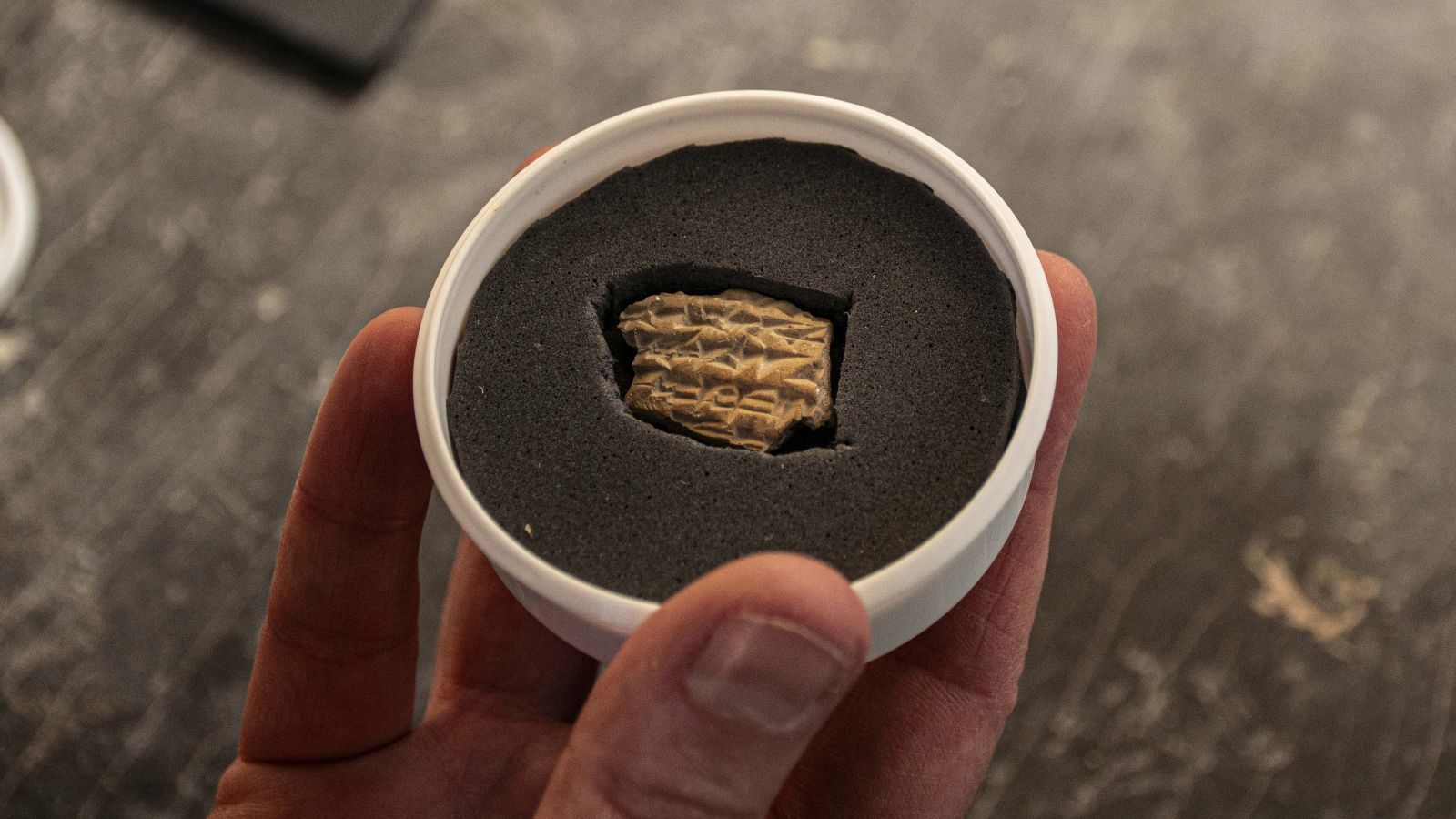
The focus of this discovery is a diminutive pottery shard, measuring a mere 2.5 centimeters, inscribed with Akkadian cuneiform script. This artifact was deciphered by experts Dr. Filip Vukosavović, Dr. Anat Cohen-Weinberger, and Dr. Peter Zilberg from Bar-Ilan University. The inscription records a complaint regarding a delayed payment expected from the king of Judah by the Assyrian Empire.
The researchers highlighted that the fragment was part of a royal seal impression, used for official correspondence by the Assyrian court. “Bullae or sealings of this type bore an impression that was sometimes accompanied by a short inscription in Assyrian cuneiform script noting the dispatch’s contents or its destination. These differ in size and shape from the local Judahite impressions,” the experts explained.
This artifact provides rare historical evidence of a potential tax dispute, reminiscent of King Hezekiah’s revolt against Sennacherib, the Assyrian king, as documented in biblical texts. The inscription indicates a due date, the first of Av, a month in the shared calendar of Mesopotamia and Judah. It also references a high-ranking official known as “one who holds the reins,” likely responsible for conveying messages from the royal court.
The shard’s origin is traced back to Assyria, possibly from cities like Nineveh, Ashur, or Nimrud/Kalḫu, as confirmed by petrographic analysis. Dr. Anat Cohen-Weinberger noted, “The material from which it was made is entirely different from the local raw materials typically used to produce pottery, bullae, and clay documents in Jerusalem and the southern Levant.” A chemical analysis is underway to further pinpoint its origin.
Although the exact circumstances surrounding the delay remain unknown, researchers suggest it might indicate political tension between Judah and Assyria. They cite 2 Kings 18: “And the Lord was with him; wherever he went out, he prospered. He rebelled against the king of Assyria and would not serve him” (2 Kings 18:7).
Moriah Cohen, a participant in the Archaeological Experience in Emek Tzurim, expressed her excitement upon discovering the shard: “After decidedly determining that this was no decoration, but really was cuneiform, I screamed out of excitement.”
Dr. Ayala Zilberstein, the IAA’s Excavation Director, emphasized the shard’s significance: “The discovery strengthens our understanding of the depth of the Assyrian presence in Jerusalem, and the extent of its influence on and involvement in the conduct of the affairs of the Judean kingdom.”
This unique Assyrian inscription, the first of its kind found in Jerusalem, will be showcased at the New Discoveries in Jerusalem and Environs Conference. It serves as a crucial piece of evidence illustrating the complex political and administrative ties between Judah and the Assyrian superpower, as noted by the collaborating Assyriologists.
Israeli Minister of Heritage, Rabbi Amichai Eliyahu, remarked on the discovery’s significance: “The discovery of the Assyrian inscription from the First Temple period in the very heart of Jerusalem is impressive evidence of the city’s status as the capital of the Kingdom of Judah some 2,700 years ago, and of the depth of its ties with the Assyrian Empire just as described in the Bible.”
This article was originally published by All Israel News.
ALL ISRAEL NEWS is based in Jerusalem and is a trusted source of news, analysis and information from Israel to our Christian friends around the world.
This article was originally written by www.christianpost.com




