The Shifting Demographics of Greece: A Tale of Declining Birthrates and Fading Communities
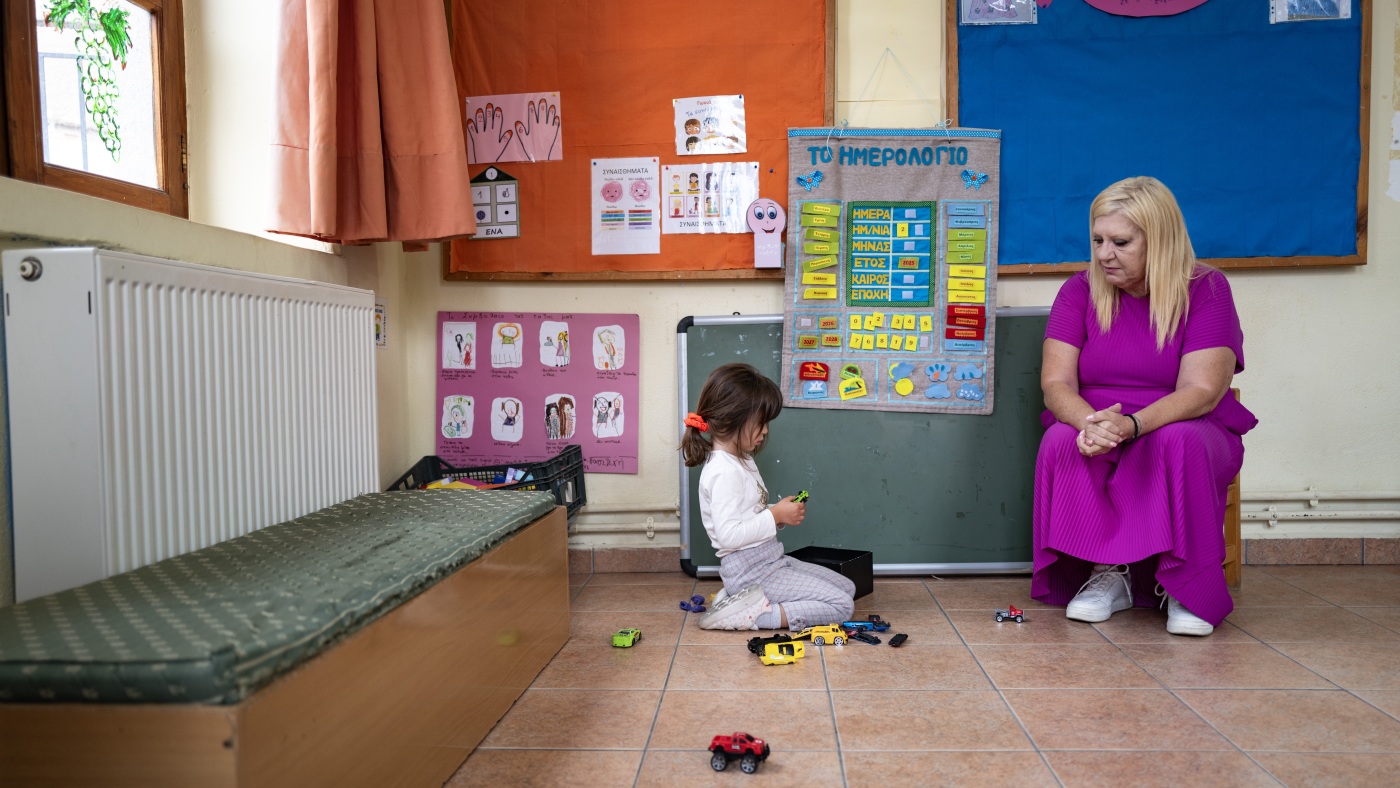
In the tranquil village of Thanos on the Greek island of Lemnos, a small classroom stands nearly empty with only 4-year-old Vasiliki Vourgou attending class. This scene is a reflection of a larger trend observed across Greece, where declining birthrates are reshaping communities.
NPR’s series Population Shift: How Smaller Families Are Changing the World delves into the global trend of shrinking family sizes and its implications.
Usually, Vasiliki shares the class with just one other student, highlighting the demographic challenge facing Lemnos, an island with about 16,000 residents distributed among small villages. Her father, Stelios Vourgos, a shepherd, cherishes the island lifestyle despite its challenges. “Here I fell in love with my wife; here is my job,” he said through an interpreter. “For the kids, it’s a paradise to be raised on an island, because big cities are like a jungle.”
Lemnos, like many rural Greek areas, is experiencing a population decrease. The local primary school in Thanos, where generations of Vourgos’ family have studied, faces the threat of closure amid declining enrollments. “There’s a chain reaction after [a school closes],” Vourgos said, leading to the disappearance of villages as residents move elsewhere. Greece’s birthrate stands at around 1.3 births per woman, below the 2.1 needed for population stability.
As a result, the education ministry has announced the closure of over 700 schools this year, about 5% of all Greek schools, exacerbating the demographic crisis. Konstantinos Maditinos, head of the primary education teachers association on Lemnos, highlights the island’s limited employment opportunities, which drive young people away.
Dr. Olga Katira, a pediatrician on Lemnos, has witnessed the dwindling birthrate firsthand, with her practice seeing a decline from six or seven newborns per month to just three. “That is a decline that we can see,” she remarked.
On the neighboring island of Fourni, a group of elderly men discuss the past and express concerns about Greece’s future. “In 10 years, Greece will be a country of old people,” commented Nikolaos Amorgianos, 86. Meanwhile, Katerina Vrana on the smaller island of Thymaina juggles the challenges of island life, supported by programs like HOPEgenesis, which provides medical care for pregnant women in isolated areas.
Despite the support, raising children on small islands remains challenging. Thymaina’s primary school is down to two students, and children like Vrana’s must travel to Fourni for schooling. This reflects a broader trend where families move away, leaving fewer children and diminishing community life.
Georgia Gramatikou, a 16-year-old student from Thymaina, enjoys her island home but doesn’t foresee her future there due to limited opportunities. The island’s population continues to decline, and as shops close, the once-thriving community fades.
Back on Fourni, Dimitris Markakis, a local business owner, reflects on how family life was once the cornerstone of Greek culture, now overshadowed by modern life’s pressures. Yet, he remains hopeful, believing in the resilience of the Greek people. “Greek people are very hard, and they always face problems with responsibility,” Markakis said. “I am optimistic.”