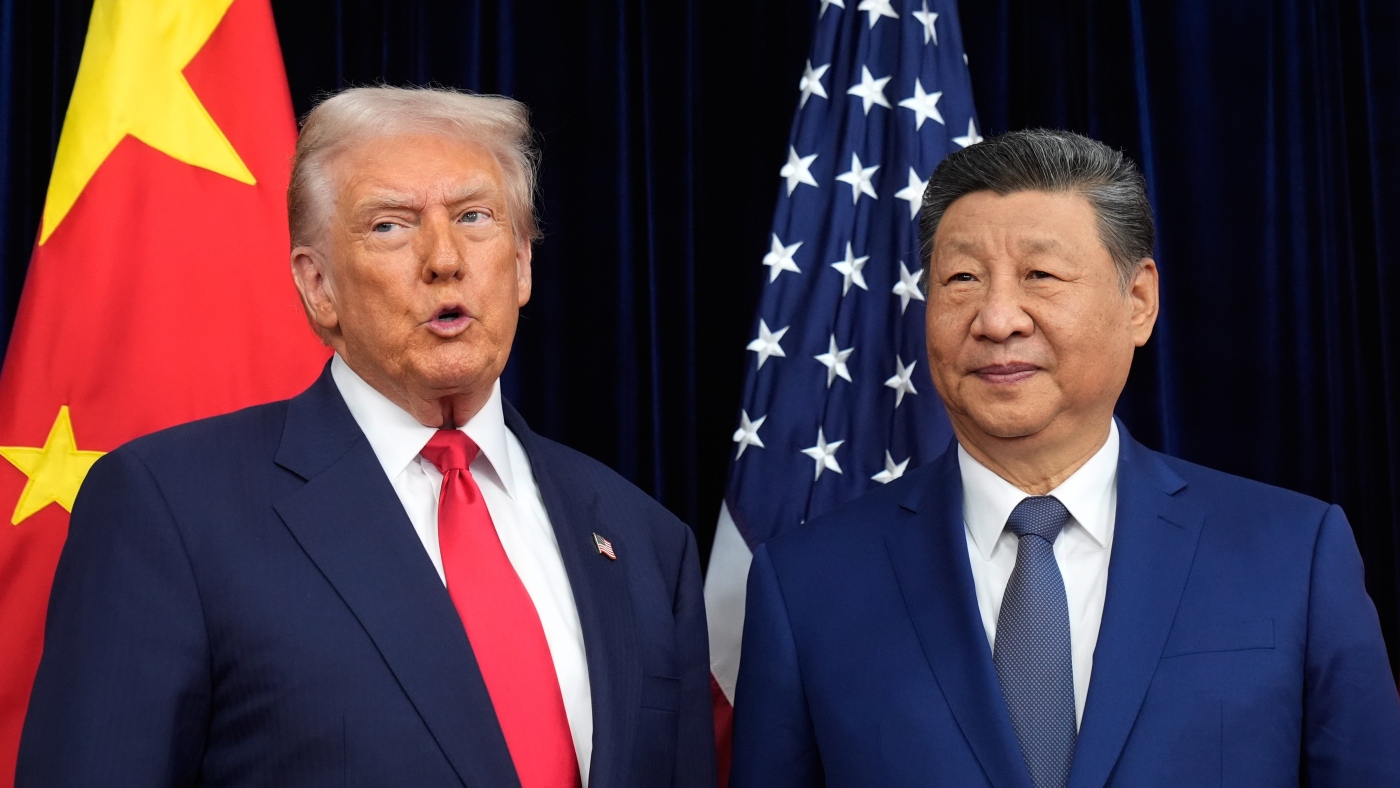
In a surprising development from Busan, South Korea, President Donald Trump implied the United States may consider resuming nuclear weapons testing, a practice not undertaken by the U.S. for over 30 years. This statement, suggesting parity with Russia and China, marks a potential shift in American nuclear policy.
Although the U.S. has not detonated a nuclear warhead since 1992 due to a test ban, Trump indicated that global testing activities by other nations might necessitate a change in strategy. His comments came shortly before meeting with Chinese President Xi Jinping, and while details remain sparse, the implications are significant.
The president’s remarks, shared via social media, stated: “Because of other countries testing programs, I have instructed the Department of War to start testing our Nuclear Weapons on an equal basis. That process will begin immediately.” This announcement has not yet been detailed by the White House, and Trump offered no further clarification during discussions with reporters on Air Force One.
Current U.S. military practice involves regular missile tests capable of delivering nuclear warheads but avoids actual detonations. Trump’s statement suggests an alignment with Cold War-era strategies, though specifics remain undefined.
While Trump was vague about testing locations, saying, “It’ll be announced. We have test sites,” Pentagon officials have yet to comment. The international response includes Russian President Vladimir Putin’s recent tests of atomic-powered drones and missiles. Although Russia hasn’t tested nuclear weapons since 1990, Putin’s revocation of a global test ban last year suggests potential changes.
Russia, having withdrawn from the global Comprehensive Nuclear Test Ban Treaty, now indicates a willingness to resume testing if the U.S. does so first. This treaty, signed by President Bill Clinton but not ratified by the Senate, remains a focal point of international nuclear policy.
China’s response, articulated by Foreign Ministry spokesperson Guo Jiakun, urges the U.S. to honor its commitments under the treaty. He stated, “China hopes the U.S. will earnestly fulfill its obligations under the Comprehensive Nuclear Test Ban Treaty and honor its commitment to suspend nuclear testing.”
Despite the provocative nature of his announcement, Trump expressed a desire for “denuclearization and de-escalation,” even mentioning ongoing discussions with Russia, though details were not provided. Daryl Kimball of the Arms Control Association criticized Trump’s stance, suggesting it could provoke international backlash and disrupt nonproliferation efforts.
Additionally, Japanese survivors of the Hiroshima and Nagasaki bombings condemned the announcement. Jiro Hamasumi of Nihon Hidankyo, a survivors’ organization and Nobel Peace Prize winner, stated, “The act vehemently opposes all countries that are endeavoring to achieve a nuclear-free and peaceful world and absolutely cannot be tolerated.”
This article was originally written by www.npr.org