
Remote Alaskan Villages Face Shelter Challenges During Disasters
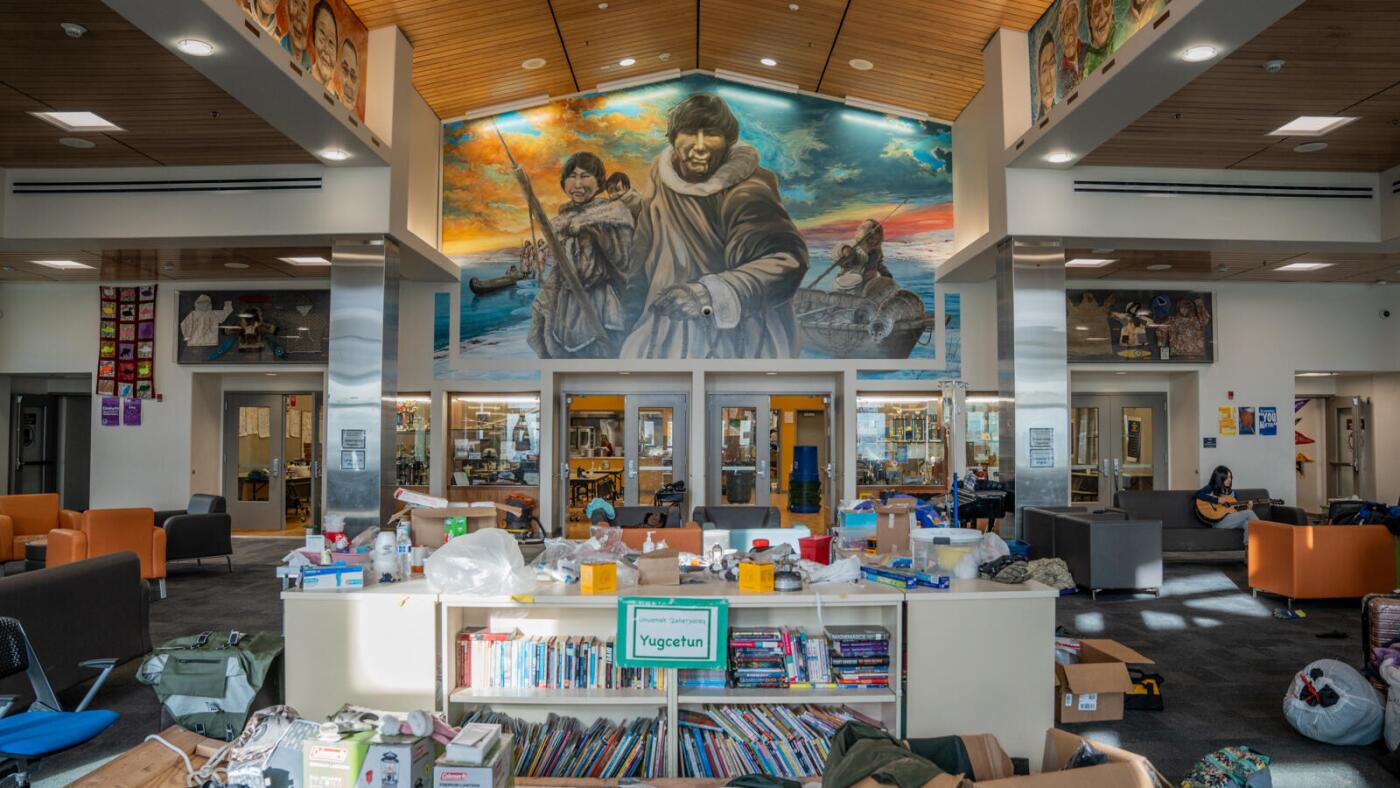
Amid the vast and rugged terrains of Alaska, public schools serve as crucial lifelines during natural disasters. In the small village of Kipnuk, with a population of 700, residents recently found refuge in the local school when a powerful storm hit the area. This incident has underscored the importance of these institutions, but also highlighted the urgent need for infrastructure improvements.
During a storm in October, the remnants of Typhoon Halong caused widespread damage in Kipnuk. Residents, including James Taq’ac Amik, sought safety at the Chief Paul Memorial School. Amik described the harrowing experience, noting, “The houses started drifting away around 5:30 a.m. There was still lights in them, there was people in them.” This account illustrates the gravity of the situation as the community battled the elements.
While the school managed to withstand the storm due to its elevated design, it was not without issues. The main generator, vital for providing power, was undergoing repairs. Additionally, the backup generator failed to meet the increased demands when the school became the primary shelter for hundreds of people. Residents were forced to evacuate after two days as local leaders deemed the damage too severe.
The scenario in Kipnuk is not isolated. Across Alaska, many rural schools face similar challenges. These educational buildings are often the only structures equipped with essential amenities like flush toilets and independent power sources. They are elevated on pilings, making them safe havens in flood-prone areas. However, the neglect of their maintenance and infrastructure continues to pose a significant risk during emergencies.
Alaska state Sen. Löki Tobin emphasized the critical role of schools in disaster response, stating, “It is a known fact that if you need to evacuate, you evacuate to the elementary school.” Yet, despite their importance, many schools have been inadequately maintained due to a lack of funding. Over the past 28 years, Alaska’s rural school districts have submitted nearly 1,800 funding requests for repairs, but only 14% have been approved.
The state’s legal obligation to support construction and maintenance in rural districts, where local tax revenue is nonexistent, has not been fully met. This situation has left many communities vulnerable, with schools unable to serve their dual role as shelters effectively. Alaska Education Commissioner Deena Bishop noted, “The crux of the situation is that we get to an emergency because we didn’t take care of it.”
The challenges extend to other villages like Kotlik and Chevak, where residents also rely on schools for shelter. Despite repeated funding requests for essential repairs, many remain unmet. In Chevak, for instance, the school district’s recent $32 million request to update and renovate facilities was not among the projects funded by the state.
The lack of formal agreements between Alaska’s emergency management division and the education department regarding schools as emergency shelters compounds these issues. While schools are primarily designed for education, their role in community safety during disasters cannot be overlooked. As Tobin pointed out, “They’re not just institutions of learning. They’re also institutions of after-school activities, of community gatherings, and of evacuation facilities and disaster preparedness support infrastructure.”
Efforts to address these challenges have been ongoing, but the need for a cohesive strategy and adequate funding remains urgent. As natural disasters become more frequent and severe, ensuring the resilience of Alaska’s public schools is essential to safeguarding its remote communities.




