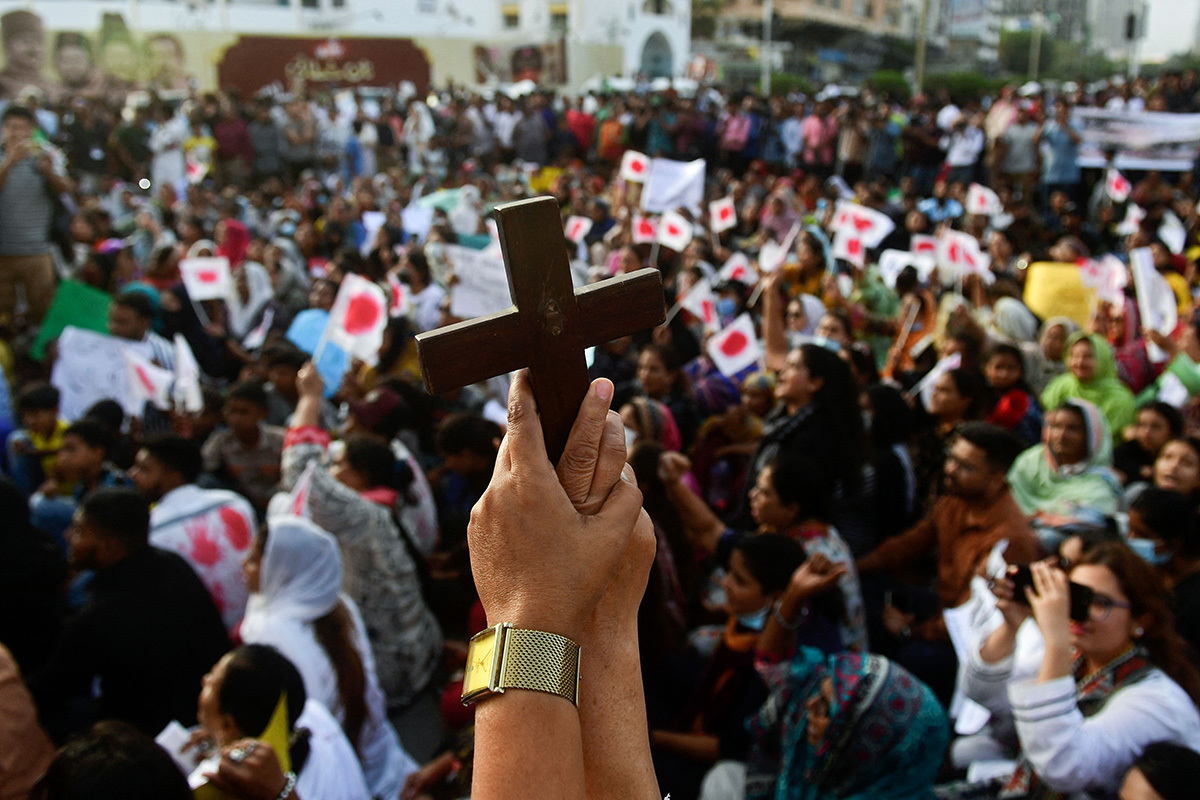
Pakistan Establishes National Commission for Minorities: A Step Forward Amidst Controversy
In a significant move towards protecting religious minorities, Pakistan’s Parliament has enacted a law to form a National Commission for Minorities. This development, though long-awaited, has evoked mixed reactions from various stakeholders.
On December 2, the legislation was passed in a joint parliamentary session with 160 votes in favor and 79 against, amid protests and walkouts from religious parties, as reported by the Center for Legal Aid and Assistance (CLAAS-UK) (source).
The commission’s role includes investigating rights violations, advising the government, and promoting minority welfare. It was established following a 2014 Supreme Court directive after numerous attacks on non-Muslim communities.
However, the bill has sparked debate over its scope, particularly regarding the exclusion of Ahmadiyya Muslims and the removal of certain powers from the commission. Law Minister Azam Nazeer Tarar defended the bill, stating, “It clearly defines minorities” and assured no legislation would contradict the Quran and Sunnah (source).
Originally, the commission was to have powers such as inspecting prisons and summoning witnesses, but these were omitted after President Asif Ali Zardari returned the earlier draft for revisions.
Notably, the Ahmadiyya community, despite identifying as Muslim, is excluded from the commission as per state laws. Tarar mentioned the exclusion of “mischief-makers or those who do not consider themselves non-Muslims,” a clear reference to the Ahmadiyya, who have condemned their exclusion.
Amir Mehmood, a spokesman for the community, expressed concern over hate speech during parliamentary debates, stating that Ahmadis were deliberately excluded.
The commission comprises 18 members, including representatives from various minority groups and human rights experts, with appointments made by the Prime Minister for three-year terms.
While rights groups welcome the establishment of the commission, they express concerns about its limitations. The Human Rights Commission of Pakistan emphasized the need for equal protection for all minorities (source).
Nasir Saeed from CLAAS-UK highlighted the importance of the commission’s active role in addressing issues such as forced conversions and misuse of blasphemy laws. He stressed the need for transparent and fair representation.
Naeem Yousaf Gill of the National Commission for Justice and Peace criticized the government’s approach, warning of potential challenges due to political appointments and legal overlaps.
Pakistan’s religious minorities, including Christians, Hindus, and Sikhs, constitute about 4% of the population and have faced systemic issues such as discrimination and forced conversions.
This legislative move comes amid broader concerns over democratic practices in Pakistan, highlighted by recent constitutional amendments granting significant powers to the military.
Pakistan ranks as the eighth-worst country for Christian persecution in the 2025 World Watch List by Open Doors, an organization monitoring religious persecution globally (source).
This article was originally written by www.christianpost.com