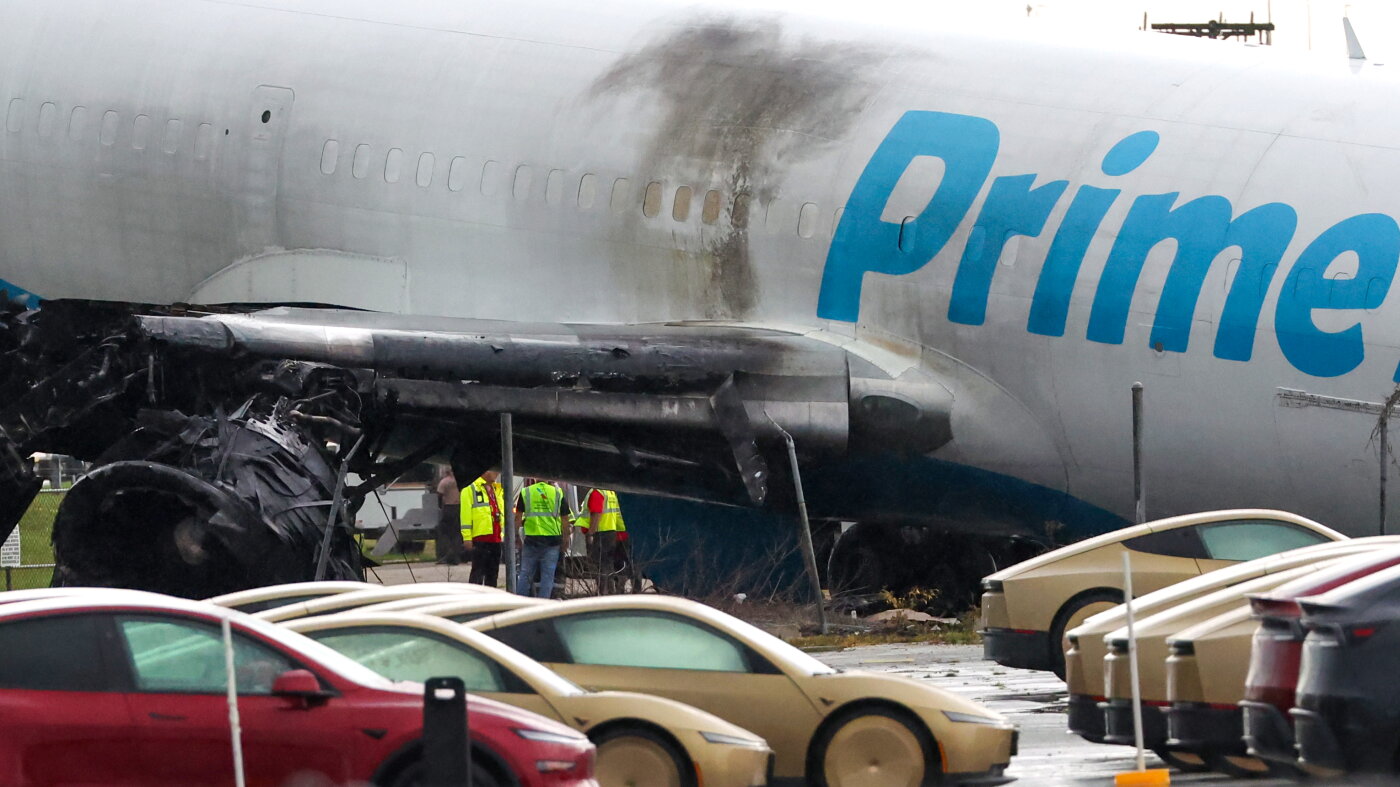
Amazon Cargo Plane Tragedy at Miami Airport Under Investigation
In a shocking accident at Miami International Airport, an Amazon cargo plane’s attempted landing turned catastrophic, leading to the loss of five lives. The National Transportation Safety Board (NTSB) is in the midst of investigating the incident, which occurred during the plane’s arrival from Puerto Rico amid stormy conditions.
According to preliminary flight data, the aircraft attempted to abort an unstable landing but ultimately collided with a van, resulting in fatalities. NTSB investigators plan to interview the pilot and co-pilot to shed light on the events that led to the crash, which also left five individuals injured.
Details Emerge on the Crash
The accident, which happened as the plane overshot the runway, left the aircraft with its nose down and visible damage near its “Prime Air” logo. NTSB Chairwoman Jennifer Homendy highlighted that investigators are examining flight data and cockpit recordings to determine why the pilots did not utilize thrust reversers to halt the plane.
Among the deceased were five individuals inside a van used for airport crew shuttle services. The van, along with an SUV struck on a city street, remained at the crash site as investigations continued.
Unstable Landing and Possible Hesitation
As the NTSB delves into the incident, experts are scrutinizing the plane’s landing approach, which was reportedly unstable. Mike O’Donnell, a former FAA official, noted the plane’s touchdown on its nose and right landing gear, suggesting a delayed attempt to abort the landing. “A go-around probably should have been executed sooner than that. And it seems like they hesitated,” O’Donnell commented.
Aviation attorney Mary Schiavo suggested that there might have been a disagreement between the pilots, and adverse weather conditions could have played a role in pushing the plane beyond its intended landing point.
Airport Safety Measures Questioned
The lack of a specialized system at Miami’s runways to manage runaway planes has come under scrutiny. Although the airport meets FAA requirements for cleared buffer zones, it lacks the lightweight, crushable material used in over 120 U.S. airports that has reportedly saved numerous lives.
Impact on Airport Operations
The crash caused significant disruptions at Miami International Airport, with over 225 flight cancellations and more delays. However, the airport resumed operations on a third runway after the NTSB released it for use.
Background on the Aircraft
The Boeing 767 involved in the accident was operated by 21 Air, a North Carolina-based cargo carrier. Originally constructed as a passenger plane in 1994, it was later converted for cargo use in 2015.
As the investigation continues, the NTSB aims to identify the accident’s cause and propose measures to prevent similar incidents, though the final report may take a year or more to complete.
This article was originally written by www.npr.org