
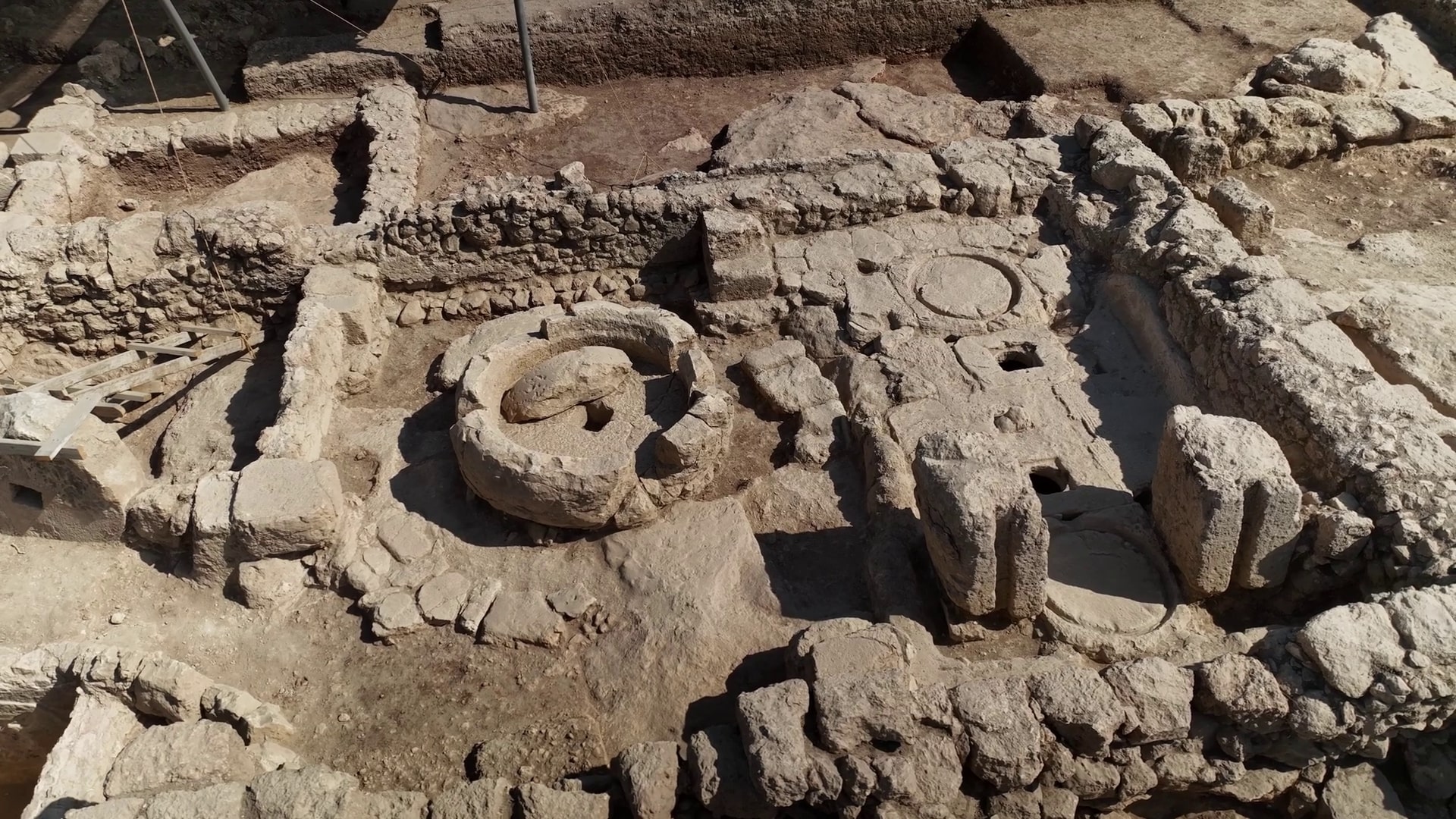
(Photo: Emil Aladjem / Israel Antiquities Authority)
In a remarkable archaeological find, experts have uncovered a significant Samaritan agricultural estate in central Israel. This site is linked to Simon the Sorcerer, a biblical figure known for his magical abilities and subsequent conversion to Christianity.
Simon, as depicted in the book of Acts, initially practices magic but later turns to Christianity after witnessing the miracles of the apostles, including Peter. His attempt to buy the power of the Holy Spirit from Peter led to the coining of “simony,” referring to the trade of church positions.
Simon is thought to have initiated a Gnostic sect, with his successor being Menander, another Samaritan magician born at Kh. Kafr Hatta, the location of the newly discovered estate.
The Israel Antiquities Authority, collaborating with the Israeli Ministry of Construction and Housing, is conducting this excavation amidst new housing developments.
Spanning approximately 400 years from the 4th to 7th centuries AD, the estate thrived under Roman and Byzantine influences.
Directors of the excavation, Alla Nagorsky and Dr. Daniel Leahy Griswold, remarked, “The size and splendor of the buildings discovered, the quality of their mosaic floors and the impressive agricultural installations, all point to the great wealth and prosperity of the local Samaritan community over the years.”
The site includes intricate mosaics, fruit-themed decorations, a sophisticated olive press, a storage facility, and a public purification bath.
Commenting on the olive press, Nagorsky noted, “This type of olive press is more typical of the Jerusalem region and the Judean Shephelah and is less common in Samaria.”
The estate saw transformations, with luxurious structures giving way to agricultural utilities. Mosaic floors were disrupted by new walls, and architectural elements like capitals and columns were reused in the construction of these walls.
During the 5th and 6th centuries, the Samaritans revolted against Byzantine rule, leading to widespread destruction. However, this estate managed to preserve Samaritan culture, even as it faced threats from the Byzantine empire.
Nagorsky expressed the site’s significance, saying, “This is a fascinating site, which displays the historical gamut between the days of prosperity and the decline of the Samaritan community. Its long-term existence and impressive findings will allow us to reconstruct its history over centuries and will enrich our knowledge about this population in ancient times.”
This article was originally written by www.christiantoday.com




