
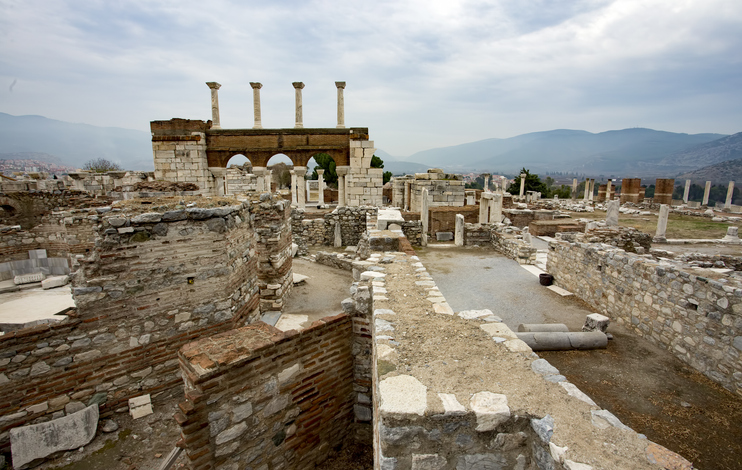
Unveiling Early Christianity: New Archaeological Discoveries in Turkey
Recent archaeological findings in Turkey are offering groundbreaking insights into the early centuries of Christianity. These discoveries are reshaping historical narratives about how this once-persecuted faith evolved into a dominant global religion.
Revealing the Earliest Image of Jesus
One of the most extraordinary finds is a fresco believed to be the best-preserved early depiction of Jesus. Discovered near Iznik, ancient Nicaea, this image from the early-to-mid third century AD shows Christ as the Good Shepherd, a youthful and beardless figure clad in Roman attire. The fresco’s excellent preservation is attributed to its burial in a low-oxygen tomb for nearly 1,800 years.
Uncovering Forgotten Churches
Archaeologists have identified over a dozen previously unknown churches from the fourth and fifth centuries AD throughout Turkey. These findings illustrate the rapid expansion of Christianity in the eastern Roman Empire as it transformed from a marginalized faith to the empire’s official religion.
Evidence of Early Christian Gatherings
In Laodicea, a rare “house church” has been unearthed, dating to the fourth century. This site offers a rare glimpse into early Christian worship before the establishment of public churches, highlighting the transitional period when private gatherings were becoming more public.
Deciphering Ancient Christian Messages
Inscriptions found in Smyrna, present-day Izmir, suggest early Christian writings. These cryptic messages, including references to “Logos,” hint at how early believers discreetly communicated their faith in a hostile environment.
Saint George in Early Christian Art
In Pergamon, a fifth-century pilgrim flask features what might be one of the earliest images of Saint George, depicting him slaying a dragon. This discovery sheds light on the early development of the cult of saints.
Christian Resistance to Roman Emperor Worship
Excavations in Pergamon are revealing the tension between early Christians and the Roman imperial cult. The region’s temples and monuments dedicated to emperor worship illustrate why early Christians, as seen in the Book of Revelation, resisted the deification of emperors.
Revisiting the Cities of Revelation
Archaeological efforts in cities like Sardis and Pergamon are connecting biblical texts with historical contexts. Discoveries include a massive sixth-century church in Sardis and evidence of early Christian martyrdom in Pergamon’s amphitheatre.
A Glimpse into Byzantine Christian Life
In Ephesus, archaeologists have uncovered a district preserved by a Byzantine-era fire, akin to Pompeii. This site provides a detailed snapshot of Christian life in the sixth and early seventh centuries, with numerous artefacts depicting a vibrant Christian community.
Understanding Christianity’s Rapid Expansion
New research suggests several factors behind Christianity’s swift growth, such as communal support systems, demographic influences, and political instability. Interestingly, persecution may have bolstered the faith’s appeal by fostering narratives of resilience and sacrifice.
Together, these discoveries from Turkey illuminate how Anatolia served as a vital center for early Christianity. This region was not just a backdrop but a significant contributor to the spread and development of Christian faith, offering a clearer understanding of how it transitioned into a worldwide religion.
This article was originally written by www.christiantoday.com


