Azerbaijan’s Release of Armenian Prisoners Marks a Tentative Step Toward Peace
The ongoing peace efforts between Azerbaijan and Armenia have seen a notable development with the release of four Armenian prisoners. This move, viewed as significant by officials in Yerevan, witnessed the men being returned at the Khakari Bridge, although some parties have labeled it as an “incomplete exchange.”
Armenian Prime Minister Nikol Pashinyan took to social media to confirm the release, identifying the prisoners as Gevorg Sujyan, Davit Davtyan, Vicken Euljekjian, and Vagif Khachatryan. Three of these individuals were detained following the 2020 conflict over Nagorno-Karabakh, while Khachatryan was apprehended in July 2023 during a Red Cross evacuation for medical reasons, as reported by Christian Solidarity International.
The prisoners had been sentenced to substantial prison terms ranging from 15 to 20 years on charges such as espionage and arms smuggling, according to Azerbaijani authorities. However, Armenian officials and human rights advocates have criticized these detentions, labeling them as illegal and politically charged.
Pashinyan’s office explained that Sujyan and Davtyan were humanitarian volunteers, while Euljekjian, a Lebanese-Armenian, was captured post-ceasefire in November 2020. The organization also highlighted that Khachatryan, aged 70, was accused of genocide after being removed from an ambulance amidst Azerbaijan’s blockade of the region.
In a reciprocal gesture, Armenia released two Syrian nationals, Yousef Alaabet al-Hajji and Muhrab Muhammad al-Shkhari, who were previously convicted and serving life sentences for fighting with Azerbaijani forces during the 2020 conflict. Described as “jihadists” by CSI, these individuals were repatriated to Syria via Turkey, as per Armenia’s Ministry of Justice.
The releases coincide with diplomatic talks between Armenian Foreign Minister Ararat Mirzoyan and U.S. Secretary of State Marco Rubio in Washington. These discussions focused on the U.S.-backed TRIPP initiative, which proposes a corridor linking Turkey and Azerbaijan through Armenia’s southern border with Iran—a topic of concern for Armenia due to Azerbaijani territorial claims.
Despite the prisoner release being perceived as a forward step in peace negotiations post Azerbaijan’s 2023 military campaign, which displaced over 100,000 ethnic Armenians from Nagorno-Karabakh, talks remain in a deadlock. Points of contention include constitutional amendments demanded by Azerbaijan, which have incited dissatisfaction among Armenians, despite Armenia’s acknowledgment of Azerbaijani sovereignty.
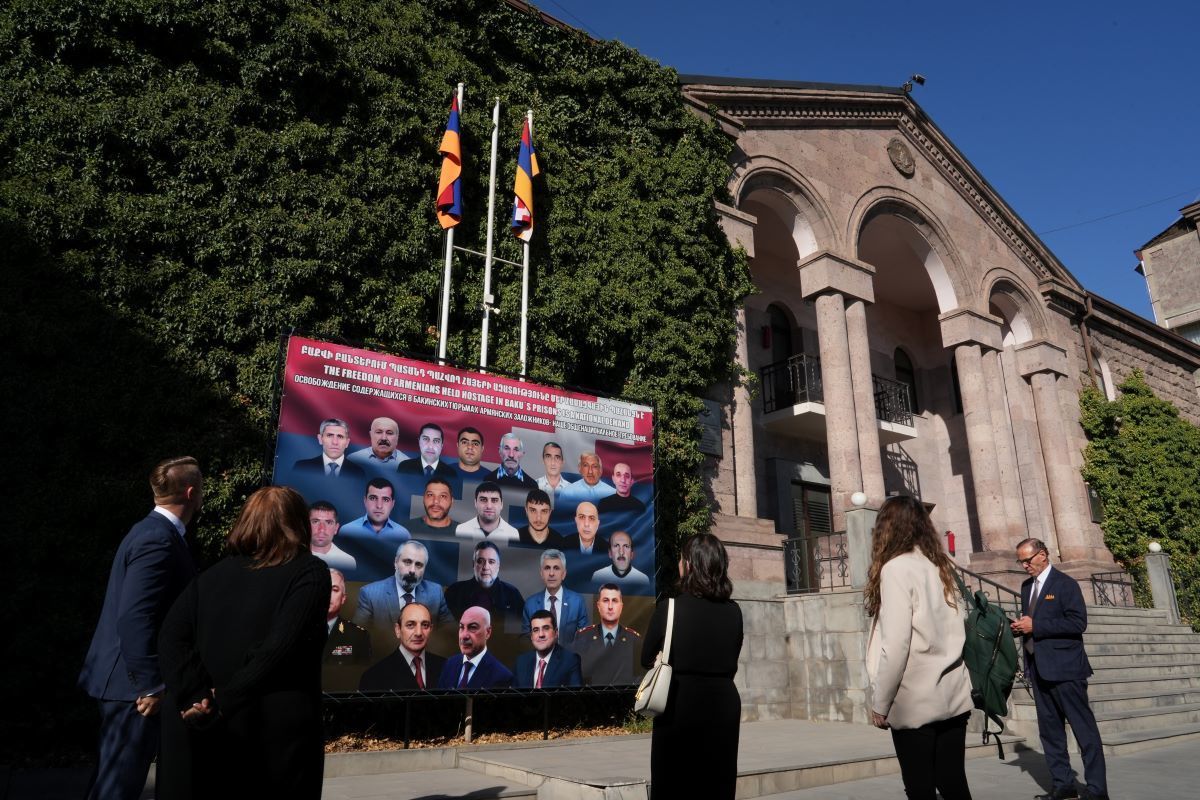
Currently, Azerbaijan detains over 20 Armenian prisoners, many of whom are former officials from the self-declared Republic of Artsakh. Baku has charged them with terrorism, war crimes, and attempts to overthrow the government.
Among these detainees is Ruben Vardanyan, a former senior official facing 42 charges, including terrorism, potentially leading to a life sentence. Concerns over the fairness of these proceedings have been raised, with trials reportedly held behind closed doors and limited legal representation available.
Christian Solidarity International has criticized these trials as “sham proceedings,” and the European Parliament has expressed apprehensions regarding due process violations and restricted familial and legal access. CSI President John Eibner remarked that while the recent releases are positive, they reflect a broader trend of hostage diplomacy.
The organization has also documented the forced disappearance of at least 80 ethnic Armenians since the 2020 conflict.
The four men freed recently were part of a group referred to by President Donald Trump as “23 Christians” during the signing of a U.S.-mediated peace agreement in August 2025. At that time, Trump pledged to encourage Azerbaijan to release all Armenian detainees.
Yerevan has long accused Baku of using prisoners as bargaining chips in political negotiations. Armenian human rights officials argue these detentions breach the Geneva Conventions and international humanitarian law.
The Armenian prisoners were transferred at the Khakari Bridge, a pivotal crossing between the two nations, situated near Armenia’s southern Syunik province.
This article was originally written by www.christianpost.com