New Regulations Aim to Improve Accessibility for Blind Students at Public Institutions
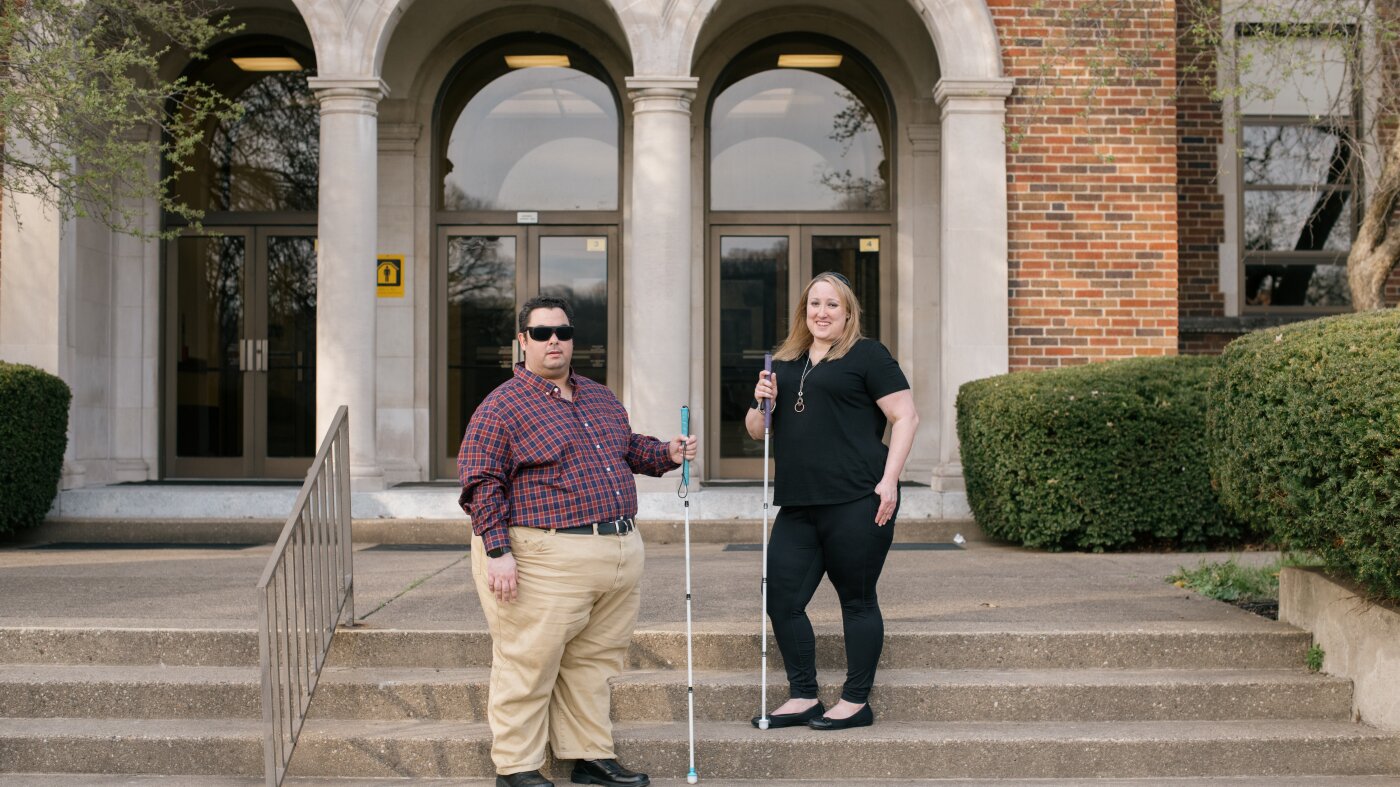
Miranda Lacy and Harold Rogers, who met during their undergraduate studies, are now facing significant challenges in their graduate program at West Virginia University (WVU). Both students are blind and have struggled with inaccessible learning materials, prompting them to take legal action against the university. This situation highlights ongoing issues with digital accessibility in education, which new regulations under the Americans with Disabilities Act (ADA) aim to address.
As students in WVU’s online Master’s in Social Work program, Lacy and Rogers have found that many course materials are not compatible with screen readers. “It’s been like going down a ski slope without any assistance,” says Rogers, 34. These challenges are representative of broader issues in digital accessibility for students with disabilities.
A forthcoming update to ADA regulations, effective at the end of April, will require public institutions to adhere to new standards for digital accessibility. The updated rules recognize that inaccessible web content and mobile apps can exclude individuals with disabilities, akin to physical barriers such as stairs for wheelchair users. The rule mandates compliance with the Web Content Accessibility Guidelines (WCAG 2.1).
“I can’t let this hold me back”
Lacy, a 43-year-old single mother, lost her vision due to a rare genetic disease. Despite undergoing a hopeful surgery that resulted in complete vision loss, she remains determined to pursue her education. “I have to do this, I can’t let this hold me back,” she says, reflecting on her decision to learn technology without sight.
When Lacy and Rogers began their graduate program, they expected WVU to be accommodating. However, they encountered numerous inaccessible documents, which affected their ability to study effectively. “It’s trying to scramble to see what is broken and how can we navigate through that,” Rogers explains.
Students with disabilities are often forgotten
For blind students, accessing educational materials is often more complex than simply downloading a document. Rogers demonstrates the challenges by opening a PDF with his screen reader, which repeatedly announces errors and unlabeled images. These issues have led Lacy and Rogers to spend more time troubleshooting than learning.
Their experiences at WVU have prompted them, with support from the National Federation of the Blind, to file a lawsuit against the university for denying equal access to education. NPR’s request for comment from WVU on the lawsuit was met with the response, “We’re not going to comment on pending litigation.”
Digital accessibility was “a crisis”
Jennifer Mathis from the U.S. Department of Justice has been instrumental in developing the new ADA rule. She acknowledges the longstanding requirement for web accessibility under the ADA but notes the absence of specific technical standards. The new rule aims to rectify widespread inaccessibility, particularly in education, by setting clear guidelines for compliance.
Judith Risch, who contributed to the rule, emphasizes that these changes will benefit all users, not just those with disabilities. Publicly funded institutions serving large populations must comply with the new standards by April 24, while smaller institutions have until 2027.
How colleges are getting ready
Many colleges are now focused on ensuring digital materials are accessible from the start. “The new ADA rule is essentially flipping that to say, everything digital must be born accessible,” explains Ella Callow, an ADA compliance officer at UC Berkeley. The transition requires resources, but accessibility teams often lack the necessary support.
Although the rule sets clear compliance guidelines, enforcement may still depend on individuals with disabilities advocating for their rights. “There’s nobody that’s coming around annually and checking,” Callow notes. As Lacy and Rogers continue their legal battle, they remain hopeful for a more inclusive future for all students with disabilities.
Edited by: Steve Drummond
Visual design and development by: LA Johnson