Declining Catholic Influence in Latin America’s Religious Landscape
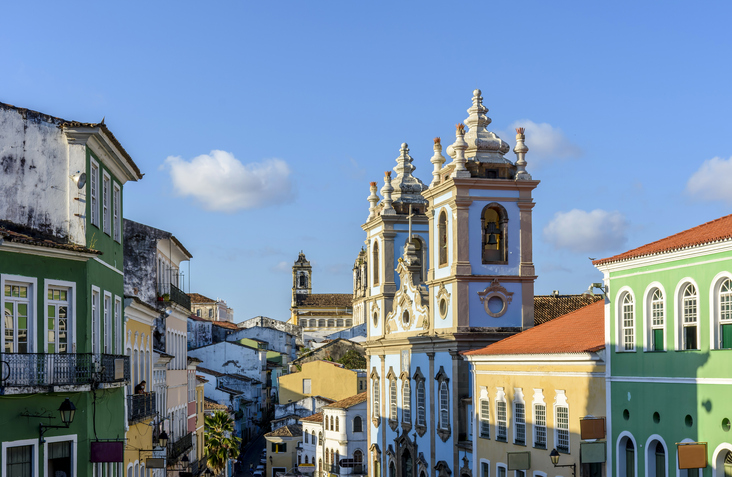
(Photo: Getty/iStock)
The religious identity of Latin America is experiencing notable shifts, as recent studies reveal a gradual decline in Catholicism’s dominance. Despite the enduring prevalence of religious belief in the region, more adults are now identifying as religiously unaffiliated.
Research conducted by the Pew Research Center highlights a reduction in the number of people identifying as Catholic in six of Latin America’s most populous countries: Peru, Brazil, Mexico, Colombia, Argentina, and Chile. This analysis forms part of the Pew-Templeton Global Religious Futures project, funded by The Pew Charitable Trusts and the John Templeton Foundation.
Surveys conducted in 2024 involving over 6,200 adults show a growing trend of individuals in Latin America identifying as atheist, agnostic, or having no particular religious affiliation.
Despite this trend, religious belief remains more pronounced in Latin America compared to many other global regions, especially Europe. Nearly 90% of adults in the surveyed countries express belief in God.
In countries such as Peru, Colombia, Brazil, and Mexico, religion is considered highly important by at least half of the population, with daily prayer practices especially common in Brazil, Colombia, and Peru.
Though Catholicism continues to be the predominant faith in these countries, its majority has significantly decreased over the past decade. In Brazil and Chile, only 46% of adults identify as Catholic, while Mexico, Argentina, Peru, and Colombia maintain reduced Catholic majorities at 67%, 58%, 67%, and 60%, respectively.
The number of religiously unaffiliated individuals has surpassed that of Protestants in Argentina, Colombia, Chile, and Mexico. Protestant Christianity has seen minimal change, although Brazil has the largest Protestant community among the surveyed countries, with 29% identifying as Protestant, up by 3% over the last ten years.
Pentecostal churches maintain their influence but represent a smaller segment of the Protestant demographic as other denominations gain ground.
The study also underscores significant religious switching, with at least 20% of adults in each country having left the Catholic Church. Most of these former Catholics now identify as having no religious affiliation, while some have joined Protestant congregations.
The rise of the religiously unaffiliated, or “nones,” does not equate to a decline in belief. Many still profess belief in God, with approximately 75% of unaffiliated individuals in Mexico affirming such belief.
The research reveals differences in religious engagement among Catholics, Protestants, and the unaffiliated. Protestants generally report higher levels of prayer and religious commitment, though Catholics exceed Protestants in some areas in select countries.
While the unaffiliated are typically less active in religious practices, many retain core beliefs associated with Christianity. When compared to European Christians, Latin America’s “nones” exhibit similar levels of religious commitment, particularly concerning belief in God.
This article was originally written by www.christiantoday.com