Exploring the Future of Christian Media in the Era of AI and Misinformation
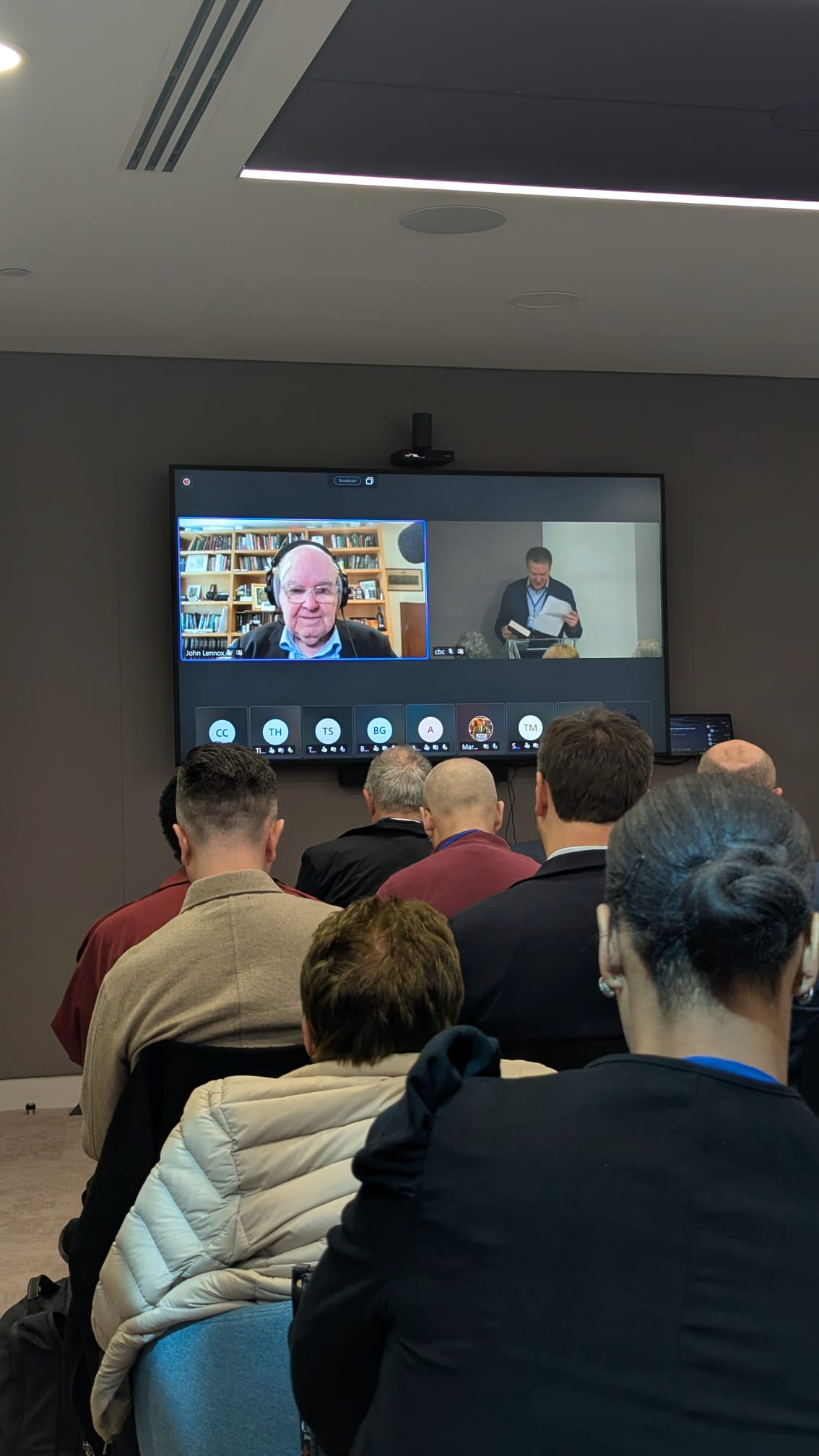
In a rapidly changing world where artificial intelligence and misinformation shape public discourse, Christian media professionals convened in London earlier this month. The occasion was ‘Revive 2026’, a gathering hosted by the Christian Broadcasting Council (CBC) at Premier Christian Radio’s new headquarters to commemorate CBC’s 40th anniversary. This event served as a platform for journalists, broadcasters, and digital communicators to discuss the evolving landscape of Christian communication.
Oxford Professor John Lennox engaged in a compelling dialogue with broadcaster and keynote speaker Justin Brierley, focusing on the rise of artificial intelligence. Lennox highlighted AI’s positive contributions, particularly in fields like medicine, logistics, and Bible translation, yet he cautioned about the potential for increased deception due to overreliance on technology.
“Artificial intelligence has two sides,” he stated. “It is a great help in many areas, including Christian mission. But there are huge dangers because it is going to make people lazy, and it is already doing so.”
Lennox referred to academic studies indicating that even limited use of AI could diminish critical thinking skills. He also raised concerns about misinformation and deepfakes, stressing the need for Christian communicators to be more vigilant.
“The greatest danger is deception,” he explained. “Deepfakes are going to become increasingly realistic, and putting those fires out will become difficult.”
He urged media professionals within the Christian community to engage in public discourse with thoughtfulness. “Do not simply think about what you want to say,” he advised. “Think about how your message could be misunderstood.”
Gareth Russell, chief executive of Jersey Road, presented insights from the ‘Christianity in the News Media Report 2025’. His findings revealed that mainstream reporting on Christianity often adheres to narrow stereotypes, focusing heavily on institutional churches rather than the diverse and growing Christian communities.
“The narrative around Christianity has often been misrepresentative of our faith,” he remarked. “We wanted to change that through better stories.”
Russell highlighted the disconnect between media narratives and the growing faith among younger generations, citing the influence of Christian athletes and public figures. “Young men are seeing sports personalities and public figures confidently talking about their faith,” he pointed out.
He emphasized the importance of churches engaging proactively with media by sharing personal stories and community impact. “People don’t necessarily care that you are Christian,” he said. “They care that you are doing good in the community.”
Lani Charlwood, executive director of Langham Arts and chair of Christians in Media, called for unity among Christian journalists and broadcasters, despite differing opinions. “We are not called to uniformity of opinion,” she stated. “We are called to unity of purpose.”
Charlwood described Christian media as a medium of “purpose, integrity, hope, challenge and justice,” rather than division or outrage.
Reflecting on the history and influence of Christian broadcasting in the UK since 1995, Premier CEO Kevin Bennett discussed the significant role media plays in shaping public agendas and perceptions. “The media tells us what is on the agenda and what is important; it then sets the agenda. It then tells us how to understand the issues with how it frames them,” he noted.
Bennett concluded by quoting poet William Blake, emphasizing the power of media in shaping perceptions: “We become what we behold. We have to choose what we behold each day, whether that’s in the media or real life.”
This article was originally written by www.christiantoday.com