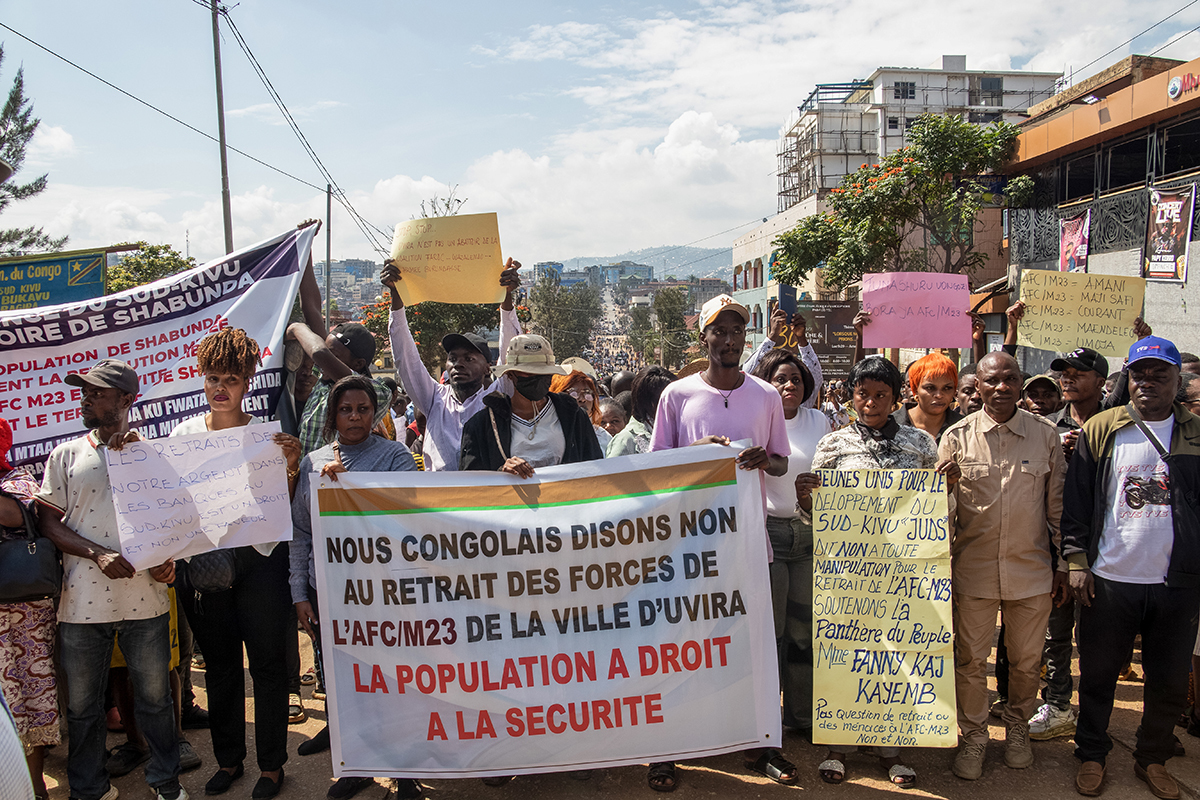
Crisis Escalates as Thousands Flee Eastern Congo Amid Renewed Rebel Offensive
In recent weeks, tens of thousands of Congolese have made a perilous journey to Burundi, escaping the intensified violence led by M23 rebels in the Democratic Republic of Congo’s eastern region. The influx has overwhelmed border areas and led to urgent calls from churches for global assistance.
The UNHCR reports over 88,000 individuals have crossed into Burundi from eastern DRC since December 5 due to the ongoing M23 insurgency in South Kivu. Refugees and host communities face overcrowded living conditions, food and water shortages, and disease outbreaks.
The crisis escalated when the strategic port city of Uvira fell to M23 rebels on December 10. This move was seen by the U.S. as a breach of the Washington Accords, a peace agreement signed days earlier by regional leaders and former President Trump, as per the U.S. Department of State.
Edmund Gakiza, the general secretary of the Alliance of Evangelicals in Burundi, emphasized the gravity of the situation, describing it as both a humanitarian and moral crisis. “This is no longer a situation the state or humanitarian agencies can manage alone,” he told Christian Daily International. “Churches have become the first point of contact for many families arriving with nothing but fear and exhaustion.”
Despite diplomatic efforts, including the Washington Accords signed in early December, the fighting persists. The U.S. Secretary of State, Marco Rubio, criticized Rwanda’s actions that undermine the agreement, stating on social media platform X, “Rwanda’s actions in eastern DRC are a clear violation of the Washington Accords signed by President Trump, and the United States will take action to ensure promises made to the President are kept.”
Churches are finding it increasingly difficult to meet the growing needs of refugees. Gakiza remarked, “We understand this crisis as the visible consequence of prolonged violence, insecurity, and broken governance.” Local congregations are providing essential aid, yet the demand continues to exceed their capacity.
At sites like Ndava and Musenyi, conditions are worsening, with rising cases of malaria, cholera, and measles reported. Gakiza highlighted the vulnerability of children, noting that approximately 83% of the refugees, mainly women and children, are experiencing severe emotional distress, as observed in field assessments.
The situation reached a critical point on December 18, 2025, when Burundian Interior Minister Leonidas Ndaruzaniye initiated a comprehensive emergency response plan. An interagency appeal was launched to raise $33.2 million to support 90,000 new arrivals over four months. Concurrently, the ministry mandated that refugees in private accommodations return to monitored transit sites to mitigate security concerns and a worsening cholera outbreak at the Gatumba camp.
Medical organizations like Doctors Without Borders reported on December 23 that conditions in reception areas are deteriorating, with families living in mud-soaked tents and a high rate of malaria among residents.
“We call the global church for prayer, solidarity, and practical support to these victims,” Gakiza appealed.
This article was originally written by www.christianpost.com