A New Chapter for Cuban Dissident Artist Luis Manuel Otero Alcántara
In an emotional reunion, Cuban dissident artist Luis Manuel Otero Alcántara touched down in Miami on Saturday, marking the end of a turbulent five-year incarceration in Cuba. His release came with the stipulation that he leave his homeland, a condition he accepted to pursue his art and activism without fear of persecution.
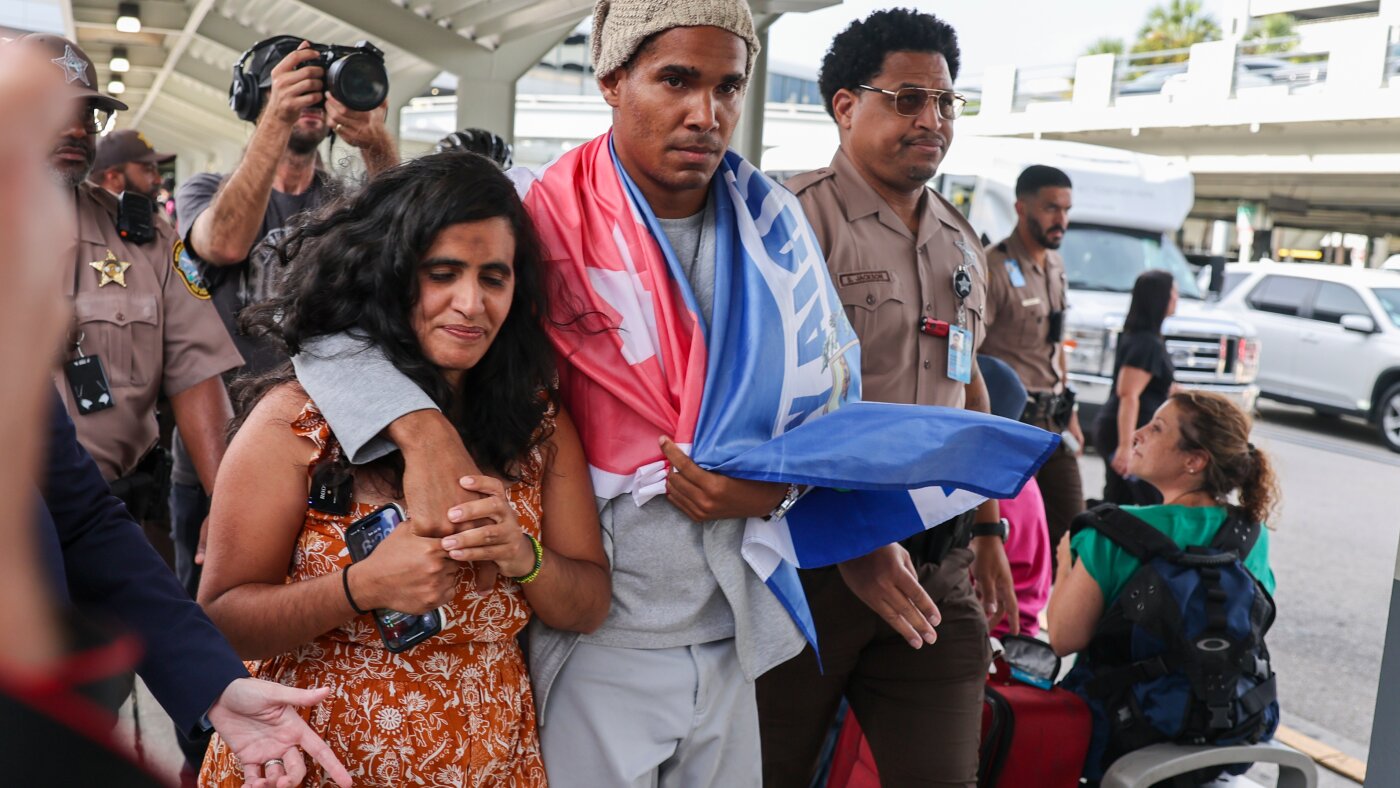
As Alcántara, aged 38, emerged into Miami International Airport, he was met with an enthusiastic gathering. Supporters cheered, sang, and captured the moment on their phones. Adorned with a Cuban flag bearing the words “Patria y Vida”—”Homeland and Life”—the title of a Grammy-winning song that became a rallying cry against Cuban repression, Alcántara’s arrival symbolized hope for many.
According to his supporters’ social media updates, the U.S. granted Alcántara parole earlier in the week, allowing him entry into the country. His decision to accept exile was described as a necessary step to continue his influential work.
Alcántara is known for co-founding the San Isidro Movement, a collective of artists, writers, and musicians named after his neighborhood in Havana. His activism led to his arrest on July 11, 2021, following a public protest. By 2022, he was sentenced to a five-year term for charges including public disorder and disrespecting national symbols.
His imprisonment had been widely criticized by human rights organizations and the U.S. government, with entities like Amnesty International labeling him a political prisoner—a claim rejected by Cuban authorities. Despite being held in maximum security, Alcántara’s supporters struggled to confirm his status until he boarded a flight to the U.S.
Efforts to secure his release included a habeas corpus petition filed by Cubalex, a group that provides legal advice to dissidents and reports on human rights abuses in Cuba.
Upon setting foot on American soil, Alcántara expressed his intention to visit the Shrine of Our Lady of Charity, carrying with him a broken statue of the Virgin Mary from Cuba. He described the statue as a symbol of hope and healing.
While Alcántara begins his new journey, advocates continue to push for the release of other political prisoners, including fellow artist Maykel “Osorbo” Castillo Pérez, hoping Alcántara’s freedom will ignite further demands for justice.
Image Credit: David Santiago/AP