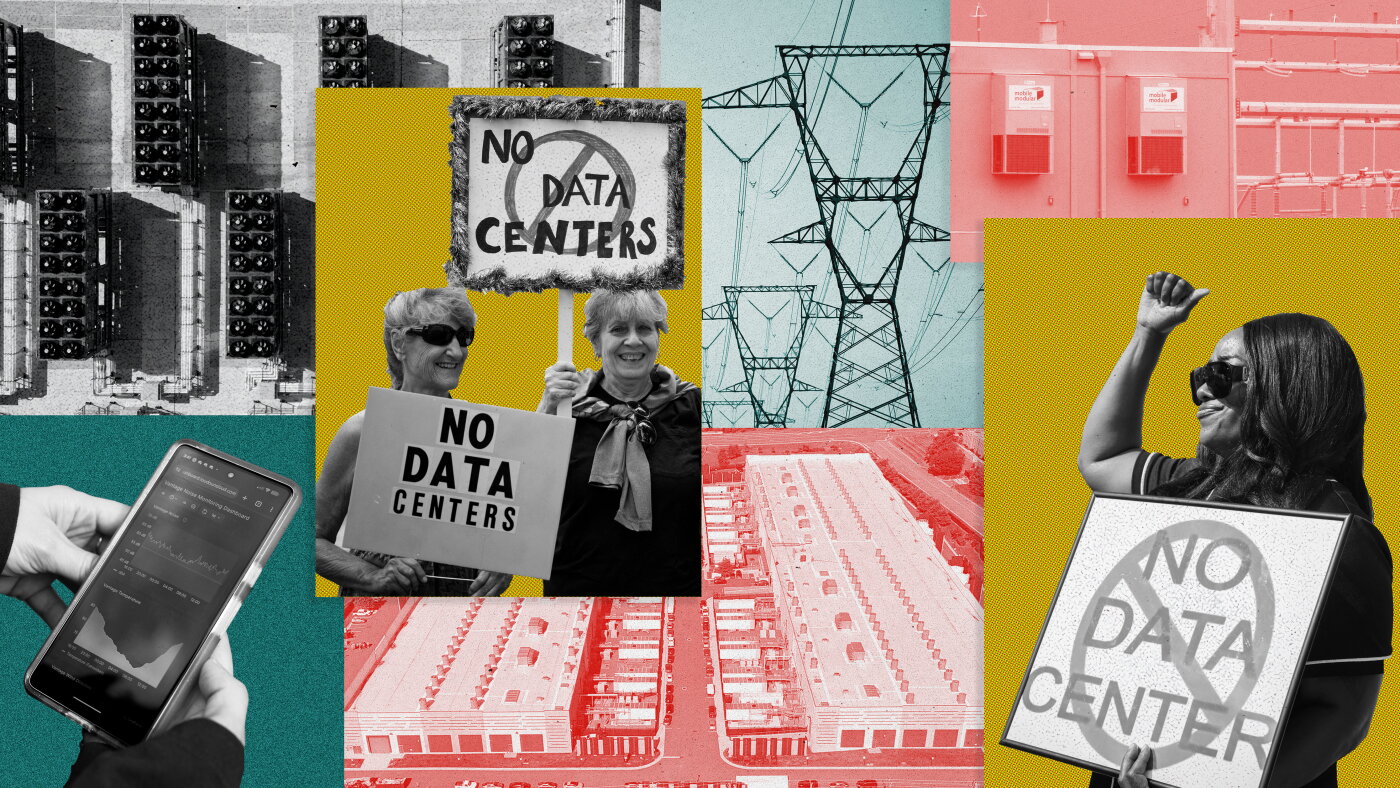
Communities Nationwide Grapple with the Expansion of Data Centers
Across the United States, the rapid growth of data centers is sparking debates that transcend political lines, bringing together unlikely allies in a common cause. This contentious issue sees citizens and local representatives often at odds, as the expansion of these facilities prompts concerns over transparency, environmental impact, and economic implications.
Data centers have turned local politics on its head, according to Darrell West of the Brookings Institution. He notes that fears over job displacement by artificial intelligence and other existential concerns are fueling grassroots movements against these facilities. “People just feel like they no longer have control over the technology, [and] that worries them,” West stated.
Distrust and Transparency Issues
NPR’s investigation into data center hotspots reveals a complex picture. While these centers have economically benefited some regions by lowering taxes and providing jobs, the lack of transparency in deals has heightened public suspicion. Many agreements involve elected officials signing nondisclosure agreements, leading to a perception of secrecy and exclusion from decision-making processes.
A recent poll by The Economist and YouGov found that around two-thirds of Americans oppose new data center constructions in their areas. Chris Borick of Lehigh University highlights that this opposition creates unusual alliances, as citizens across political divides come together to voice their concerns.
Political Divides and Economic Impact
In Loudoun County, Va., the data center debate is dividing Democrats. Juli Briskman of the county’s Board of Supervisors opposes further development, citing long-term concerns, while Board Chair Phyllis Randall supports them for the tax benefits they provide. Briskman is already challenging Randall in the upcoming primary.
The economic benefits of data centers are undeniable for some communities, with Loudoun County generating about $1.2 billion in property tax revenue in 2026 alone. This financial boon has led to reduced property and vehicle taxes, according to Dan Diorio of the Data Center Coalition. Yet, the environmental costs, especially water and electricity consumption, have raised alarms among residents.
Secrecy and Community Backlash
The secrecy surrounding data center deals has been a significant driver of public opposition. In Virginia, a study found that NDAs were signed in 25 out of 31 localities with data center projects. John Stephenson of Vantage Data Centers admits that better community engagement could have mitigated some of the backlash.
In places like Bessemer, Ala., and DeForest, Wis., secrecy has led to heightened suspicions and grassroots campaigns against planned developments. The opposition in DeForest successfully halted a massive $12 billion data center project after extensive community activism.
The Future of Data Center Developments
With increasing restrictions and moratoriums across states like Virginia and Maryland, the future of data center developments is uncertain. Loudoun County recently paused new applications, while Frederick County is evaluating their long-term impacts through a cost-benefit analysis.
Steve Black, a Loudoun County resident, exemplifies the local resistance, dedicating significant personal time to opposing these developments. He sees the fight against data centers as transcending partisan politics, focusing instead on community interests and accountability.
Data centers have become a focal point for broader societal discontent, channeling frustrations over governmental transparency and the influence of Big Tech. As Kathy Cramer of the University of Wisconsin-Madison notes, these issues resonate deeply with citizens who feel marginalized by current policies.
This article was originally written by www.npr.org