
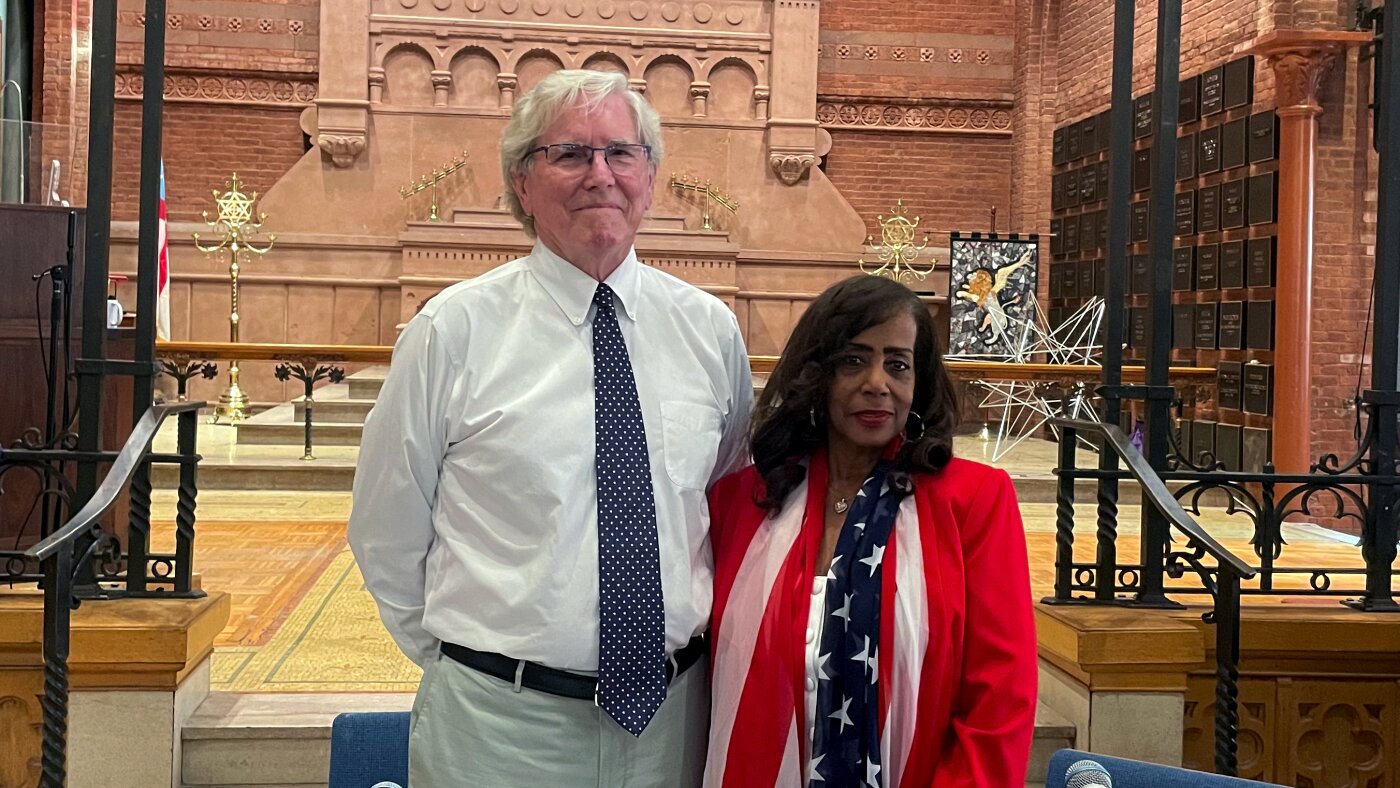
Historical Descendants Unite to Reflect on a Supreme Court Ruling’s Legacy
In a compelling meeting in Washington, D.C., descendants of individuals connected by a controversial Supreme Court case came together to discuss its lasting impact. Lynne Jackson, a descendant of Dred Scott, and Charlie Taney, a descendant of Chief Justice Roger Taney, shared their stories near the very steps of the Supreme Court where history was made over a century and a half ago.
The historic case at the heart of their connection, Dred Scott v. Sandford, was a pivotal 1857 decision where Scott sued for his freedom, but the ruling denied citizenship to enslaved people. This case is often cited as a catalyst for the Civil War. Jackson and Taney’s meeting at St. Mark’s Episcopal Church highlights ongoing discussions about race and citizenship in America.
Charlie Taney expressed the complex legacy of his ancestor, noting, “He actually participated in a lot of important law … and our family’s proud of that,” while also acknowledging the controversial nature of the Dred Scott decision, often labeled as the worst in the court’s history.
Despite the ruling’s historical reversal by the 14th Amendment, discussions on birthright citizenship have resurfaced, notably when former President Trump attempted to limit it through an executive order. This legislative proposal reflects ongoing debates about who qualifies as an American citizen.
Supreme Court’s Recent Ruling
Recently, the Supreme Court reaffirmed birthright citizenship, asserting that most individuals born in the U.S. are citizens. Chief Justice John Roberts, in his majority opinion, criticized the Trump administration’s arguments as an attempt to alter historical interpretations with weak evidence.
“Citizenship, then and now, was the right to have rights — to freely participate in our political community,” Roberts wrote, emphasizing the 14th Amendment’s promise to extend citizenship to all born on American soil.
However, the ruling was not unanimous. Justice Clarence Thomas and two other conservative justices dissented, arguing the amendment was specifically intended for freed slaves. Eric Wessan, Iowa’s solicitor general, noted the close 5-4 decision, highlighting the court’s deep divide on constitutional interpretations related to race.
Legacy and Reconciliation
Justice Ketanji Brown Jackson emphasized in her opinion that the 14th Amendment was a comprehensive reform, not merely a response to slavery. Her words resonated with Charlie Taney, who hopes for a lasting resolution on citizenship rights.
Despite the recent ruling, the political debate persists, with Trump and his supporters in Congress vowing to continue their efforts. As Taney reflects on his family’s history, he hopes future generations won’t face the same stigmatization due to historical legacies.
Nine years ago, Taney publicly apologized to Lynne Jackson, and since then, they have been actively engaged in dialogues about reconciliation. For Jackson, building a relationship has been key. “Remember the R-word?” she asked, clarifying that it’s about “relationship,” not race.
Both Jackson and Taney aspire for their relationship to serve as a model for national unity and healing.
This article was originally written by www.npr.org




