
EU to Scrutinize Pakistan’s GSP+ Eligibility Amid Human Rights Concerns
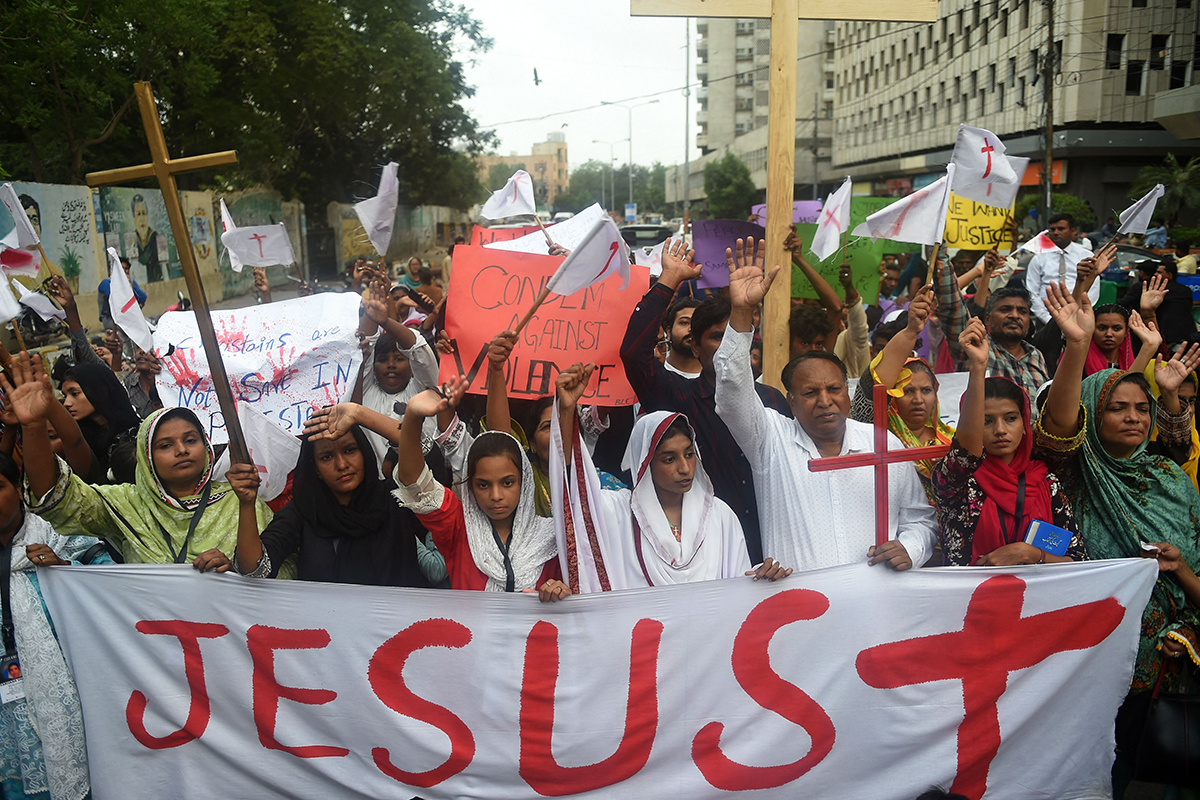
As the European Union prepares to review Pakistan’s adherence to global human rights standards, activists are calling attention to systemic abuses against religious minorities in the country. This scrutiny comes ahead of an EU mission set to assess Pakistan’s eligibility for the GSP+ trade scheme starting Monday.
The mission will evaluate Pakistan’s compliance with 27 United Nations conventions linked to the GSP+, a status that grants preferential trade terms in exchange for commitments to “sustainable development and good governance.” Since 2014, Pakistan has leveraged this status to significantly boost textile exports to the EU.
During the review, EU officials will engage with governmental bodies, civil society organizations, and private sector representatives. Initially scheduled for June, the mission was delayed due to geopolitical tensions between Iran and Israel.
Akmal Bhatti, Chairman of Minorities Alliance Pakistan (MAP), condemned the Pakistani government for failing to uphold constitutional rights. He stated, “The Pakistan government has completely failed to fulfill its constitutional responsibilities to protect the fundamental rights of Pakistani people guaranteed in the Constitution of Pakistan and protected by international conventions and protocols.”
Bhatti highlighted ongoing discrimination against religious minorities, particularly Christians, citing misuse of blasphemy laws and state complicity. He referenced a case in the Islamabad High Court where a judge directed the formation of a judicial commission to investigate false blasphemy accusations, a verdict later suspended by an appellate bench.
The issue of religious violence was underscored by the August 2023 attacks on Christian communities in Jaranwala, Punjab Province. Despite a crackdown on the extremist group Tehreek-e-Labbaik Pakistan (TLP), Bhatti criticized the government’s failure to apprehend key leaders involved in the violence.
Bhatti also criticized the Punjab government’s inaction on child marriage legislation, submitted in April 2024, and called for laws against forced conversions and raising the legal marriage age to 18. He urged the EU mission to press Pakistani leaders on these matters.
Pakistan Masiha Millat Party Chairman Aslam Pervaiz Sahotra echoed Bhatti’s concerns, stating, “There has been no improvement in Pakistan’s human rights situation. In fact, it has only worsened over the years.” He emphasized that prioritizing economic benefits over human rights sends a troubling message.
EU Ambassador to Pakistan Raimundas Karoblis indicated that significant progress is needed for Pakistan to maintain its GSP+ status. The EU review will cover human rights, minority protections, the death penalty, blasphemy laws, and other critical areas.
Pakistan’s GSP+ status was extended in October 2023 until 2027, but the upcoming review cycle will affect its reapplication under the new scheme set for 2027. The country has benefited from duty-free or reduced duties on exports like apparel and surgical instruments.
According to the State Bank of Pakistan, export earnings to the EU increased to $3.17 billion from July through October, compared to $3 billion during the same period last year. The EU’s ongoing monitoring ensures compliance with international conventions, requiring public reports to be submitted biennially.
For more information, visit the original article at Christian Daily International.
This article was originally written by www.christianpost.com




