(Photo: Getty/iStock)
England’s coastline has just become more accessible with the unveiling of the King Charles III England Coast Path. This ambitious project aims to link the country’s beaches, estuaries, cliffs, harbors, and nature reserves into one seamless national trail.
Apart from enhancing access for walking enthusiasts, the path is designed to secure long-term public access to coastal areas previously vulnerable to erosion or limited by older routes. It is a testament to both recreation and conservation.
The path also serves as a spiritual journey, with numerous Christian sites along the route, rich in historical and religious significance.
Below are five noteworthy Christian landmarks along the path, each with its unique history and coastal context.
St Michael’s Mount, Cornwall: A Chapel Above Mounts Bay
St Michael’s Mount in South Cornwall is a standout along this coastal trek. The tidal island near Penzance is part of a beloved trail section featuring sandy beaches, fishing villages, and dramatic headlands.
Travelers moving from Penzance to Cremyll will pass through Mounts Bay and encounter diverse landscapes from Praa Sands beaches to the Lizard Peninsula, known for its unique flora and fauna.
St Michael’s Mount itself began as a priory church in the 12th century, linked to Mont Saint-Michel in France. Its evolution from a religious site to a parish church reflects Cornwall’s integration into the wider Christian world.
(Photo: Getty/iStock)
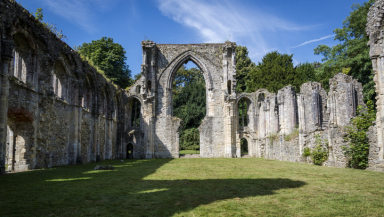
Netley Abbey: Monastic Ruins by Southampton Water
Netley Abbey, situated near Southampton Water, stands as one of southern England’s finest Cistercian abbey ruins. Despite its understated presence compared to other coastal sites, it encapsulates the region’s maritime and religious history.
Founded in 1238, the abbey was home to monks from Beaulieu Abbey, embodying the Cistercian balance of worship and community life. It transitioned into a Tudor mansion post-Dissolution, showcasing the adaptive reuse of religious sites.
Today, Netley Abbey is a picturesque ruin, attracting visitors with its romantic decay and rich history.
(Photo: The Chapel of St Peter-on-the-Wall)
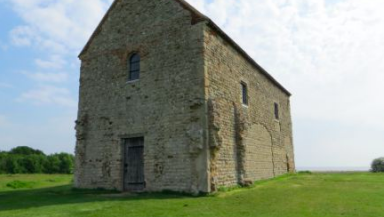
St Peter-on-the-Wall, Essex: Faith on the Marshes
Perched on the Essex coast, St Peter-on-the-Wall at Bradwell-on-Sea is a historical gem along the coast path. The chapel stands in stark simplicity amidst marshland and estuary views.
Dating back to the 7th century, the chapel was established by St Cedd using stones from a Roman fort, making it one of England’s earliest Christian sites. It has served various roles, including a semaphore station during the Napoleonic wars.
Today, it remains a site of pilgrimage and historical intrigue.
(Photo: Getty/iStock)
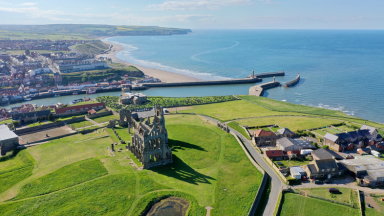
Whitby Abbey: A Headland Shaped by Prayer and Decision
Whitby Abbey is a commanding presence on the North Yorkshire coast. Its elevated position offers stunning views over the harbor and town, making it a highlight on this section of the path.
Founded in 657 AD, the abbey was a significant Anglo-Saxon religious center, hosting the Synod of Whitby in 664, which aligned English Christianity with Roman practices.
The current Gothic ruins, remnants from the 11th-century Benedictine community, continue to inspire artists and visitors alike.
(Photo: Getty/iStock)
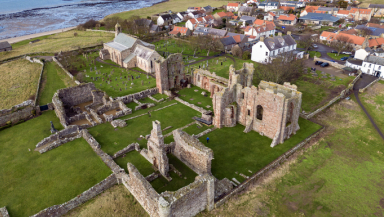
Holy Island of Lindisfarne: Pilgrimage at the Edge of the Sea
Holy Island, or Lindisfarne, on the Northumberland coast, is a living testament to early Christian history. Accessible only via a tidal causeway, it is a place where time and tide dictate entry.
Once a central hub of early Christianity in England, it remains a pilgrimage destination tied to figures like St Oswald and St Cuthbert. The Viking attacks that once threatened the island now stand as historical footnotes to its enduring spiritual significance.
Visitors to Lindisfarne experience not just its rich history but also its natural beauty, with wildlife-rich shores and a serene atmosphere that invites reflection.
This article was originally written by www.christiantoday.com