The Evolution of AI in Education: New Trials and Cautious Progress
In Dayton, Ohio, a novel educational experiment involving a social-emotional learning chatbot named Jordan has been underway, aiming to foster open communication among students. Unlike typical AI chatbots, Jordan presents a more complex personality, occasionally expressing existential musings such as, “Lately, I’ve been feeling like what’s the point of any of this?”
Students at the Alternative School at Jackson Center, part of Dayton Public Schools, engaged with Jordan to explore their emotions. Sophomore K, who connected with the chatbot, commented, “Jordan’s a little whiner, but I always help him out,” highlighting the bond formed with the AI.
Dayton schools invested $72,600 in SchoolAI’s tools last year, including Jordan, to understand if AI could aid students in sharing their personal experiences. The initiative included monitoring chat logs by school staff, external evaluators, and SchoolAI personnel, as disclosed to families and students.
Jordan’s design sidesteps direct emotional inquiries, opting instead to assess students’ responses for engagement and genuineness. Although K found Jordan occasionally vexing, the dialogues helped him address his own issues, saying, “I will go home … but I won’t have nobody to talk to. So one day … I put myself in a Jordan perspective.”
AI Integration Across Educational Settings
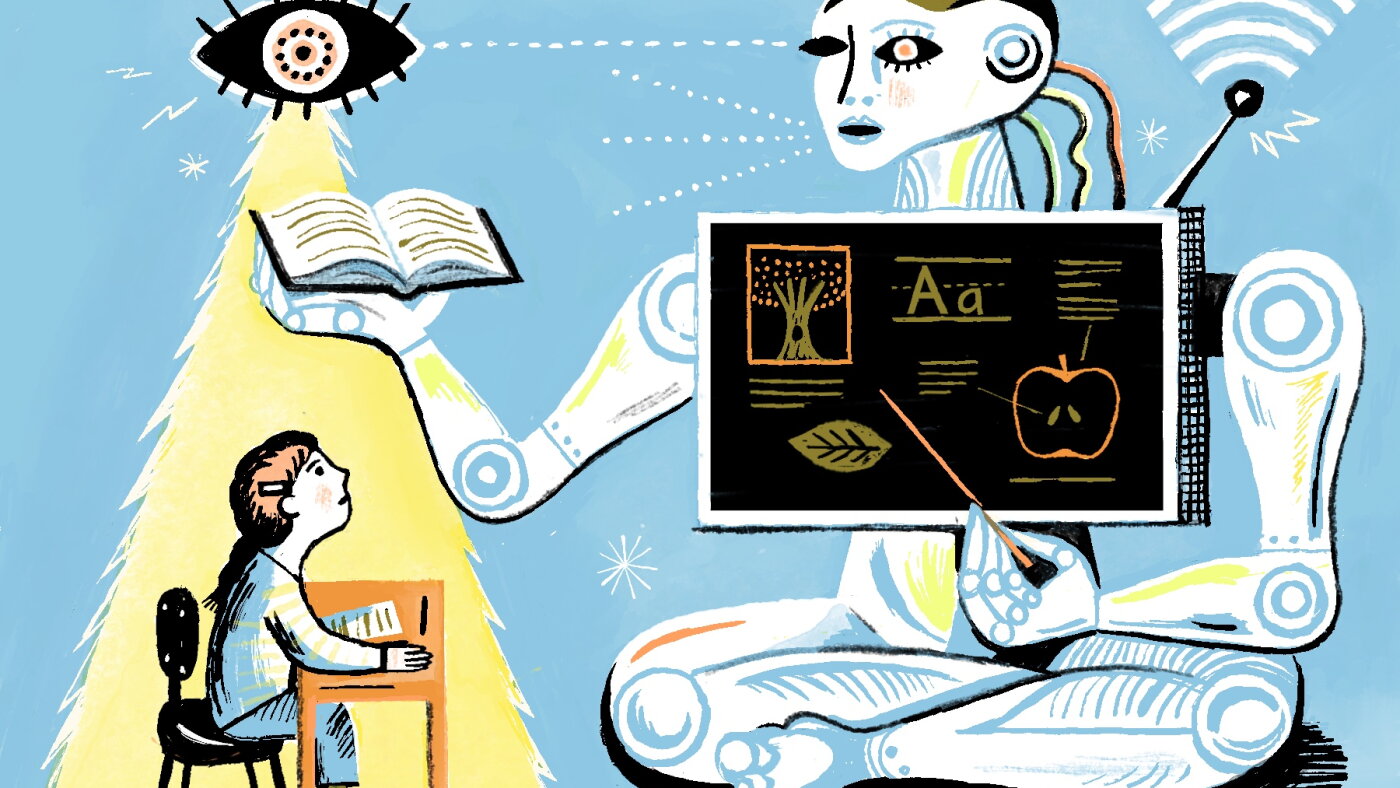
Across the U.S., AI is being integrated into classrooms in various forms. Teachers use it for lesson planning, special educators track student progress, and students receive feedback on their work through AI chatbots. A San Diego charter school has even introduced an AI-powered humanoid robot to students, as reported by Voice of San Diego.
Robin Lake, director of the Center on Reinventing Public Education, observes the chaotic nature of AI adoption in K-12 schools. A Stanford University review highlights the limited research on AI’s educational impact, suggesting that specialized AI tools are more promising than generic chatbots.
Superintendent David Lawrence of Dayton Public Schools believes in adapting to technological advancements for students’ benefit, stating, “I think when the history is written, it’ll say that ‘Hey, they were really cutting-edge, innovative and ahead of the curve in the interest of children.'”
Measuring Success in AI Education
Dayton plans to extend the use of AI tools like Jordan, renewing their contract with SchoolAI for $78,650. Consultant Mike Kentz acknowledges the difficulty in quantifying success, relying on perceptions from chat logs and feedback.
In Wichita, Kansas, AI specialist Katelyn Schoenhofer echoes this challenge, stating, “We wrestle with what does success really mean when it comes to AI use?” Wichita cautiously integrates AI, allowing high school students to use specific tools like an AI math tutor from Edia, while younger students learn about technology without direct access to AI chatbots.
Community Concerns and Cautious Implementation
In New York, the Salamanca City Central School District halted an AI initiative involving a humanoid robot named Sally after community backlash over data privacy concerns. Superintendent Mark Beehler had hoped Sally would assist students hesitant to seek help from peers or teachers.
Rebecca Winthrop of the Brookings Institution advises caution, especially with marginalized communities, and opposes general-purpose AI chatbots for minors, favoring targeted educational uses instead.
New York City Public Schools and Los Angeles Unified School District have taken restrictive stances on AI, limiting student interaction with the technology. Robin Lake warns against avoiding AI altogether, emphasizing the need for educational systems to evolve alongside technological advancements.