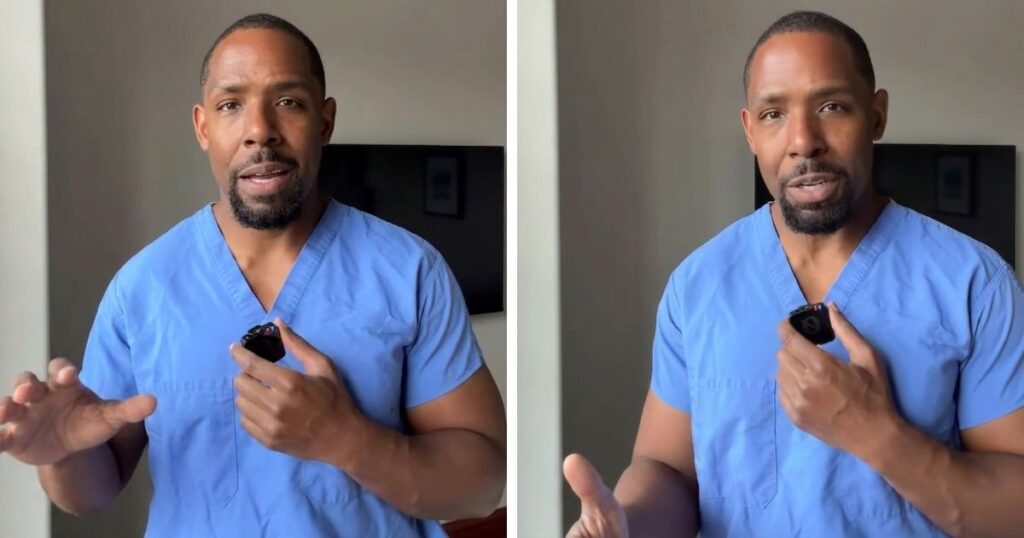
When Dr. Robert Singleton II received a message from one of his followers wrestling with one of faith’s most difficult questions, he knew there were no easy answers. The question of why a loving God permits suffering, illness, and tragedy has challenged believers for centuries, but this Chicago-based anesthesiologist offered a perspective rooted in scripture and compassion.
Dr. Singleton, who practices as a board-certified anesthesiologist in the Chicago area, has built a following online where he shares faith-based content including videos, prayers, and spiritual reflections. Before entering the medical field, he taught middle school science, giving him a unique background in both education and healthcare that informs his ministry work.
Confronting the question of suffering
In his video response to the follower’s inquiry, Dr. Singleton immediately acknowledged the complexity of the issue. “I don’t pretend to have all the answers,” he said. “Suffering is one of the most difficult and hardest realities of our existence.”
Rather than offering philosophical speculation, he directed his response toward biblical teaching. He explained that scripture itself acknowledges we exist in a world damaged by sin, pain, and death. Jesus Christ himself, according to John 16:33, told his followers they would face trouble in this world, suggesting that hardship is not evidence of divine abandonment or a lack of God’s goodness.
God’s presence in pain
The central message Dr. Singleton wanted to communicate was that God didn’t remain separate from human suffering. Instead, through Jesus, God experienced it directly. Jesus encountered grief, experienced betrayal from those closest to him, and ultimately suffered and died.
Referencing Isaiah 53:3, which describes Jesus as a man well acquainted with grief, Dr. Singleton offered this insight: “God’s goodness is not proven by the absence of tragedy, but by his presence in the middle of our suffering.”
He pointed to Psalm 34:18, which assures believers that the Lord draws near to those with broken hearts. Dr. Singleton also observed that many Christians report their most profound encounters with God occurred during their most difficult periods.
Hope for the future
Dr. Singleton concluded his message by referencing Revelation 21:4, which describes a future when God will wipe away all tears, and death, crying, and pain will cease to exist.
While complete understanding of suffering’s purpose may remain elusive during our earthly lives, Dr. Singleton encouraged trust in the One who understands fully. For those currently experiencing pain, his message was clear: God is not absent or indifferent, but present in the midst of suffering.