(Photo: Getty/iStock)
The writer of the Letter to the Hebrews reminds Christians that they are surrounded by a great “cloud of witnesses.” (NRSV) That “cloud” has continued to grow in size since then. In this monthly column we will be thinking about some of the people and events, over the past 2000 years, that have helped make up this “cloud.” People and events that have helped build the community of the Christian church as it exists today.
In the 16th century, Protestant reformers launched a vigorous critique of the Roman Catholic Church, challenging its theological doctrines, institutional practices, and the authority of the papacy. They advocated for sola scriptura, emphasizing scripture as the ultimate authority, and rejected practices like the sale of indulgences and the veneration of saints. This movement marked a significant shift towards restoring the early Christian community’s purity and authority.
The reformers aimed to dismantle the sacramental system of medieval Catholicism, advocating for justification by faith alone (sola fide) and criticizing the Church’s moral and financial corruption. They accused the papal hierarchy of straying from apostolic Christianity, even going so far as to label it as the Antichrist. This multifaceted critique sought to address doctrinal, moral, and institutional concerns.
Amidst these critiques, one might assume the medieval Church in the West was in decline, yet the situation was more nuanced. Examining medieval England, with its extensive documentary records, offers a more complex picture.
Construction and Community Engagement
During the 13th century, England witnessed extensive church construction, with communities contributing substantial resources equivalent to over £1,000 annually per family. This widespread engagement in developing churches in contemporary architectural styles reflected a genuine expression of faith and a desire to glorify God, rather than mere competition for divine favor.
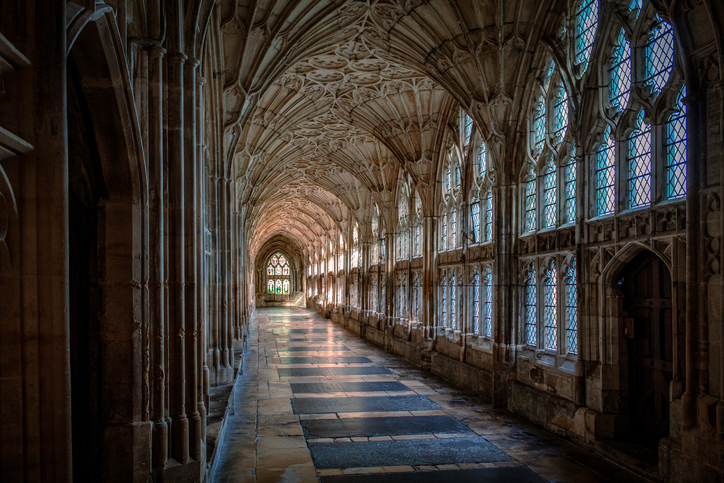
By 1300, church architecture evolved significantly, incorporating features like bell towers and spires. The Perpendicular Style, characterized by vertical lines, resonated with a society grappling with the aftermath of the Black Death, seeking solace in personal faith amid earthly turmoil.
Rich wool-producing regions, such as the Cotswolds and Suffolk, became hubs of church rebuilding in the 15th century. Notable examples include Huish Episcopi in Somerset and Lavenham in Suffolk. Church interiors saw enhancements, with increased use of font covers, rood screens, and images of saints. The era also marked the widespread introduction of benches and pews.
Chantry Chapels and Purgatory
The late 14th and 15th centuries witnessed a rise in chantry chapels, where Masses were conducted for the deceased. This practice aligned with the doctrine of purgatory, emphasizing post-Black Death investments in chantries and chantry priests. By the late 15th century, Bristol boasted 18 parish churches and a multitude of chantries, reflecting communities’ attempts to grapple with mortality and the afterlife.
Amid this context, there was a growing emphasis on recognizing life’s transience and preparing for death. Tomb carvings depicted emaciated corpses, and some carvings juxtaposed lifelike figures with decaying bodies.
Faith and Mortality
In the 1490s, Caxton printed “Arte and crafte to knowe well to die,” highlighting the era’s engagement with mortality. Cemeteries served as spaces for both the living and the dead, hosting processions, sermons, and fairs. The physical presence of the deceased was a daily reality, as burial practices evolved, with coffins becoming more prevalent, possibly influenced by the Black Death’s aftermath.
The Role of Friars and Education
By 1250, the focus shifted from monastic building to supporting friars, who thrived in urban centers, relying on local generosity. While friars initially connected with an appetite for preaching, over time, financial support shifted to parish churches, where donors felt more control over their contributions.
Wealthy benefactors began funding colleges, combining religious services with educational functions and support for the needy. Notable examples include Oxford and Cambridge colleges, as well as smaller institutions in market towns.
The Lollards’ Challenge
The Lollards, a diverse group of critics, emerged in the late 14th and early 15th centuries, challenging the Church’s authority and practices. Their beliefs were varied, lacking a unified system, but they shared a common critique of the Church’s power and wealth. John Wycliffe, a central figure, is associated with translating the Bible into English.
While some Lollards sought reform within the Church, others rejected its institutional framework. The movement’s complexity highlights the diverse responses to faith in late-medieval England.
Spirituality and Reform
Debate persists regarding the state of the Catholic Church in England before the Reformation. Some argue that widespread dissatisfaction with the Church’s shortcomings led to its eventual restructuring. However, the situation was more nuanced, with evidence of vibrant religious devotion.
Religious texts like ‘Books of Hours’ facilitated personal devotion, while relics and pilgrimages reflected a deep spiritual connection. Despite the decline in some religious practices, local shrines continued to attract pilgrims into the 16th century.
Artistic expressions of devotion, such as the ‘Five Wounds of Christ,’ persisted even as Protestant reformers critiqued traditional practices. Late medieval faith was characterized by a personal connection with Christ, evident in the realistic depictions of the crucified Christ.
The Church on the Brink of Reformation
In 1500, the English Church faced challenges, but these were not insurmountable. Constructive engagement with reform calls and Tudor politics might have sustained medieval spirituality. However, unforeseen developments, including the papacy’s resistance to reform and Tudor nationalization, led to significant changes.
The English Church, far from stagnant, was a complex institution, adapting to societal changes and spiritual demands as it approached the Reformation.
This article was originally written by www.christiantoday.com